

On May 22nd, the Ministry of Health held an online meeting on the monitoring and prevention of Ebola virus disease, in the context of the World Health Organization (WHO) officially declaring an Ebola outbreak caused by the Bundibugyo strain in the Democratic Republic of Congo and Uganda. This is the 17th outbreak in Congo since 1976, with an extremely complex situation as the number of cases and deaths continues to rise.
Based on the latest epidemiological data, the Vietnamese Ministry of Health has identified four unusual aspects of this outbreak and provided important assessments of the risk of its entry into the country. Unlike previous outbreaks, the Bundibugyo virus strain is showing worrying transmission characteristics and scale:
Firstly, unusual clusters of deaths and concerns about infection in healthcare facilities have been observed. Clusters of unexplained deaths with characteristic Ebola symptoms have been recorded in the community. In particular, the deaths of four healthcare workers in Ituri province (Congo) due to suspected Ebola infection have raised serious concerns about healthcare-associated transmission and gaps in infection control in healthcare settings.
Secondly, the scale and epidemiological links are yet to be determined . Experts are currently uncertain about the actual number of people infected and the extent of the spread. The emergence of many cases without a clear epidemiological link suggests that the virus may be silently spreading beyond the scope of current reports.
Thirdly, the rate of positive samples reached a record high. In Ituri province, the rate of positive samples was recorded at a very high level (8 out of 13 cases across various areas). The simultaneous increase in suspected cases and clusters of deaths suggests that the actual number of cases is much higher than the reported figures, signaling a high risk of a major outbreak at the local and regional levels.
Fourth, rapid cross-border spread. The virus is no longer confined to a single country's borders but has spread to neighboring countries. For example, Uganda has confirmed cases among people entering from Congo, including cases in the capital, Kampala.
A major challenge in controlling this outbreak is that the causative agent has been identified as the Bundibugyo strain. Currently, the world only has a vaccine and specific treatment for the Ebola virus strain Zaire. For other strains such as Sudan and Bundibugyo, we still lack vaccines and specific treatments. This makes controlling the mortality rate – which can reach 90% – an extremely difficult task for health organizations.

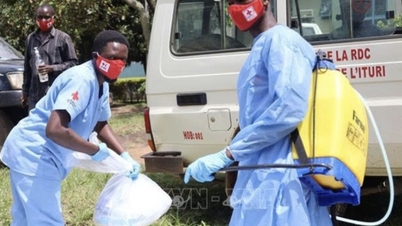
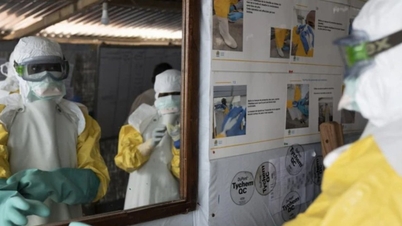
Ebola is highly contagious and has a high mortality rate. (Illustrative image: VGP)
The risk of the disease entering Vietnam is low, but we must not be complacent.
Regarding the question of whether there is a risk of an Ebola outbreak in our country, Mr. Hoang Minh Duc, Director of the Department of Disease Prevention (Ministry of Health), affirmed: As of May 21, 2026, Vietnam has not recorded any cases of Ebola.
The WHO assesses the risk of this outbreak as high in the affected country and the African region, but low globally, including Vietnam. However, authorities warn that the risk of the disease entering the country through passengers returning from affected areas cannot be ruled out.
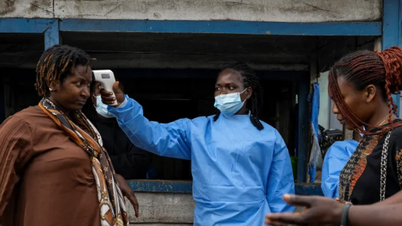
To proactively prevent the spread of the disease, the Ministry of Health is implementing drastic measures: Strengthening border surveillance, paying particular attention to checking and gathering travel history from people returning from areas with outbreaks to detect cases early and isolate them promptly.
Be prepared to respond, directing localities and medical facilities to organize rapid response teams and develop scenarios to respond to all situations and risks of disease outbreaks.
Strengthening international coordination and updating information hourly from the WHO and countries through the International Health Regulations will enable timely advice to the Government on the most effective prevention and control measures.
Characteristics of Ebola disease
Transmission mechanism: Transmitted to humans from wild animals (bats, hedgehogs, primates) and transmitted between humans through direct contact with blood, secretions, or contaminated objects.
Virulence: This is an acute infectious disease that is particularly dangerous, spreading very rapidly and having a very high mortality rate.
The strains causing the outbreak: There are three most common strains: Ebola, Sudan, and Bundibugyo. The strain currently causing the outbreak is Bundibugyo.
Source: https://phunuvietnam.vn/4-diem-bat-thuong-kho-kiem-soat-dich-ebola-238260522221757326.htm









































































































Comment (0)