

This morning, December 9, at the seminar "Media training from Innovation to the New Era" as part of a series of activities celebrating the 40th anniversary of the first issue of Thanh Nien Newspaper, experts from universities that train in the field discussed many practical contents.
The rift between traditional and digital age capabilities
Present at the seminar, Dr. Vo Van Tuan, Permanent Vice President, Head of the Faculty of Public Relations and Communication, Van Lang University, commented that the rapid shift in communication technology, especially artificial intelligence (AI), big data and digital platform ecosystems, is creating an increasingly clear gap between traditional training capacity and practical human resource needs.
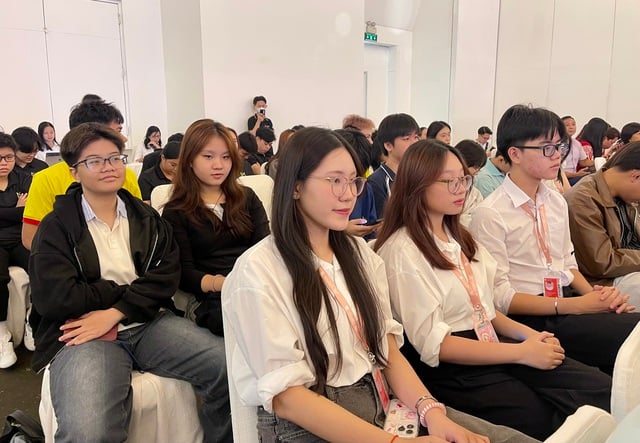
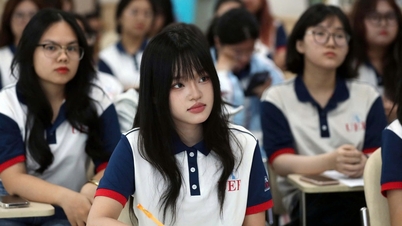
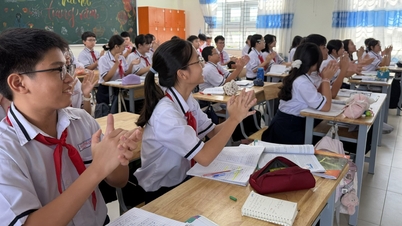
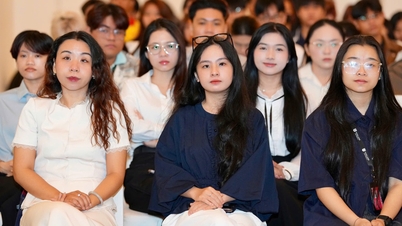
Media students at the seminar
PHOTO: MY QUYEN
"Media training is facing a gap between traditional competencies and the competencies required in the digital age. From the perspective of university training, this is no longer a question of whether to innovate or not, but how quickly to innovate, according to which model, and which competency standards to use as a basis," said Dr. Tuan.
According to Dr. Tuan, there are three factors that are reshaping the entire media industry today. That is the explosion of technology such as AI, big data, digital content creation tools that change the speed of media production. That is the change in public behavior, when Gen Z, Gen Alpha receive information through short videos , mobile platforms, and have very high interaction expectations.
And the third is the specialization of human resources in the industry. Businesses no longer look for general communication workers, but need content creators, data-based communication, and technology-based creators, specifically AI.
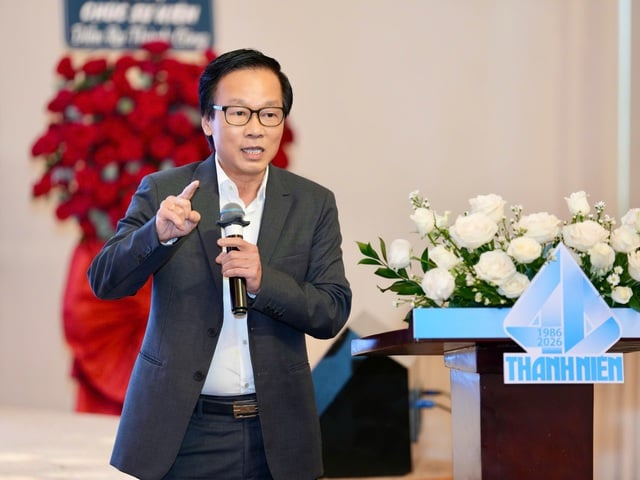
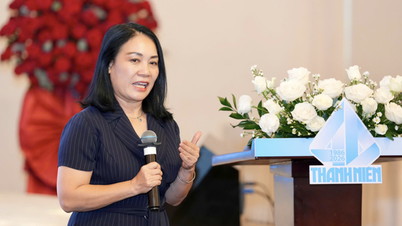
Dr. Vo Van Tuan shares about challenges and solutions in media training
PHOTO: INDEPENDENCE
From there, Mr. Tuan pointed out 4 major groups of challenges that are hindering the synchronous development of media training in Vietnam: One is the gap between education and human resource needs. Enterprises have high requirements for practical ability, speed and technological capacity, while many programs are still heavy on theory.
Second, competition for admission is increasingly fierce. The rapid increase in the number of media training institutions makes brand, practical capacity and professional connection become decisive points.
Third is the lack of common professional competency standards. The differences between training programs reduce compatibility and quality standardization. Fourth is the investment in facilities when the media industry requires studios, newsrooms, labs, software and equipment with high costs, not all schools have enough resources.
Media training shifts from "vocational training" to competency training
Dr. Vo Van Tuan has made suggestions to address the challenges in current media training. According to Mr. Tuan, it is necessary to build a practice ecosystem - co-creating businesses. Specifically, not only cooperation but businesses must also participate deeply in the structure of the subject, assign real tasks, and give real assessments.
"For example, the training cooperation with Thanh Nien Newspaper that the school is implementing is an example. In addition, promote training of lecturers in the direction of technology pedagogy. Lecturers need to be proficient in new production tools, understand the principles of applying AI in professional processes, and update communication trends through open learning materials - international seminars - workshops," Dr. Tuan shared.
In particular, according to Dr. Tuan, it is necessary to shift from “industry training” to “competency training”. Instead of asking “what do students learn?”, it is necessary to answer the question “what can students do, with what tools, in what context?”. This approach helps personalize the learning experience, increase interaction, and prepare learners with sustainable digital competencies.
In addition, it is necessary to strengthen the role of professional journalism and media, with the participation of press and media agencies in training through workshops, simulated editorial offices, internships, guest lecturers, etc. to help students understand the profession - work in the profession - love the profession from an early age.
"Van Lang University is also innovating the role of lecturers, innovating learning methods, and innovating training philosophy, moving from 'vocational training' to 'media thinking training', training learners with lifelong learning capacity, critical thinking, and the ability to quickly re-adapt when technology and the market change," Dr. Tuan informed.
Source: https://thanhnien.vn/4-thach-thuc-trong-dao-tao-truyen-thong-can-giai-quyet-18525120910083256.htm



![[Photo] Urgently help people soon have a place to live and stabilize their lives](/_next/image?url=https%3A%2F%2Fvphoto.vietnam.vn%2Fthumb%2F1200x675%2Fvietnam%2Fresource%2FIMAGE%2F2025%2F12%2F09%2F1765248230297_c-jpg.webp&w=3840&q=75)
















































![[Photo] General Secretary To Lam works with the Standing Committees of the 14th Party Congress Subcommittees](https://vphoto.vietnam.vn/thumb/402x226/vietnam/resource/IMAGE/2025/12/09/1765265023554_image.jpeg)























Comment (0)