

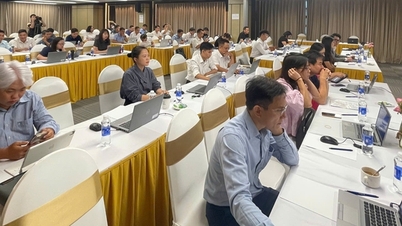
On December 2, at the Open Innovation Summit, UNDP launched the Asia- Pacific Human Development Report titled “The Next Great Polarization – Why Artificial Intelligence Could Increase Inequality Between Countries”. The report emphasizes that the impact of AI on human well-being is not predetermined but depends entirely on policy and governance choices.
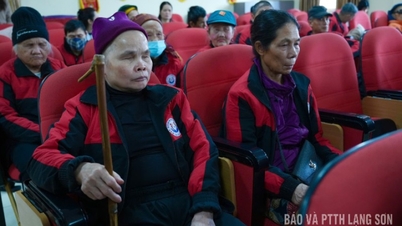
Many Vietnamese worry about losing their jobs to AI.
Ms. Ramla Khalidi, UNDP Resident Representative in Vietnam, commented that Vietnam is a country that understands the urgency of the current moment: “The country's rapid digital transformation and ambitious national development vision put AI at the center of discussions about Vietnam's future.”
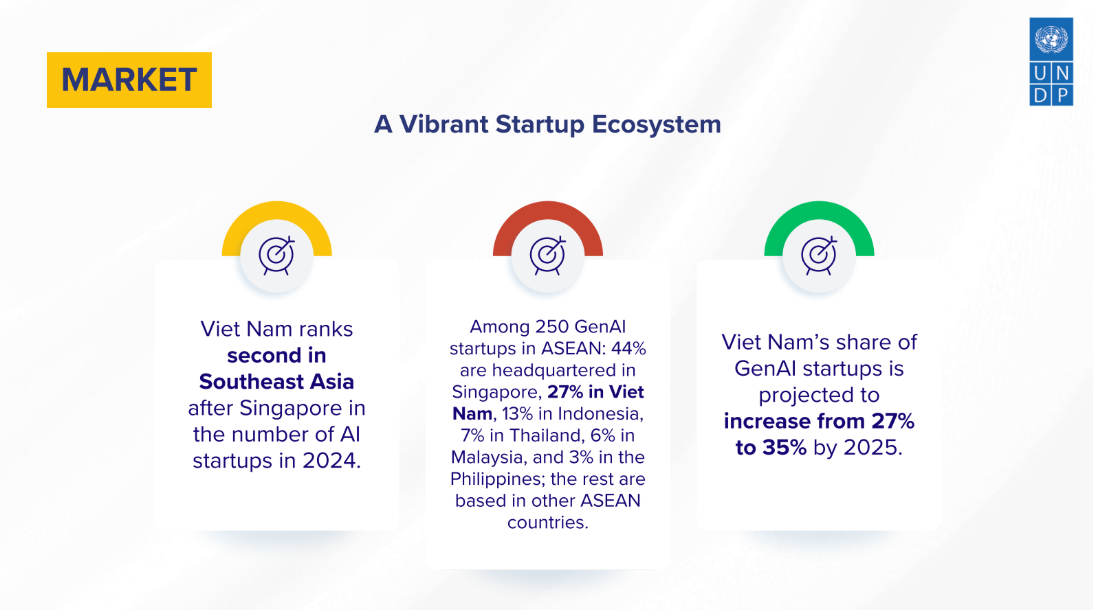
Vietnam aims to become a leading AI country by 2030, ranking in the top 3 in Southeast Asia. This is reinforced by a dynamic AI startup ecosystem, ranking second in ASEAN, after Singapore, in terms of quantity and accounting for 27% of the bloc’s GenAI (Generative AI) startup market share in 2024.
However, this growth opportunity comes with significant social pressure. According to Ms. Do Le Thu Ngoc, Head of Inclusive Growth, UNDP in Vietnam, the impact of AI is particularly serious for young people. AI is gradually replacing basic jobs that young people often use as a stepping stone for their careers, such as administration, scheduling, word processing, translation or research. This means that young people are being deprived of the opportunity to access important entry-level jobs to build their careers.

According to the report, Vietnam is among the countries with the highest rate of people worried about losing their jobs or not being able to find jobs due to AI, at 61%. Meanwhile, in countries like South Korea, this rate is much lower because they have strategies to retrain skills and cope with career changes.
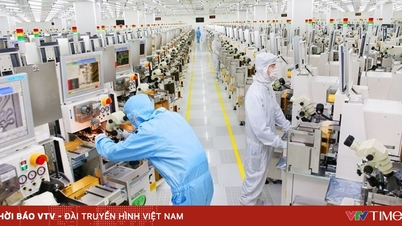
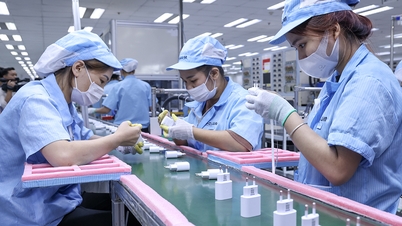
On a macro level, countries that rely heavily on agriculture , textiles or assembly will be under great pressure. Job losses in these sectors are unlikely to be immediately transferred to other sectors, as the competitive advantage of cheap labor is gradually disappearing before the emergence of AI-integrated robots.
Domestic enterprises slow to apply AI
In addition to the concerns of workers, the speed of AI application in Vietnamese enterprises is also a big challenge. According to the report, despite a vibrant startup ecosystem, the rate of readiness to deploy and utilize AI technology among enterprises is low and tends to decrease, from 27% in 2023 to 22% in 2024. Statistics on GenAI show that 64% of enterprises have not yet applied or are uncertain about using this technology.
While AI is expected to boost GDP growth by up to 2% through the creation of new jobs and industries, without infrastructure preparation, these benefits will be concentrated in urban areas, leaving behind rural areas and disadvantaged groups.
However, Ms. Ramla Khalidi affirmed: "Vietnam is well-positioned to leverage AI for sustainable and inclusive growth, if it continues to address challenges such as the digital skills gap, data quality and digital inclusion for women, rural communities and vulnerable groups."
The report shows that the Government has demonstrated strong political will, implementing policies and investments to promote digital transformation and AI application in key areas. The rapid development of digital infrastructure, including near-nationwide 4G coverage, ongoing 5G deployment and a significant improvement in Vietnam’s global e-government ranking, is supporting this progress.
To ensure that AI serves equitable human development, the UNDP report proposes a framework for action based on three core principles. First, human-centered, embedding technological innovation within a human development framework, prioritizing capacity expansion and unleashing human potential.
Next, manage innovation responsibly. This means developing clear, risk-based rules and strengthening accountability to balance progress with ethical and privacy protections.
Finally, build future-ready systems through strong investment in local talent and sustainable infrastructure, ensuring digital access is considered essential infrastructure.

Source: https://vietnamnet.vn/61-nguoi-viet-lo-mat-viec-hoac-khong-tim-duoc-viec-lam-do-ai-2468590.html




![[Photo] National Assembly Chairman Tran Thanh Man receives First Vice Chairman of the Federation Council of the Federal Assembly of the Russian Federation](/_next/image?url=https%3A%2F%2Fvphoto.vietnam.vn%2Fthumb%2F1200x675%2Fvietnam%2Fresource%2FIMAGE%2F2025%2F12%2F02%2F1764648408509_ndo_br_bnd-8452-jpg.webp&w=3840&q=75)





























































































Comment (0)