

Drivers of logistics industry restructuring
At the VALOMA LogTech Forum 2026, themed "AI Shaping the Future of Logistics," experts asserted that AI is no longer a technology of the future but has become a driving force for the comprehensive restructuring of the logistics industry.
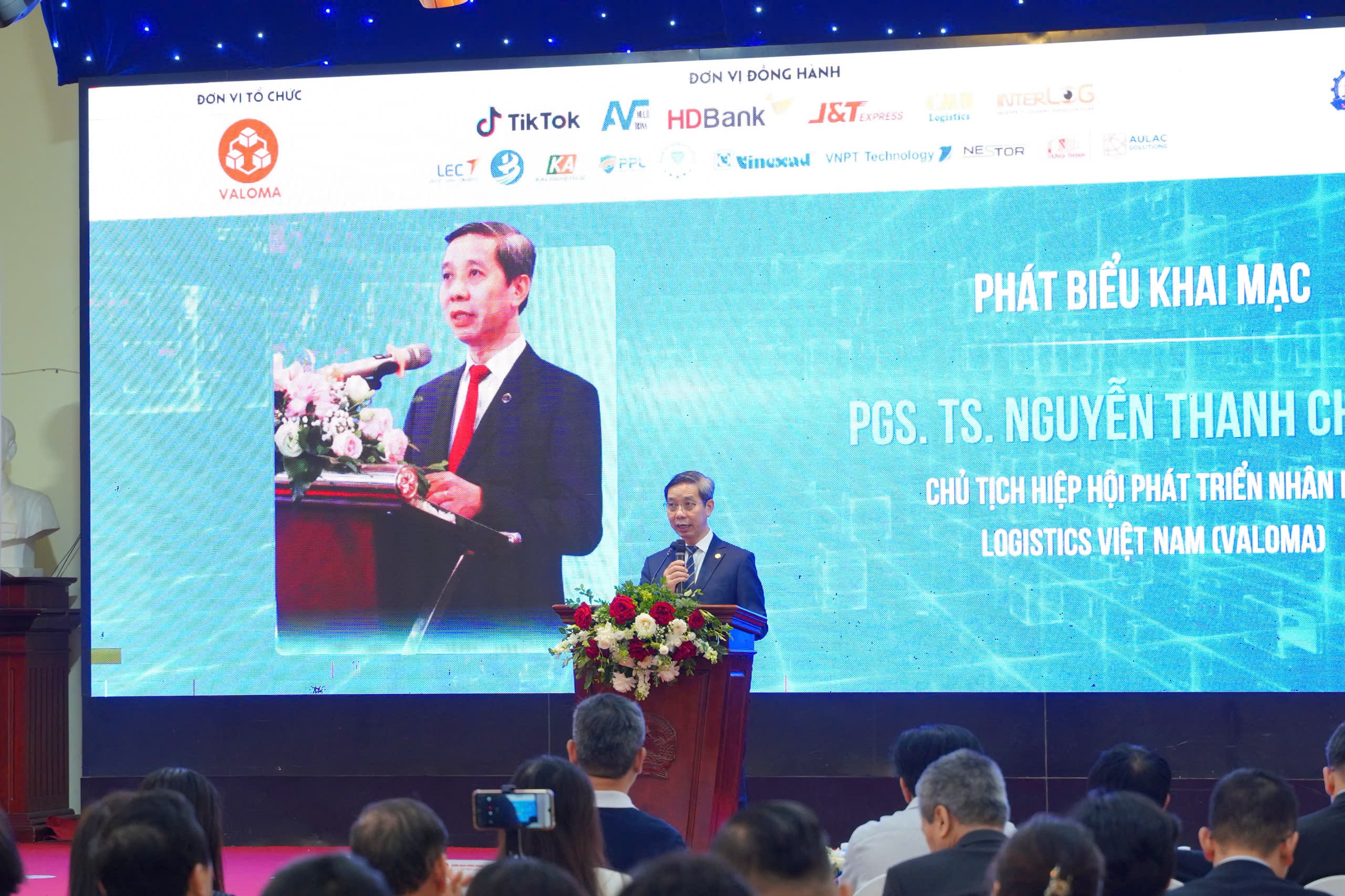
At the forum, Associate Professor, Dr. Nguyen Thanh Chuong, Chairman of the Vietnam Logistics Human Resources Development Association (VALOMA), stated that technology is fundamentally changing the way businesses operate as well as the structure of global supply chains. While previously logistics was only considered a "support" activity, it has now become a foundational service sector for the digital economy , the green economy, and international trade.
According to Mr. Chuong, AI is emerging as the most impactful technology in logistics in recent decades. This technology is already present in almost all operational activities such as optimizing transportation routes, forecasting cargo demand, intelligent warehouse management, port automation, container optimization, reducing carbon emissions, and real-time supply chain data analysis.
Globally , AI has helped many logistics businesses significantly reduce operating costs, shorten delivery times, and enhance the resilience of supply chains to global fluctuations. Meanwhile, Vietnam's logistics industry currently maintains a growth rate of approximately 14-16% per year, among the highest in the world. Digital logistics is gradually becoming a new driving force for economic growth and enhancing national competitiveness.
Associate Professor Dr. Nguyen Binh Minh, Director of the Institute of Digital Technology and Economics, Hanoi University of Science and Technology, believes that AI is no longer just a reference option but has become a "core competitive infrastructure" for the logistics industry.
According to Mr. Minh, the pressure to transform has now shifted from a "should do" to a "must do" to survive. Citing a Deloitte survey, he stated that within the next five years, the percentage of supply chain organizations applying or preparing to apply AI is expected to increase from 28% to 82%. At the same time, up to 71% of business leaders believe that if they do not adopt AI in time, their business operations risk disruption.
Gartner forecasts that by 2031, approximately 60% of supply chain disruptions could be handled automatically without human intervention. According to McKinsey statistics, AI can optimize logistics costs by about 15%, reduce inventory by 35%, and improve service levels by up to 65%.
Vietnam has also set a target that by 2035, 100% of logistics service businesses will apply digital transformation, thereby reducing logistics costs to approximately 10–12% of GDP.
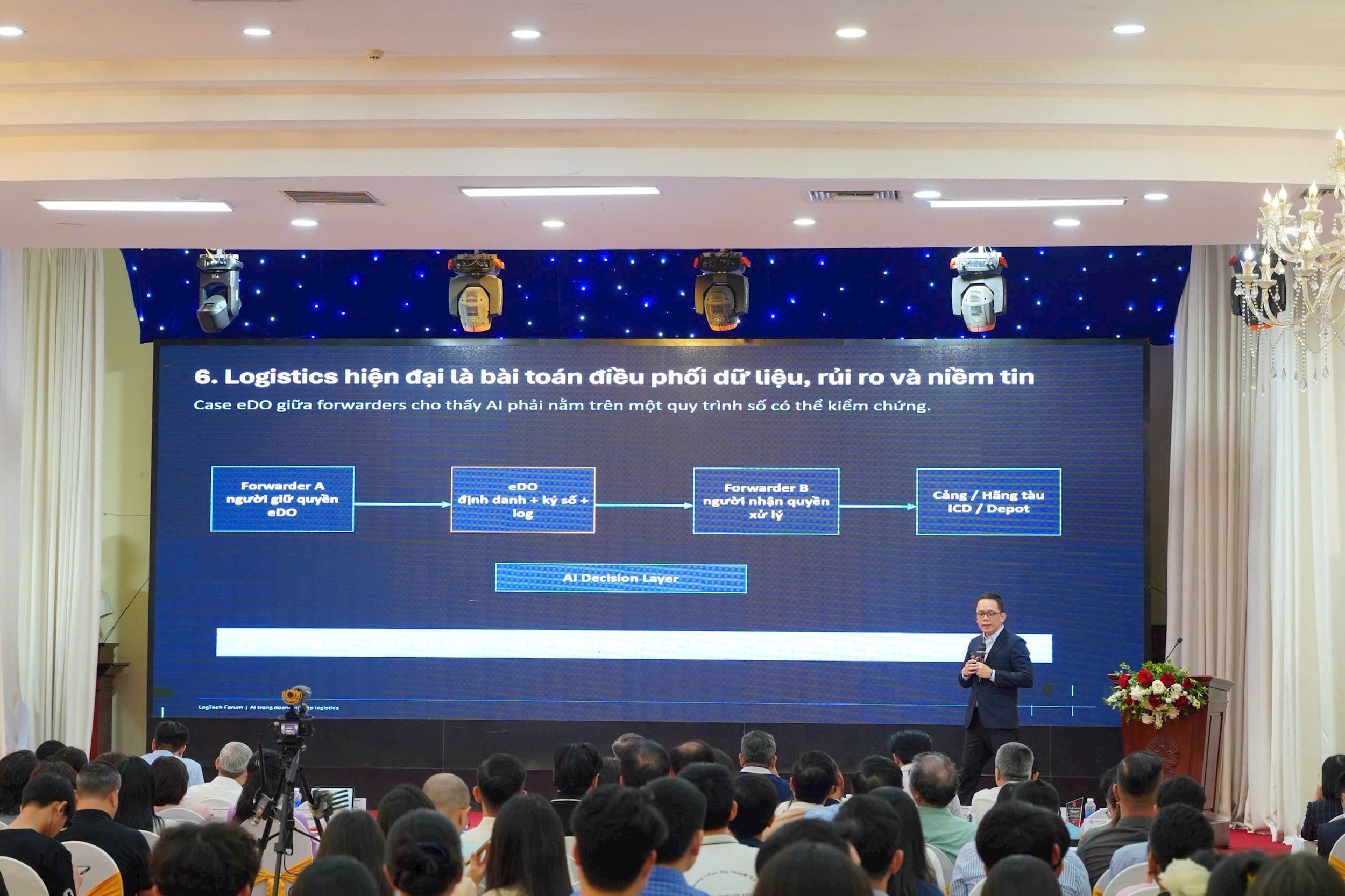
AI powered by data platforms.
Despite its great potential, the gap between AI application capabilities and actual implementation in businesses remains quite large. According to Associate Professor, Dr. Nguyen Thanh Chuong, most Vietnamese logistics businesses are currently only at the basic stage of digitizing processes; the number of businesses that actually apply AI in data analysis, forecasting, or decision support is still very limited.
"The current challenges lie not only in technology but also in data quality, system connectivity, human resource capabilities, logistics infrastructure, investment capacity, and the transformation mindset of businesses," Mr. Chuong emphasized.
Mr. Tran Thanh Hai, Deputy Director of the Import-Export Department (Ministry of Industry and Trade), said that many Vietnamese logistics businesses have begun applying AI to optimize delivery routes, manage warehouses using computer vision, and automate processes. However, the gap between technological expectations and actual implementation capabilities remains a major challenge for many businesses.
Sharing the same view, Mr. Nguyen Tien Dong, Director of AI Technology at CMC Group, stated that most logistics businesses still operate according to traditional models. Although data has been digitized in each department, it remains fragmented, while operational processes and management decisions are still separated between departments. This results in a linear operating model and slow response to market fluctuations.
According to Mr. Dong, AI has now proven effective in many tasks such as forecasting, operational optimization, decision support, and process automation. From a slow, linear response model, businesses can transition to an intelligent, adaptive model in real time when applying AI.
According to experts, for AI to be effective, logistics businesses need to start from a data foundation and build a suitable deployment roadmap. Businesses need to assess the maturity level of digital transformation and the readiness to apply AI in aspects such as data, processes, operations, human resources, and technology infrastructure.
AI can only operate effectively when data is standardized, connected, and fully contextualized. Businesses also need to select AI problems that are highly feasible and deliver clear results, such as optimizing costs, improving operational safety, or enhancing service quality.
Meanwhile, Associate Professor Dr. Nguyen Binh Minh recommends that businesses focus on three strategic steps. First, digitize and standardize data, because "without reliable data, AI will only remain at the demo stage." Second, prioritize the implementation of small-scale problems that can be measured effectively through KPIs within 90 days. Third, build a risk management mechanism related to data security, AI ethics, accountability, and approval processes.
Experts also believe that, in the context of increasingly competitive global supply chains and higher demands for speed, transparency, and resilience, AI will become a decisive tool for the competitiveness of logistics businesses.
The application of AI not only helps businesses reduce costs and optimize operations but also creates a foundation for deeper integration into global supply chains. However, to take advantage of this opportunity, Vietnamese logistics businesses need to change their mindset and invest systematically in data, technology, and human resources, instead of just focusing on isolated digital solutions.
Source: https://hanoimoi.vn/ai-dang-tai-dinh-hinh-nganh-logistics-749100.html











































































































Comment (0)