

Pioneers
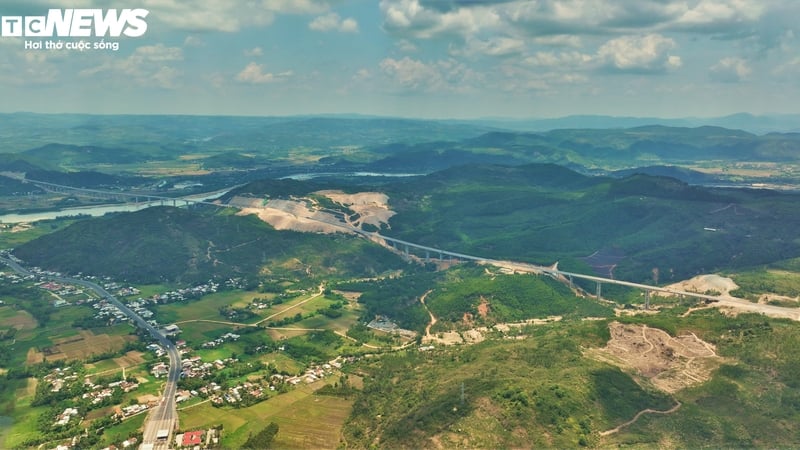
The book "Ô Châu Cận Lục" by the renowned cultural figure and doctor Dương Văn An once mentioned the An Mã region (Mã Yên mountain range) as a wild, rugged, and rugged mountainous area. However, with time and human effort, this land has undergone a transformation, no longer a barren wasteland where "dogs eat rocks and chickens eat pebbles."
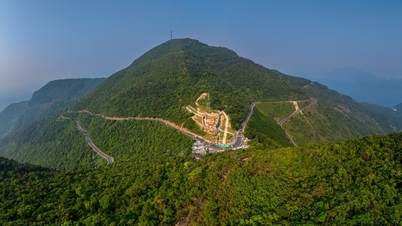
The entire vast area has been covered in green by planted forests, industrial crops, and fruit trees. The once barren hills are now a continuous expanse of lush green. The impoverished past is gradually fading away, giving way to bountiful harvests and comfortable homes.
Vo Vinh Hai, Party Secretary of An Ma village (Kim Ngan commune), still vividly remembers the early days of settling here under the Youth Settlement Village project implemented by the Central Youth Union. It was in the 2000s, when he and many other young people left the Le Thuy delta region, carrying with them the aspiration for a better life in this new land.
 |
| The endless green of the An Ma forests - Photo: PP |
Hai recalled that when they first arrived, the area was just a dense thicket of bushes, with barren land, mainly used for livestock grazing. When established, the An Ma Youth Settlement Village covered an area of over 6,200 hectares, spread across the former Thai Thuy and Kim Thuy communes. Each household was allocated approximately 10 hectares of land for forest planting, plus additional land for industrial crops to develop the economy according to an agro-forestry model.
Coming from a low-lying, densely populated area, many were overjoyed to be allocated so much land here. But land doesn't always please everyone. The complex terrain, harsh climate, and lack of investment capital caused many young families to give up and return to their old hometowns. Vo Vinh Hai was no exception; he spent many sleepless nights agonizing over the reality of whether to stay or return home.
Returning to their old hometown with a few acres of rice fields wouldn't mean starvation, but life would hardly change for the better. However, staying would require the couple to work twice or three times as hard. And so, Hai and his wife, like many other young couples, chose to stay.
The first patches of forest were planted by human effort, with the belief that the land would reward their hard work. Acacia, melaleuca, and rubber trees gradually took root. The barren hillsides were slowly covered in green…
 |
| The people of An Ma have begun developing large timber forests to increase economic value and protect the environment - Photo: PP |
More than 20 years later, that decision became a turning point. Hai's family now owns dozens of hectares of forest, has a stable income, and their lives have changed for the better. Not only his family, but An Ma has now become the most prosperous village in Kim Ngan commune.
According to Vo Vinh Hai, Secretary of the An Ma Village Party Branch: The village has 106 households with 387 people, all of whom are former youth settlement groups who decided to stay in this new land. More than 80% of the households live by forestry, rising out of poverty and achieving sustainable wealth from forestry. Many families have become well-off, owning 10-30 hectares of planted forest. Many families have built multi-story houses and bought cars thanks to forestry.
New thinking in old forests
While in the past, people in An Ma planted forests to secure their immediate livelihoods, they have now begun to think further ahead, aiming for higher and more sustainable values.
Mr. Le Minh Cong, a long-time forest farmer in An Ma, led us on a tour of his acacia forest planted according to FSC standards. Having been involved in forestry in this area for nearly 20 years, his family also experienced difficult times when they had to sell their young trees. However, his increasingly stable life has helped him realize the true potential of forestry economics.
 |
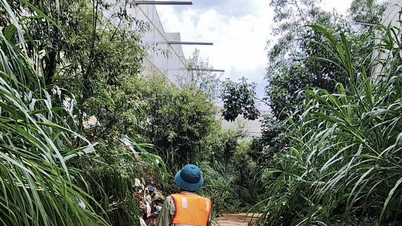
| A peaceful corner at An Ma Farm - Photo: PP |
According to Mr. Cong, previously, due to life pressures, forest trees were cut down and sold after only 4-5 years because people needed quick money. Now, if left to grow for 8-10 years, their value increases many times over. The trend of planting large timber forests is spreading in An Ma. This is considered an important step, helping to increase economic value, while also increasing forest cover and protecting the environment.
Beyond just timber, the people also utilize the forest canopy to develop supplementary economic activities. Beneath the lush green forests, flocks of poultry are raised, and medicinal herb gardens are interspersed. The land surrounding the forest or beneath the 500kV power lines is used to cultivate myrtle, green tea, and other crops. Therefore, income is no longer dependent on a single cycle of complete deforestation.
“An Ma is the only village among the 24 villages and hamlets of Kim Ngan border commune. Besides developing forests sustainably, the local authorities are aiming to develop An Ma into an attractive tourist and service destination. This is because An Ma possesses many favorable conditions: beautiful scenery, convenient transportation, and many unique cultural and historical values. An Ma is located near the tomb of Le Thanh Hau Nguyen Huu Canh, a figure who contributed to the expansion of the southern territories. Not far away is Bang hot spring with a temperature reaching 105°C, a rare feature in Vietnam, along with historical relics along the legendary Ho Chi Minh Trail – the Truong Son Road…”, shared Dang Van Duong, Chairman of the People's Committee of Kim Ngan commune.
A new direction is also emerging in An Ma: combining forest-based economy with experiential tourism. The pine hills, myrtle forests, and vast lake offer the potential for developing eco-farm models. Two years ago, two young engineering sisters left the city to return to their hometown and establish An Ma Farm. Farm owner Nguyen Thi Thuy says this is a clean agriculture model linked to eco-tourism. The farm space unfolds amidst pine forests, grassy hills, myrtle forests, and various flowers, creating a vibrant natural landscape.
Although still under construction, the farm attracted a large number of visitors during the recent Lunar New Year. The farm needs to expand its parking area, add more services, and develop souvenir products to meet the growing demand for unique experiences. Ms. Thuy hopes to expand the model, combining it with the scenic beauty of An Ma Lake to develop eco-tourism.
From the embankment of An Ma Lake, the green color today is not just the color of the forest, but the color of dreams that have taken root. And those who pioneered this land years ago are not just planting trees; they are planting the future on the very land they chose.
Phan Phuong
Source: https://baoquangtri.vn/xa-hoi/202605/am-no-tu-nhung-canh-rung-an-ma-1757c2a/
















































































Comment (0)