

While renowned for its high-end products, Apple is proving its dominance in the budget device market as well, while many competitors are struggling with rising production costs.
One of the company's secret weapons is using chips with minor defects, which would normally be discarded in the normal manufacturing process.
This strategy is clearly demonstrated by the specifications of the recently launched $599 MacBook Neo. According to preliminary data, this is a resounding success for Apple.
The art of 'sorting eggs' in the semiconductor industry.
The MacBook Neo is powered by the A18 Pro chip, the same processor found in the iPhone 16 Pro two years ago, but there's a key difference: the Neo's chip only has five graphics cores (GPU), one less than the version in the 2024 iPhone.
This suggests that Apple has "saved" A18 Pro chips with a faulty core, reusing them instead of destroying them.
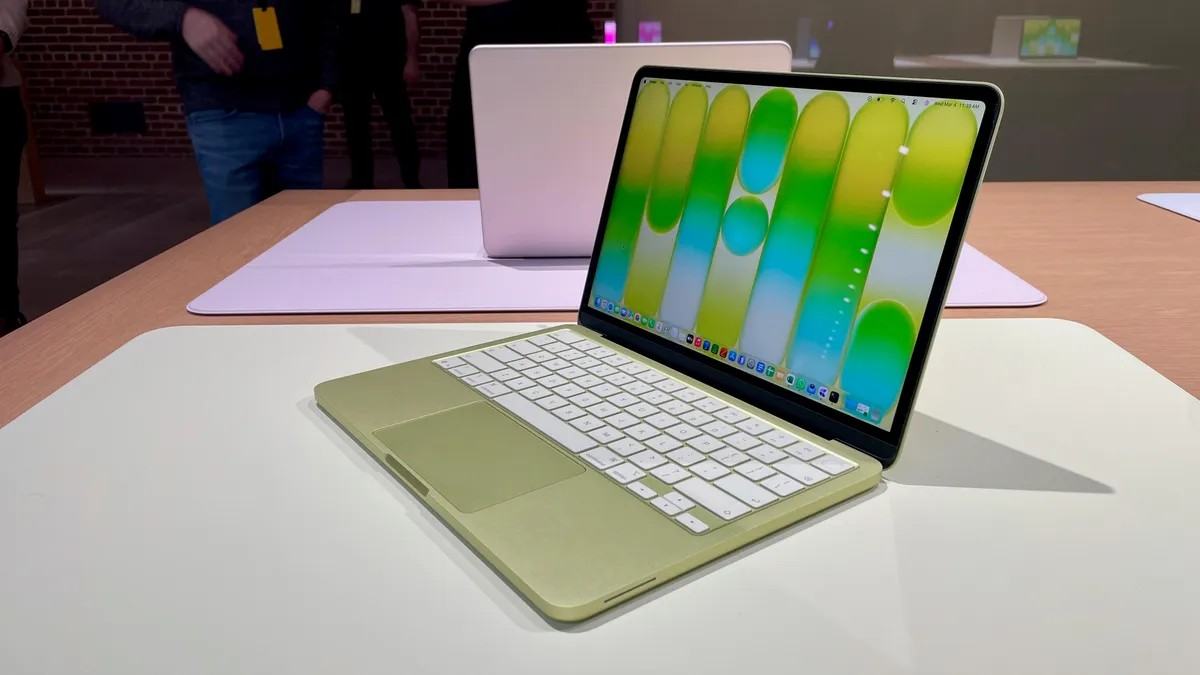
In the semiconductor industry, faulty cores can be disabled, leaving a chip that still works perfectly for lower-demand devices – in this case, a mainstream laptop instead of a top-of-the-line iPhone.
Apple has elevated its decades-old product binning strategy into a business art: dividing products into Fair, Good, and Excellent levels to optimize profitability.
"If you can leverage components that don't meet the highest standards but are still functional, you'll save money, time, and reduce component waste," says supply chain analyst Tim Culpan. "Furthermore, you can reach a huge customer base that you couldn't before."
Apple's flexibility in designing its own silicon has allowed it to develop low-cost iPhones and computers that still sell very well. The Neo line was so popular that Apple used up its chip inventory and was forced to order new production.
Apple is also using price as a weapon to attract new users. The MacBook Neo is cheap enough to "steal" customers from Chromebooks and Windows PCs; while the iPhone 17e, which also uses a chip, is attractive enough to entice Android users.
According to research firms Counterpoint and IDC, while competitors are struggling with soaring memory and storage prices that are making low-cost devices unprofitable, Apple is increasing its market share.
Each new user joining the ecosystem is a potential customer for higher-margin services like iCloud and the App Store.
History of component reuse
An analysis by the Wall Street Journal based on nearly 200 pages of Apple documents reveals that since 2021, the company has sold six lines of A-series chips that had one GPU core removed after the full version was released in high-end iPhones.
With sales exceeding 200 million iPhones annually, even if the percentage of defective chips were only a small fraction, Apple would still have millions of chips to recycle. The iPhone 17e uses a chip that doesn't meet the standards of the iPhone 17; the iPhone Air uses a chip that doesn't meet the requirements of the 17 Pro.
Similarly, the M series chips lacking GPU cores were also included in the cheaper iPad Air line.
This strategy dates back to Apple's first self-designed chip – the A4. The A4 chips, which consumed excessive power (unsuitable for battery-powered smartphones), were incorporated into the second-generation Apple TV (which plugs directly into a power outlet).
The same thing happened with the less efficient S7 chip; instead of being in the Apple Watch, it was moved to the second-generation HomePod speaker.
Although this strategy helped Apple launch its first budget laptop, the overwhelming popularity of the Neo line is creating reverse pressure. The company has used up its supply of low-cost, faulty chips and has had to order new A18 Pro chips to maintain the Neo production line.
However, this is no longer as easy as it used to be. TSMC, Apple's sole supplier of advanced chips, is struggling to meet the enormous demand for AI chips.
"Apple no longer has the flexibility it once did, and tensions are starting to become apparent," commented analyst Ming-Chi Kuo from TF International Securities.
CEO Tim Cook himself has admitted that the company is facing a chip shortage, hindering its ability to meet customer demand, especially for iPhones and more recently, Macs.
Currently, the delivery time for a new MacBook Neo on Apple's website ranges from one to two weeks.
(According to WSJ)
Source: https://vietnamnet.vn/apple-hot-bac-nho-dung-chip-iphone-loi-บน-macbook-neo-2517169.html


































































































Comment (0)