

 |
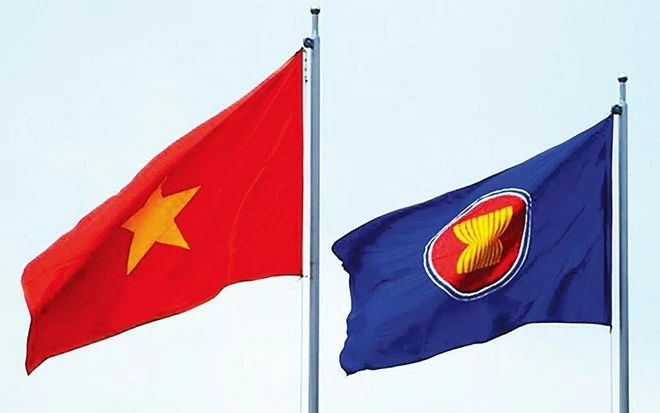
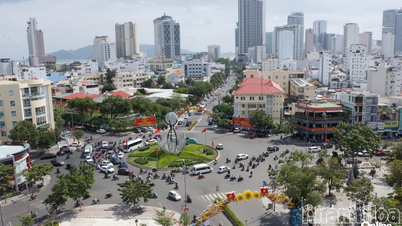
| According to the ADB, the interconnectedness of production and supply chains within ASEAN is helping members like Vietnam increase their resilience to external shocks. (Source: ASEAN Secretariat) |
Against the backdrop of fragmented global trade, reshaped supply chains, and rising geopolitical risks, ASEAN is increasingly becoming an economic space directly linked to Vietnam's growth. And as strategic competition among major economic hubs intensifies, ASEAN is also emerging as a crucial transit region for manufacturing, investment, and market connectivity in Asia.
The World Bank (WB) assesses ASEAN as one of the regions with a high level of intra-regional trade integration, playing a crucial role in maintaining the growth momentum of member economies , including Vietnam. Meanwhile, the Asian Development Bank (ADB) highlights that the interconnected production and supply chains within ASEAN are helping members like Vietnam increase their resilience to external shocks.
However, ASEAN's significance lies not only in its trade volume but also in its increasingly important role in regional supply chains. ASEAN is now among the largest trading partners and a crucial export market for many sectors, from agricultural products and processed foods to electronics and construction materials. Conversely, ASEAN is currently a major and continuously growing source of machinery, equipment, and raw materials.
Essentially, ASEAN operates as an integrated production space where members both cooperate and compete. At the macro level, the region contributes to stable growth, supports a balanced trade balance, and facilitates deeper participation of economies in value chains.
Agreements such as the ASEAN Free Trade Area (AFTA) and the Regional Comprehensive Economic Partnership (RCEP) significantly reduce tariff barriers, but also place businesses in a more direct competitive environment. At the micro level, competitive pressure drives businesses to upgrade their management, improve product quality, and invest in technology.
Thus, the driving force behind ASEAN's increasing importance to Vietnam stems primarily from the trend of restructuring global supply chains, as multinational corporations allocate production within the region. Vietnam benefits from this influx of investment capital, but is also forced to compete directly with other strong members in high value-added stages.
Furthermore, the rapid growth of the ASEAN middle class is creating a large-scale consumer market, opening up export opportunities but simultaneously demanding higher standards of quality and branding.
Finally, in the context of a volatile global economy, ASEAN is increasingly playing the role of a stable "buffer zone," recognized by the ADB and WB as a new supply chain integration hub, helping members like Vietnam maintain export growth and diversify risks when major markets fluctuate.
However, what is important for Vietnam is not only expanding trade within ASEAN, but also the ability to participate more deeply in regional value chains, improve the quality of growth, and increase resilience to increasingly unpredictable global fluctuations.
The support of leaders at the 48th ASEAN Summit (May 7-8) for intra-ASEAN cooperation priorities and the message "Together We Steer Our Shared Future" further reflects the determination to realize the goals set out in the ASEAN Community Vision 2045 - building a united, resilient, innovative, people-centered, and sustainable ASEAN in the face of external changes.
Source: https://baoquocte.vn/asean-khong-chi-la-thi-truong-lan-can-392777.html































































































Comment (0)