

In forest ecosystems, plant health depends on many factors, including pests, anthropogenic organisms, and soil microorganisms. Improving forest health means controlling all of these factors.
To establish a biosafety network, the Project on Building Biosafety Networks and Forest Health Care in Southeast Asia (FST/2020/123), funded by ACIAR, hosted by the University of Sydney (Australia), and implemented from 2022 in six Southeast Asian countries: Laos, Cambodia, Indonesia, Malaysia, Thailand, and Vietnam. In Vietnam, the Forest Protection Research Center (FPRC) is the main implementing unit.
According to FPRC Director, Associate Professor, Dr. Dao Ngoc Quang, the research team selected three areas at risk of alien invasion to set traps first, specifically: A warehouse at Noi Bai airport; a large timber gathering area near Dinh Vu port ( Hai Phong ); and a border forest in Na Hinh (Lang Son). In particular, focusing on three main groups of species: Hair-cutting insects; Insects belonging to the bark beetle family; Fungus-carrying beetles - that is, species that both damage wood and carry fungi that weaken forest trees.
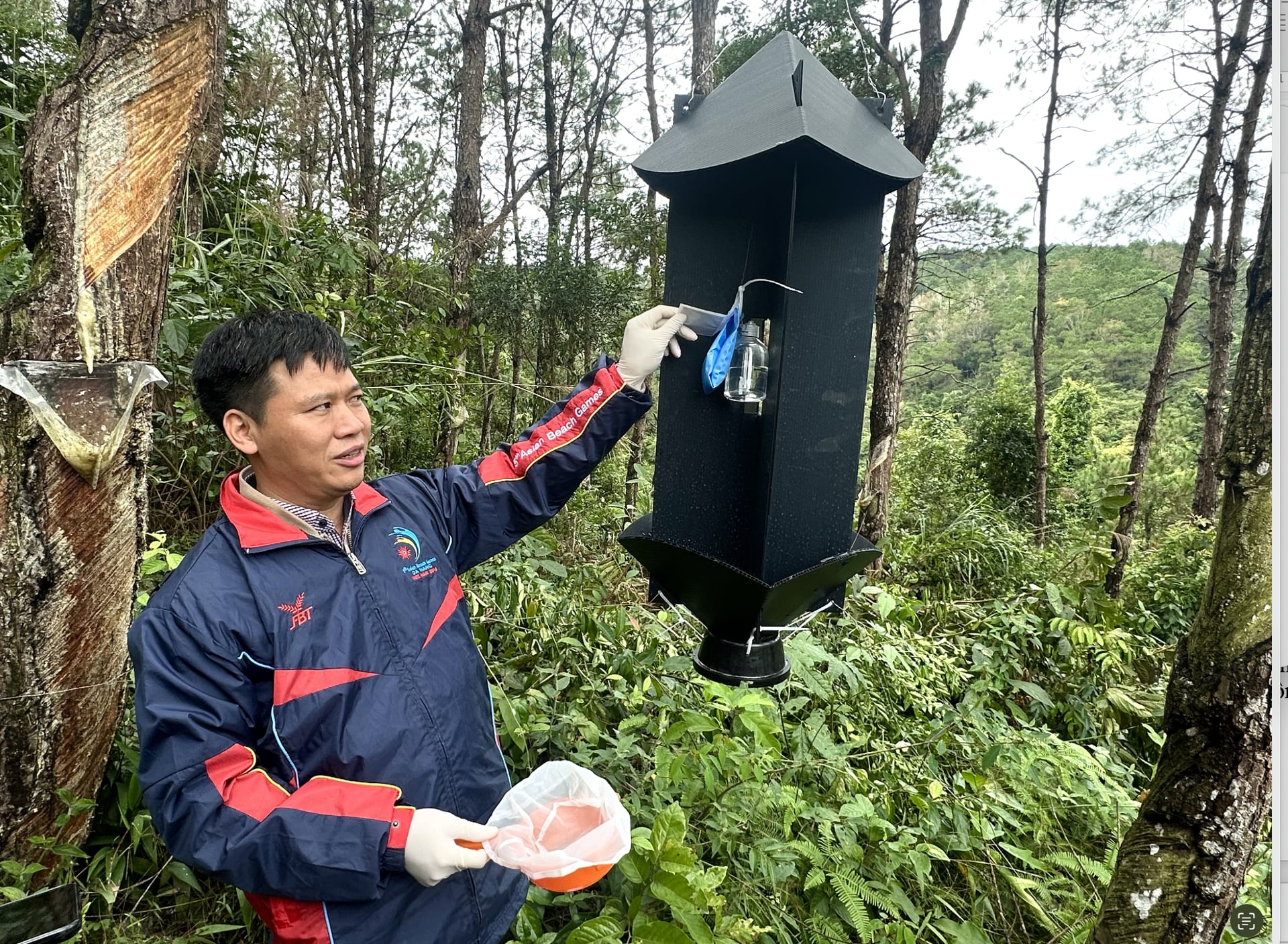
The bait traps provided by Project FST/2020/123 are low-cost but highly effective, especially attracting beetles. Photo: Phuong Linh.
After trapping and collecting samples, scientists began to classify and identify. This is a key step, because only by correctly identifying each species can we distinguish between native species and new species that have invaded in recent years.
"For common species, identification based on morphological characteristics is quite quick. However, with strange specimens or those belonging to groups suspected of being exotic, we sometimes have to do microscopic dissection to determine. If we still cannot conclude, we are forced to use DNA analysis. Initial assessments show that some new species have appeared, but more time is needed for accurate identification.
In cases where data is already available, we will compare it with international studies to shorten the analysis time. The final result of the project is a complete list of collected samples, along with a preliminary assessment of newly introduced species and species at risk of becoming invasive alien species. For high-risk species, the team will continue to study their biological characteristics, level of harm and potential spread, and at the same time, propose policy recommendations to management agencies," said Associate Professor Dr. Quang.
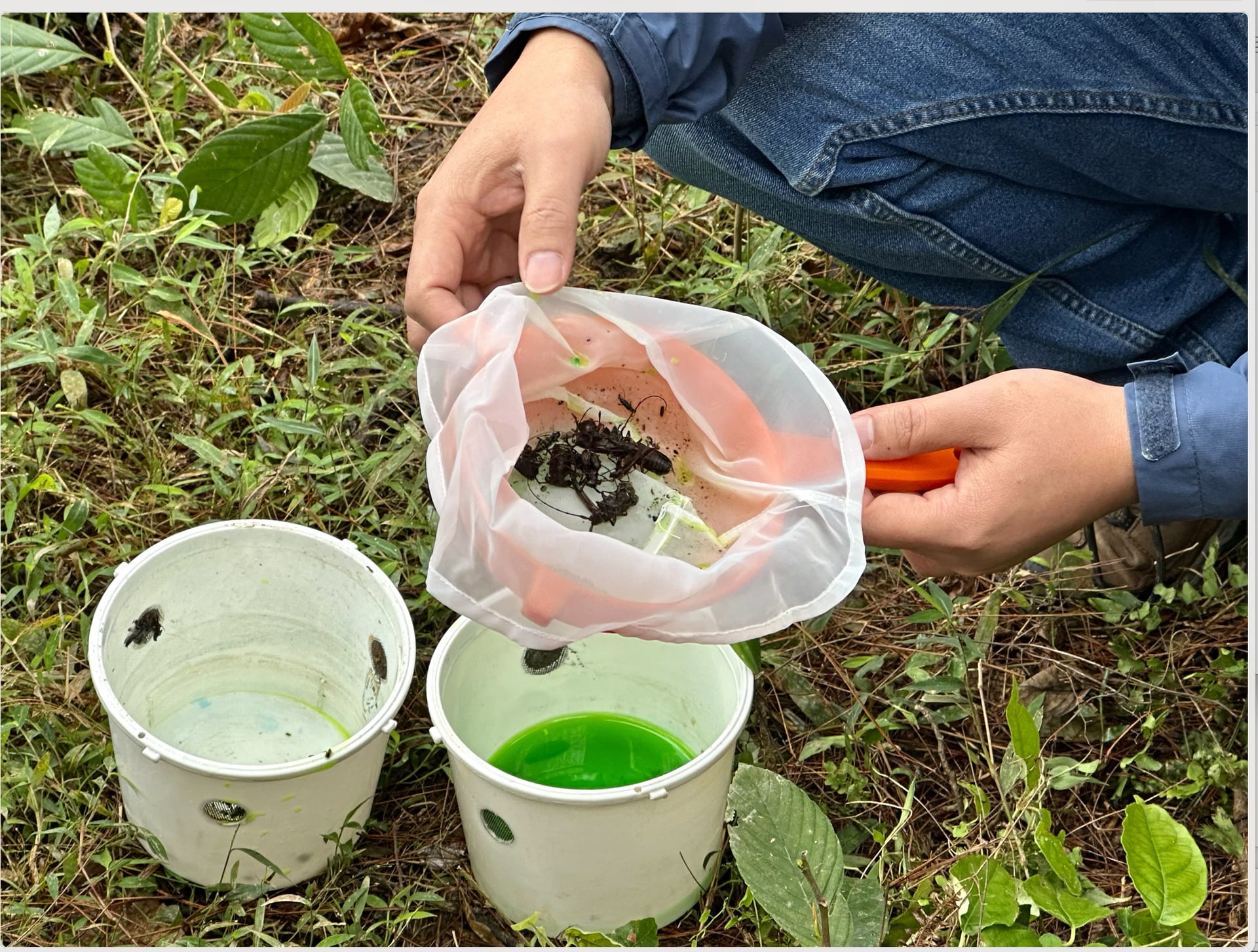
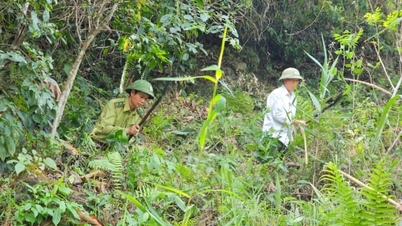
Local officials check traps, collect samples, put them in zip bags and store them in the freezer before sending them to the lab. Photo: Phuong Linh.
According to Project Officer Nguyen Manh Ha, Australia funded the entire sampling system, while the bait and traps were provided by the Project. The bait set, including alcohol, alpha-pinene from rosin, and synthetic baits, was shipped from Australia.
The project focuses on borers and beetles – species that are likely to be introduced in the timber trade. The bait provided by the project is low cost but highly effective, and is particularly attractive to beetles; other species may also be attracted depending on their biology.
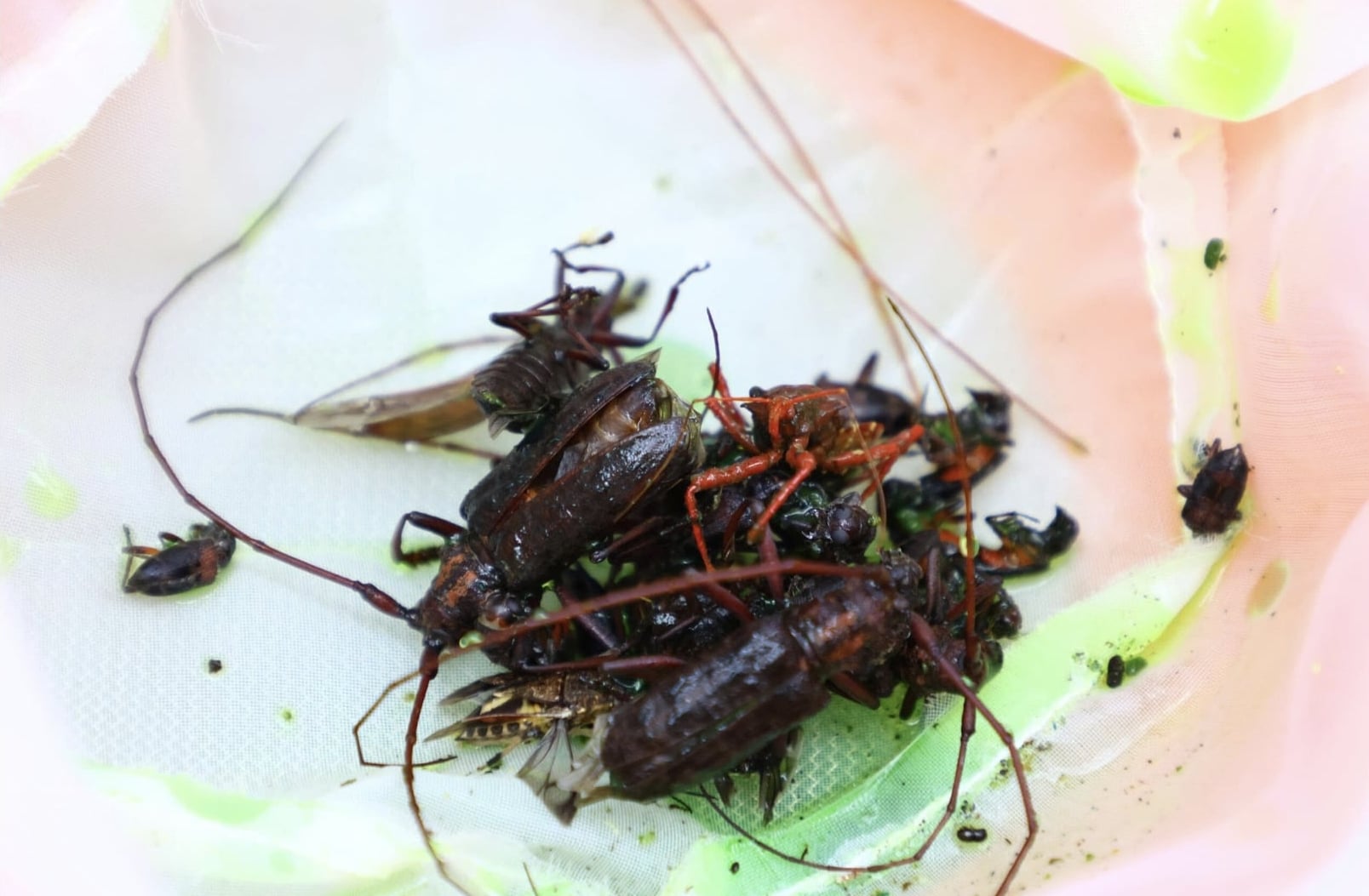
Large specimens such as hair clippers can be classified directly, while small beetles must be observed under a microscope for morphological analysis. Photo: Dat Thanh.
"Monitoring is carried out periodically every 7-10 days. After receiving, the samples are frozen to preserve the color and wing patterns, then completely dried before being examined. The number of traps varies according to the season, about 6-8 traps in the cold season and 16-24 traps in the peak season, with a minimum distance of 50m between traps to avoid scent interference. Each trap is replaced after 4-5 harvests (about 1-2 months) because dirt reduces the effectiveness of attraction.
Large samples such as hair clippers can be classified directly, while small beetles must be observed under a microscope for morphological analysis. For difficult samples, the team will take photos and send them to Australian experts for identification support; in cases requiring in-depth analysis, DNA will be extracted to determine the species and compared with the catalog to detect the risk of alien invasion," he said.
Over the past three years, the project has collected about 3,000 insect samples, classified into about 50 morphological groups and identified about 40 species, including species that may be new. Although trapping has only been deployed in the Lang Son border forest area in the past year, the number of samples collected here accounts for nearly half of the total number of three monitoring points, showing that this is a "hot spot" for the risk of alien species invasion.
According to Australian Ambassador to Vietnam Gillian Bird, through the Southeast Asia Forest Biosafety and Health Network Project, Vietnamese scientists have provided scientific evidence to help protect the economic value and health of planted forests against the risk of invasion by alien species.
"We are pleased that the Project contributes to the formation of a regional forest biosafety network, where Vietnamese experts share research and support capacity building for colleagues in Cambodia, Laos, Thailand, Malaysia and Indonesia," the Ambassador shared.
Source: https://nongnghiepmoitruong.vn/australia--viet-nam-phoi-hop-ngan-chan-sinh-vat-ngoai-lai-xam-hai-d787735.html

![[Photo] Parade to celebrate the 50th anniversary of Laos' National Day](/_next/image?url=https%3A%2F%2Fvphoto.vietnam.vn%2Fthumb%2F1200x675%2Fvietnam%2Fresource%2FIMAGE%2F2025%2F12%2F02%2F1764691918289_ndo_br_0-jpg.webp&w=3840&q=75)
![[Photo] Worshiping the Tuyet Son statue - a nearly 400-year-old treasure at Keo Pagoda](/_next/image?url=https%3A%2F%2Fvphoto.vietnam.vn%2Fthumb%2F1200x675%2Fvietnam%2Fresource%2FIMAGE%2F2025%2F12%2F02%2F1764679323086_ndo_br_tempimageomw0hi-4884-jpg.webp&w=3840&q=75)


































































Comment (0)