

Some people who exercise excessively may silently develop "athlete's heart"—a condition where the heart's structure is altered by prolonged, high-intensity training.
Dr. Ruchit Shah, a cardiologist at Saifee Hospital (India), explains why and what happens to the heart when exercising excessively.

Athlete's heart syndrome is generally a physiological adaptation rather than a dangerous condition. It does not cause serious problems in healthy individuals.
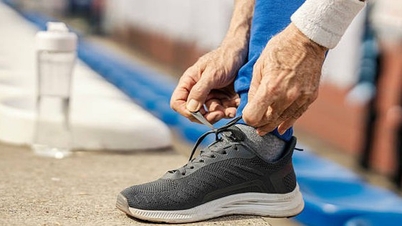
Illustration: PH created from Gemini
What is "athlete's heart syndrome"?
Ruchit Shah stated that this condition occurs in competitive athletes, particularly those in the top 1-2%. Just as skeletal muscles grow larger through regular training and gym workouts, the heart muscle can also adapt to prolonged exertion, leading to structural changes within the heart, according to the Hindustan Times.
How does an athlete's heart develop?
Dr. Shah explained: It's mainly due to the intensity, duration, and consistency of the training. Excessive exercise for more than 60 minutes a day, most days of the week, over an extended period, significantly increases the body's oxygen demand and blood supply, especially in professional athletes following rigorous training schedules.
Dr. Shah explained: To meet this increased demand, the heart muscle undergoes an adaptation process and becomes thicker over time. As the heart muscle thickens, especially the left ventricular muscle, the size of the left ventricular cavity slightly decreases. Consequently, the amount of blood filling the left ventricle also slightly decreases.
Is it harmful?
The structural changes in the heart may initially sound alarming. However, this syndrome is generally considered a physiological adaptation rather than a dangerous condition. It does not cause serious problems in healthy individuals. Therefore, not all changes necessarily lead to heart disease.
How can you tell if you have an "athlete's heart"?
One of the most common signs is a low resting heart rate, often referred to as "adaptive heart rate." Dr. Shah explains: This happens because the heart becomes more efficient due to continuous exercise. In most cases, people with an "athlete's heart" don't experience dangerous symptoms or warning signs. And when high-intensity exercise stops, the heart will gradually return to its normal size and function within 3-6 months. However, in about 20% of cases, these changes may not disappear completely.
In particular, it can sometimes cause heart disease – obstructive hypertrophic cardiomyopathy. Therefore, athletes who show changes in their heart during electrocardiograms or imaging need to be carefully evaluated for any potential underlying conditions, according to the Hindustan Times.
Source: https://thanhnien.vn/bac-si-tap-the-duc-qua-muc-co-lam-to-tim-185260524180903004.htm




































































































Comment (0)