


According to the assessment of the Department of Cultural Heritage (Ministry of Culture, Sports and Tourism), in recent years, digital transformation in the cultural field, especially heritage, has been placed within a strategic direction. The promulgation of the Program for Digitizing Vietnamese Cultural Heritage for the period 2021-2030, with the goal of comprehensive digitization, has created a significant impetus.
Digital transformation is a mission.
Notably, Government Decree No. 308/2025/ND-CP continues to emphasize the need to accelerate the digitalization of heritage, viewing it as one of the key solutions to adapt to the new context. From this point on, digital transformation is no longer just a encouraged trend, but has become a task linked to the responsibility of each agency and unit.
The period 2021–2025 has seen important initial results, laying the foundation for further implementation. The Ministry of Culture, Sports and Tourism has completed scanning 4.3 million pages of documents (100%) of scientific records on ranking, registering, and recognizing heritage sites from 1962 to the present.
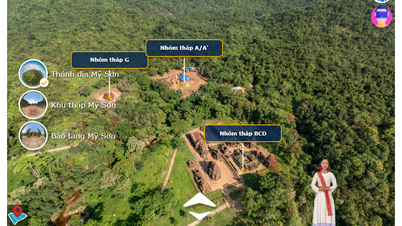
Simultaneously, 3D digitization and 360-degree panoramas have been implemented for several special national monuments such as Keo Pagoda, Banh It Tower, Minh Mang Mausoleum, and 100 national treasures. Heritage management information systems and digital maps are also being gradually connected under the project "Building a platform and database for managing, protecting, and promoting the value of cultural heritage."
Locally, 29 out of 34 provinces and cities have implemented digitalization with diverse approaches. Notable examples include Bac Ninh, which has digitized over 120 historical sites and more than 50,000 image and video data points; developed 360-degree tour guides; recorded and archived nearly 70 festivals and 50 Quan Ho folk songs; and digitized over 3,000 ancient documents.
In Hue, 360-degree technology has been applied to digitize the spaces of the Imperial Citadel, Thai Hoa Palace, and Hai Van Pass; 207 ancient artifacts have been digitized in 3D; more than 452,000 pages of Han-Nom documents and 30 typical festivals have been stored digitally. In particular, the application of BIM technology in monument restoration has opened up a new approach to conservation.
Quang Ninh province has also digitized 142 out of 165 historical sites, built 360-degree spaces for 17 sites, integrated more than 550 3D artifacts on a digital museum platform; synchronized thousands of documents and artifacts, and deployed a digital exhibition system and VR360 virtual museum.
In Dong Nai, more than 2,600 records and nearly 2,700 artifacts have been digitized; 5 sets of national treasures have been recreated in 3D; many historical sites have been equipped with VR experiences; tens of thousands of pages of documents and nearly 100 documentary films have been stored digitally.
Ninh Binh, Dong Thap, Ha Tinh… are also gradually building databases, applying GIS, VR, AI chatbots, and digitizing tens of thousands of pages of documents and artifacts. These figures not only reflect the scale of implementation but also show a reality: Digitizing heritage is no longer an isolated story, but is gradually becoming a widespread trend.

Digitizing heritage is not just a technology story.
In reality, at many historical sites, technology has become an effective bridge between heritage and the public. According to Mr. Le Xuan Kieu, Director of the Cultural and Scientific Activities Center of Van Mieu - Quoc Tu Giám, the digital transformation process does not happen easily, but requires continuous experimentation and adjustment.
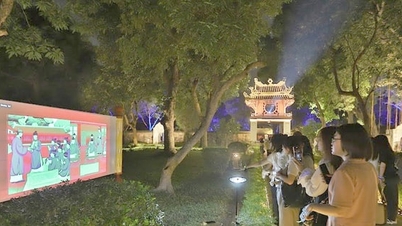
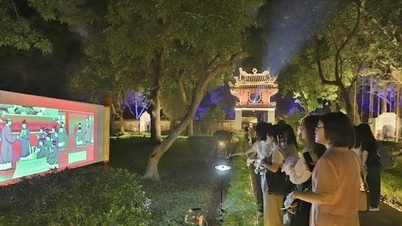
However, the results are clear. Products such as night tours, 3D projections, and automated audio guides not only refresh the approach to heritage sites but also significantly increase visitor numbers. At times, programs had to be organized with multiple shows each evening to meet the growing public demand.
Not only in the field of historical sites, but also in museums and archives, significant transformations are taking place. Many digital exhibition spaces and online exhibitions are being developed, allowing the public to access heritage without geographical or time constraints. With just an internet-connected device, users can "travel" through virtual spaces, observe artifacts in 3D models, and even interact directly with integrated information layers.
Virtual reality (VR) and augmented reality (AR) technologies have helped transform traditionally one-dimensional experiences into more immersive, engaging, and multi-sensory journeys of discovery. Notably, digitalization extends beyond simply enhancing experiences; it also plays a crucial role in heritage preservation.
Many rare and valuable documents such as woodblock prints, official documents, royal decrees, ancient maps, and documentary films have been digitized with high accuracy. For intangible heritage, which is easily lost over time, recording and storing it in digital form is especially significant, contributing to "preserving" cultural values for future generations...
However, according to Dr. Le Thi Minh Ly, Vice President of the Vietnam Cultural Heritage Association, digitizing heritage is not simply a matter of technology. It is an interdisciplinary process requiring the participation of researchers, museum experts, designers, technical staff, and even educators and media professionals. Only when these elements are closely combined can the digitized product ensure both scientific value and attractiveness, meeting the diverse needs of the public.
Associate Professor Dr. Dang Van Bai, Vice Chairman of the National Council for Cultural Heritage, also highly appreciated the effectiveness of digital transformation. According to him, technology not only helps preserve heritage but also expands the potential for disseminating cultural values.
While previously, access to heritage was primarily local, now, through the digital environment, heritage can "travel further," reaching a wider audience both domestically and internationally without incurring significant costs. This contributes to making Vietnamese culture an important soft resource in the context of globalization.
However, Mr. Bai also noted that behind the bright spots, the picture of digital transformation in heritage still has many gaps. Uneven development among localities is a readily apparent reality.
While some areas have implemented digitalization vigorously, creating many innovative products, in many other localities, digitalization remains at a basic level, mainly focusing on data creation. Many projects are still fragmented and lack connectivity, leading to dispersion and difficulty in effective exploitation.
Furthermore, the transformation of digital data into products serving the public has not received adequate attention in some areas. Differences in technical infrastructure, resources, and implementation capacity also create a significant gap between localities. "If we only chase after technology without content and storytelling, the results will not be high," said Associate Professor Dr. Dang Van Bai.
Besides the opportunities, the process of digitizing heritage also demands a more systematic, synchronized, and sustainable approach. How can we ensure that models don't stop at isolated successes? How can data be connected, shared, and effectively utilized? And how can technology truly become a tool to serve heritage, rather than just a superficial facade? These are also challenges that need to be addressed as the goal extends beyond simply "awakening" heritage, aiming to build a sustainable digital heritage ecosystem.
( To be continued )
Source: https://baovanhoa.vn/van-hoa/bai-2-neu-chi-chay-theo-cong-nghe-225913.html
























































































Comment (0)