

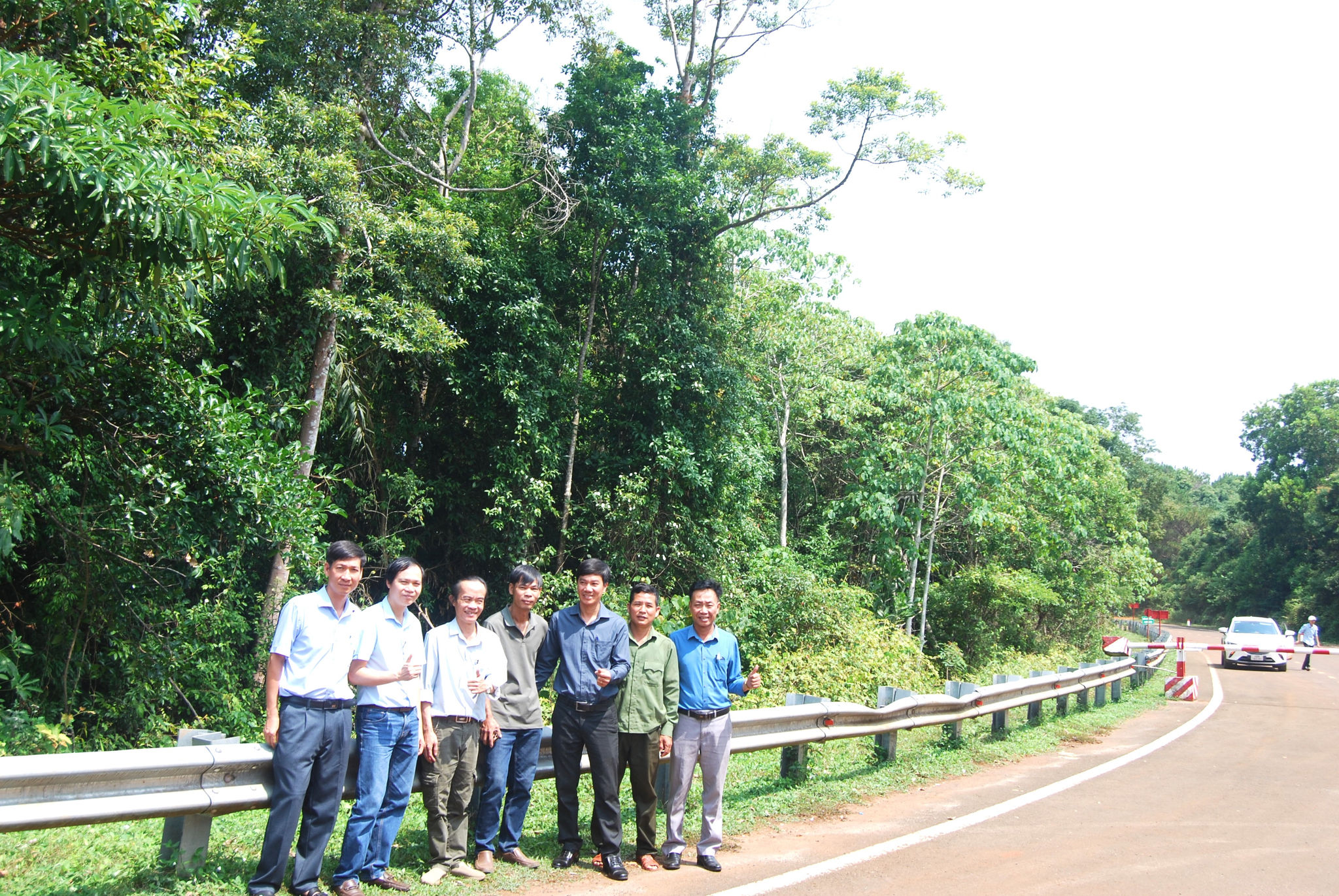
Absorb and store massive amounts of carbon dioxide.
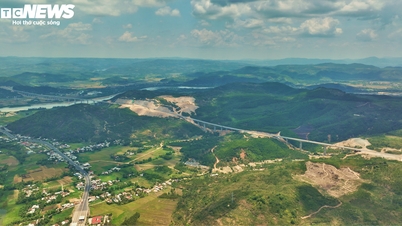
A survey of the border forest belt area in Lam Dong province shows that it currently manages and protects over 16,208 hectares, including nearly 14,955 hectares of forested land and over 1,254.2 hectares of non-forested land; distributed across 25 sub-areas in 5 communes: Dak Wil, Thuan An, Thuan Hanh, Tuy Duc, and Quang Truc. Of this, 16,114 hectares are protection forests, over 18.3 hectares are production forests; and nearly 75.5 hectares are outside the planned forest classification.
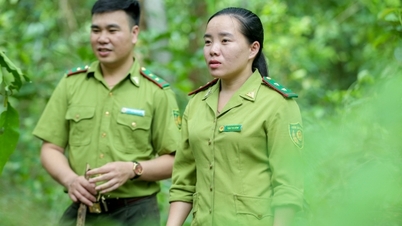
Mr. Do Thanh Tam, Deputy Head of the Provincial Border Protection Forest Management Board, stated that the total area of forest managed and protected by 5 forest management and protection teams is over 14,024 hectares; the area contracted to 11 communities with 166 households for forest management and protection is nearly 930 hectares. The area providing forest environmental services is over 10,411 hectares, corresponding to a total revenue of over 6 billion VND in the past year. In addition, on a total area of approximately 1,200 hectares of agricultural land that has existed for a long time, the board has been encouraging farmers to intercrop and green the area with multi-purpose trees such as macadamia, durian, avocado, and longan; and annually organizes farmers to sign commitments not to destroy the forest.
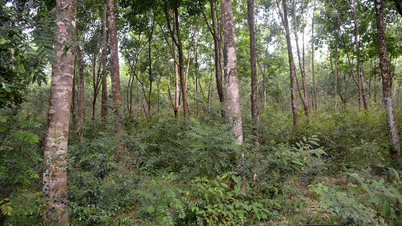
“Besides mobilization and propaganda efforts combined with regular patrols, staying close to the forest and assigning responsibility for forest protection to each team, group, and individual; proactively developing forest fire prevention and control plans suitable for each planted forest, evergreen broadleaf forest, and dipterocarp forest. As a result, to date, no violations of the law have occurred throughout the forest area under the management of the board, and the forest cover rate is estimated at over 92%…,” Mr. Do Thanh Tam said.
According to the Ministry of Agriculture and Environment , the total area of natural and planted forests nationwide is 14,971,553 hectares, achieving a forest cover rate of over 42.03%. The province alone has 1,128,884 hectares of natural and planted forests, with a forest cover rate of 45.91%. This is considered a "green gold mine" absorbing and storing a huge amount of carbon dioxide, including over 16,208 hectares of forest under the management of the Border Protection Forest Management Board of the aforementioned province.
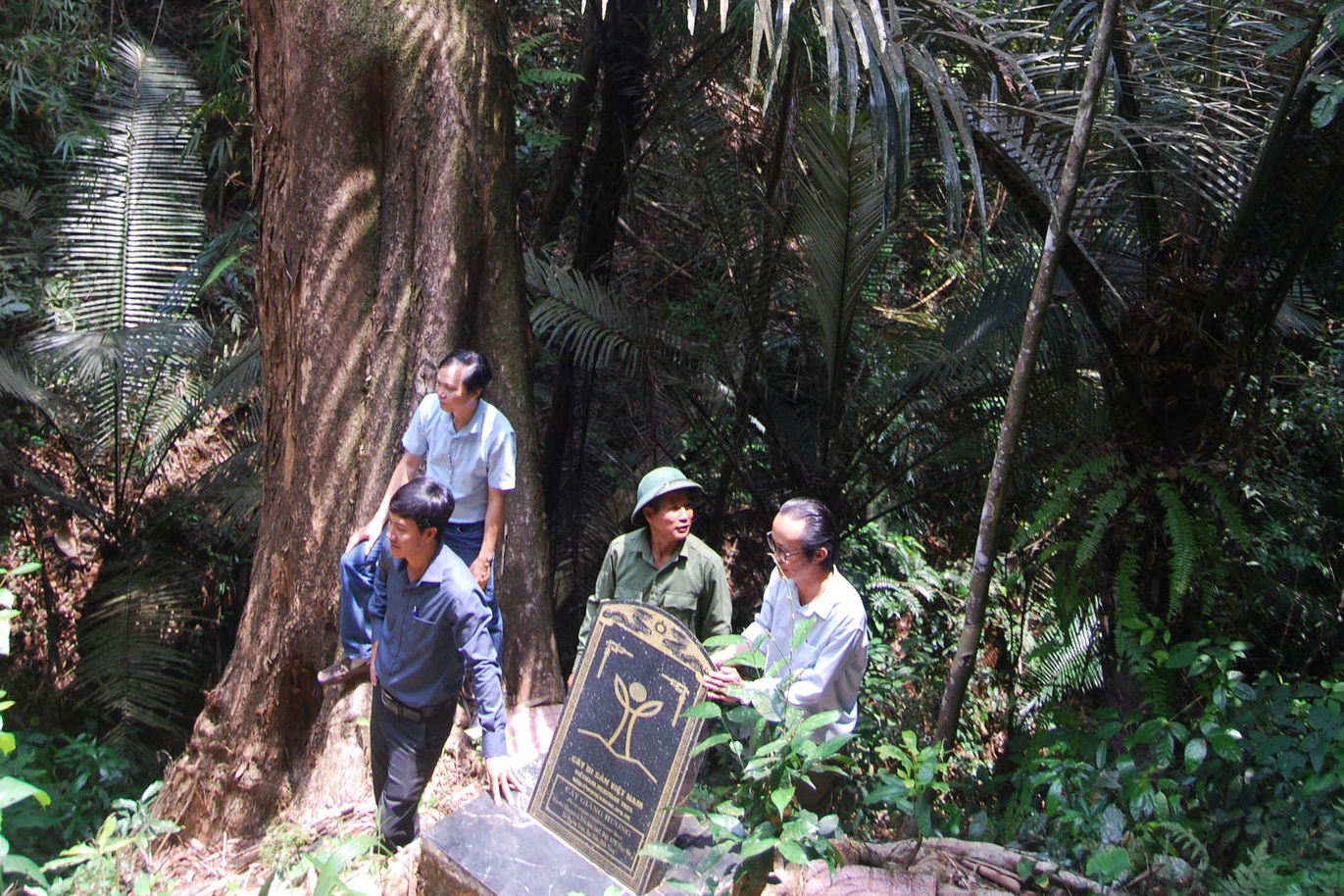
Specialty goods from the forest
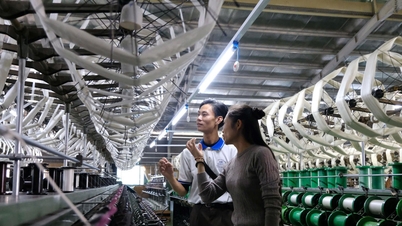
Expert Tran Ngoc Toan, a member of the Scientific Council of the Vietnam Union of Silk and Ecotourism Associations, analyzed: “Through photosynthesis, forests absorb and store carbon in their trunks, foliage, and soil, becoming a special commodity. The carbon market operates on the principle that high emitters pay low emitters or absorbers. Businesses and international organizations purchase carbon credits to fulfill their commitment to offset greenhouse gas emissions.”
It is known that in recent years, through the REDD+ program in Vietnam in general and the province in particular, agreements have been signed to transfer millions of tons of carbon emissions reductions from forests to international partners, generating significant revenue. This pilot project is intended to help Lam Dong and the whole country officially participate in the global carbon credit market, which is expected to be operational in 2028.
Dr. Nguyen Cong Truong, Head of the Faculty of Agriculture, Forestry and Fisheries at Nghe An University, said that research has identified ecological zones in the province where approximately 100,000 hectares of bamboo forests can be planted and developed to increase the supply of this "green gold mine" for air purification. "Bamboo grows and expands its green cover very quickly in Lam Dong province, not only for its function of soil retention and erosion control, creating a continuous and enormous biomass, but also for its strong carbon absorption capacity, the strongest among other agricultural and forestry plants in the area..."
According to Dr. Nguyen Cong Truong, the process from fields and forests to the carbon credit exchange platform involves seven steps: defining plot boundaries, selecting low-emission or carbon-absorbing crops, preparing design documents, monitoring biomass, conducting appraisal and cross-checking, the Ministry of Agriculture and Environment approving the dossier and issuing a decision to grant a credit code, and opening an account to register for selling carbon credits on the national exchange platform.
Source: https://baolamdong.vn/bai-2-tiem-nang-lon-tu-mo-vang-xanh-439843.html





















































































Comment (0)