REMOVING BOOSTER POINTS IN CULTURAL DEVELOPMENT
Delegate Tran Van Khai ( Ninh Binh ) pointed out three "bottlenecks" hindering cultural development that need to be addressed immediately: the modest proportion of budget allocated to technology infrastructure in the cultural sector, a shortage of digital human resources, and limited investment resources from the budget.
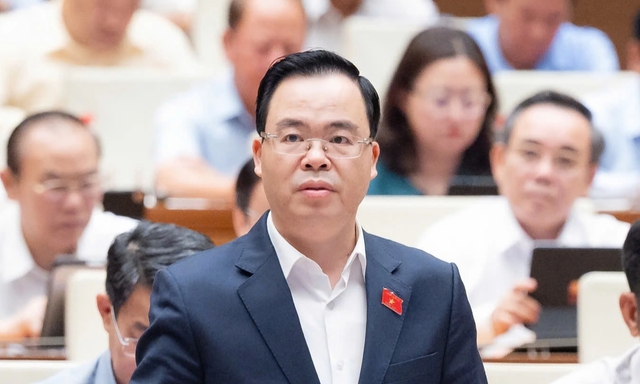
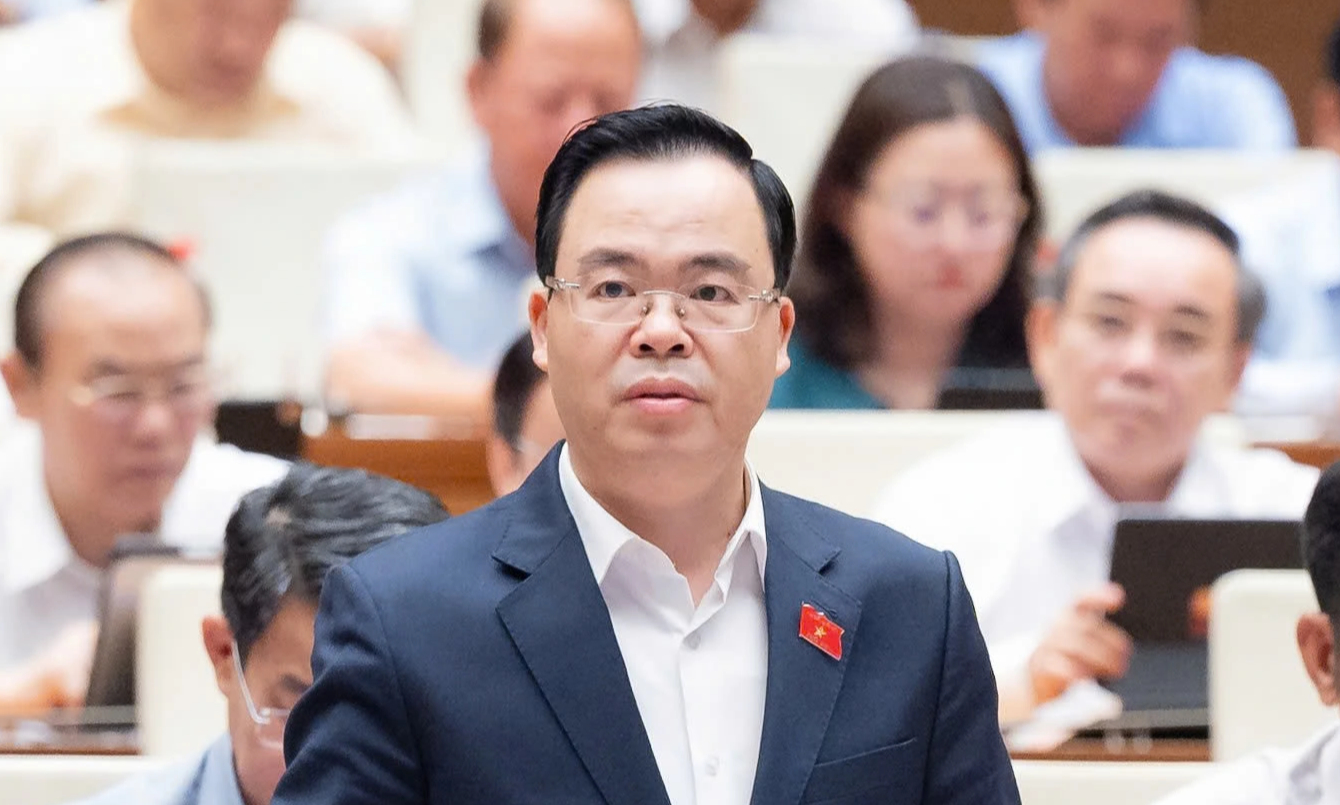
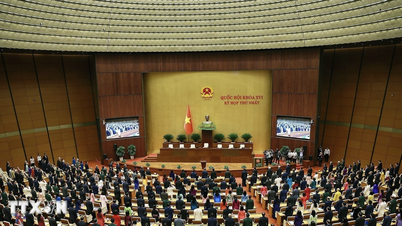
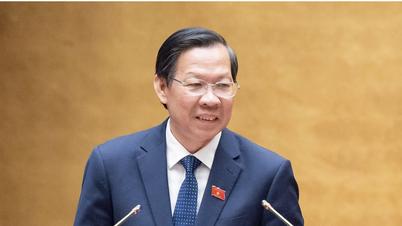
Representative Tran Van Khai delivered a speech in the assembly hall on the morning of April 22.
PHOTO: GIA HAN
Among the delegates' proposals, a notable one is the amendment to Article 3 of the draft resolution, which, in addition to ensuring a minimum of 2% of the total state budget expenditure on culture, should clearly stipulate the priority allocation of medium-term public investment plans and annual budget estimates for digital transformation of culture, national cultural data infrastructure, digitization of ranked heritage, long-term digital preservation, and digital cultural security.
Furthermore, it is necessary to design a truly effective cultural and arts fund that can lead to innovation, investing in cultural technology startups, digital content platforms, and digital preservation models. However, it must have a very strict and transparent fund management mechanism to prevent "turning a sound policy into a risky institution."
According to Representative Khai, the draft resolution of the National Assembly must "design an implementation mechanism"; in which three mandatory focuses are sufficient financial resources, sufficiently skilled digital human resources, and a sufficiently synchronized data infrastructure - platform - and digital cultural security.
Representative Ca Thi Tham (Lai Chau) proposed adding to Article 7 a mechanism for a special monthly professional allowance for those holding the titles of Meritorious Artist and People's Artist, ensuring stable and independent benefits even after retirement. In addition, there should be a principle of equality in evaluating and utilizing talent in public service units in the fields of culture and sports , using awards and professional competence as the main criteria for recruitment and employment.
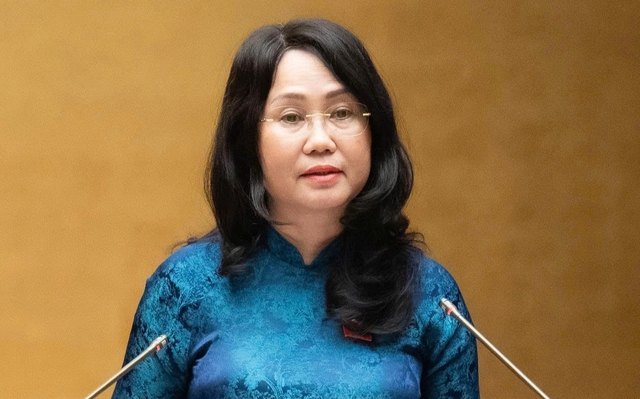
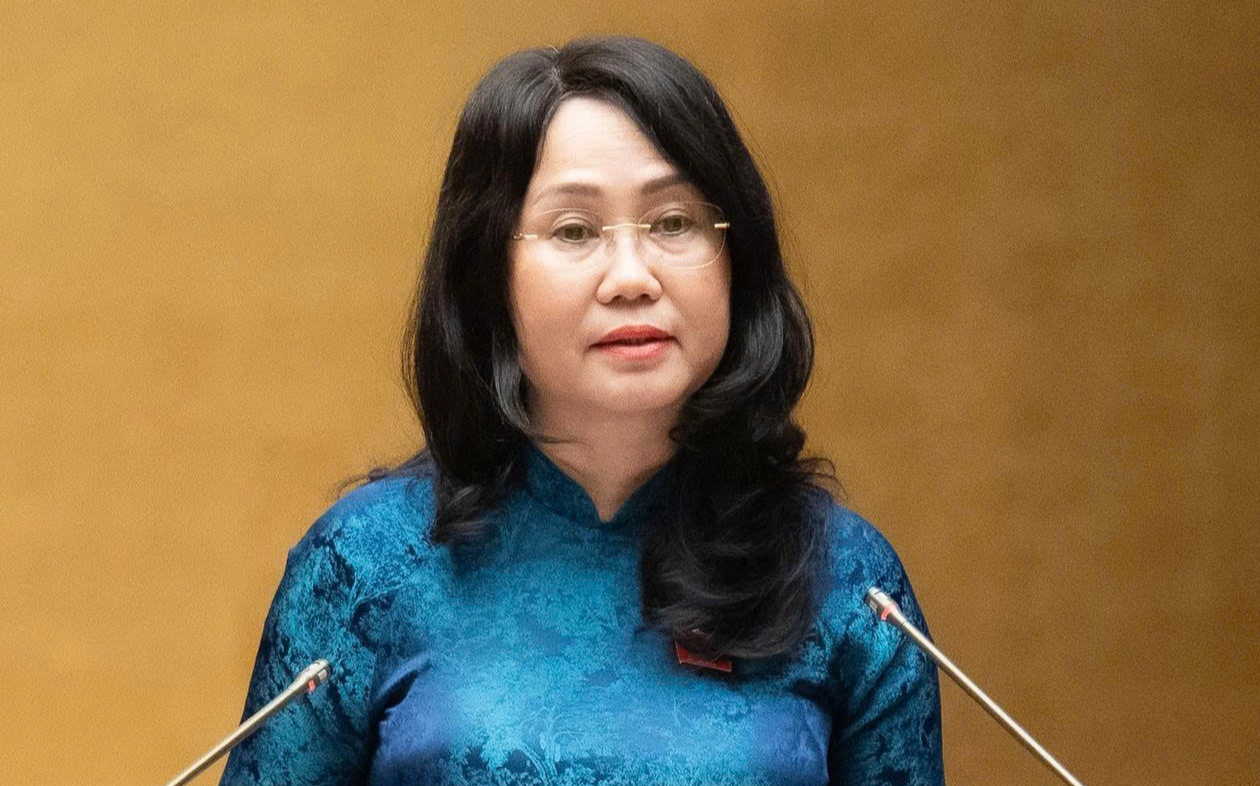
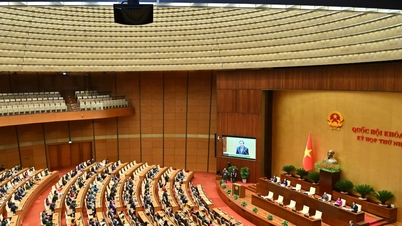
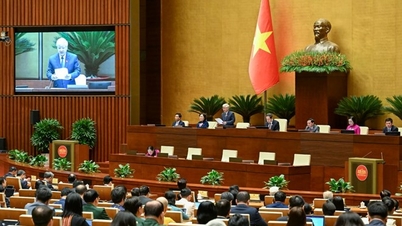
Minister of Culture, Sports and Tourism Lam Thi Phuong Thanh gave an explanation on the morning of April 22.
PHOTO: GIA HAN
Representative Do Duc Hong Ha (Hanoi) agreed that November 24th, the annual Vietnamese Culture Day , should be a paid public holiday. He also proposed that instead of limiting fee reductions to public institutions, the resolution should include a mechanism to encourage private cultural and entertainment establishments to participate in the price reduction campaign, thereby creating a nationwide festival to stimulate the cultural industry.
MINIMUM ANNUAL BUDGET EXPENDITURE OF 2%
Responding to some of the issues raised by the National Assembly deputies, Minister of Culture, Sports and Tourism Lam Thi Phuong Thanh emphasized that the draft resolution of the National Assembly aims to focus on resolving two major issues: removing bottlenecks, difficulties, and obstacles in cultural development ; and mobilizing and effectively utilizing all resources for cultural development. Policies that are clear, mature, feasible, and have high consensus should be regulated immediately; at the same time, she proposed that the Government be tasked with providing detailed regulations on issues requiring flexibility and new issues that need to be piloted through specific policies.
Specifically, the draft clearly defines the resources for cultural development as including annual state budget allocations, ensuring a minimum of 2% of total budget expenditure, and the mobilization of social resources. The Ministry of Culture, Sports and Tourism is coordinating with the Ministry of Finance and other agencies and localities to clearly define the structure of the aforementioned 2%, ensuring that spending on culture is targeted and prioritized.
Regarding Vietnam Culture Day, Minister Lam Thi Phuong Thanh stated that the purpose of this regulation is to care for and ensure that people have access to and participate in enjoying culture; and at the same time, to enhance the cultural appreciation abilities of the people, especially young people.
Besides the regulation stipulating that public cultural and entertainment units will waive or reduce fees for the public on Vietnam Culture Day, some delegates proposed additional mechanisms to encourage private establishments to participate. The Minister stated that this suggestion would be noted and considered. Regarding the Arts and Culture Fund, Ms. Thanh said that the fund's establishment is primarily aimed at mobilizing social resources. The state budget mainly plays the role of "seed capital" to encourage private contributions. The government has added to the draft a proposal to pilot the establishment of this fund under a public-private partnership model, as a venture capital fund operating on market principles, accepting potential risks, and ensuring transparency and openness.
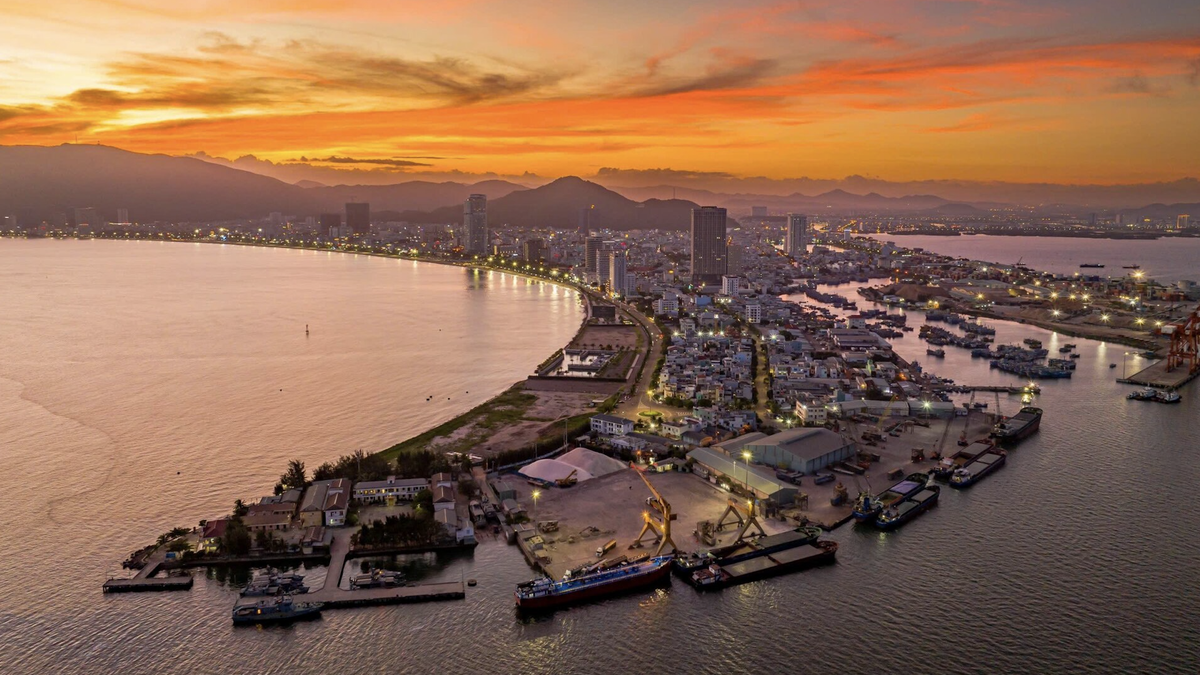
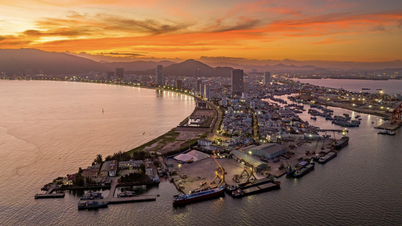
Providing mechanisms to enable Dong Nai City to achieve breakthroughs.
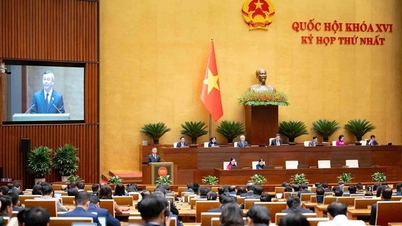
Earlier that morning, during discussions in the assembly hall, all delegates expressed support for the draft resolution establishing Dong Nai City.
The issue receiving attention is what mechanisms Dong Nai will be given after becoming a city to enable it to break through and "not hold itself back." Representative Nguyen Thi Suu (Hue City) proposed three key mechanisms for Dong Nai. First, mandatory and effective regional linkages, with Dong Nai playing the role of an industrial logistics center, Ho Chi Minh City as a financial and technology center, and other localities participating in the value chain. Second, greater financial autonomy; a city the size of Dong Nai, if still under the usual decentralization mechanism, will not be able to break through, be proactive in public investment, and mobilize social resources. Third, strict control over the quality of development.
Representative Nguyen Minh Tam (Quang Tri) suggested that Dong Nai needs a specific planning framework to avoid urban fragmentation and transform old industrial zones like Bien Hoa 1 Industrial Park into modern innovation centers and compact urban areas. Furthermore, Dong Nai's planning must integrate strong regional linkages, ensuring synchronized transportation infrastructure, logistics, and economic zones. Priority should be given to allocating budget for radial and ring roads directly connecting industrial zones with Long Thanh Airport and Cai Mep - Thi Vai Port to reduce logistics costs, which are currently a bottleneck.
The female delegate also suggested that the Government direct localities to develop a roadmap and make specific commitments to address urban standards that are currently low or lacking, especially the rate of domestic wastewater treatment and the area of public green spaces. "We cannot accept a centrally-governed city with modern economic infrastructure but lacking adequate environmental and social welfare standards," Delegate Tâm stated.
Responding to the opinions of the National Assembly deputies, Vice Chairman of the National Assembly Nguyen Khac Dinh said that the Standing Committee of the National Assembly and the Government acknowledge them and will coordinate their implementation. For matters that can be done immediately, the Government will direct ministries and localities to promptly carry out the tasks; for matters requiring the development of proposals, the Government will assign relevant agencies to develop and issue them according to their authority. Regarding the special and superior mechanisms for the city, the Government will direct relevant agencies to research, report, and institutionalize them into a resolution of the National Assembly for consideration at an appropriate time.
Compensation for public lawyers should be linked to their performance.
Later that same day, the National Assembly discussed the pilot program for public lawyers. According to the government's proposal, the pilot program for public lawyers will be implemented in 8 ministries and 10 localities from October 1, 2026 to September 30, 2028. In addition to their regular salaries, public lawyers will receive monthly allowances and other benefits. When participating in legal cases, they will also receive a case-based compensation equivalent to 0.5 times the basic salary per session.
Expressing his opinion, National Assembly Deputy Pham Van Hoa (Dong Thap) suggested reconsidering the above content. According to him, it is unreasonable for public lawyers to receive 100% of their salary like full-time officials even if they "don't participate in any cases for an entire month," not to mention the additional compensation they receive per case. While a system of incentives to attract talent is necessary, he suggested that instead of a monthly salary, it should be based on the actual number of cases handled by public lawyers.
Representative Nguyen Thi Hong Hanh, Director of the Ho Chi Minh City Department of Justice, also argued that the workload varies among agencies, not to mention differences in skill levels, which could lead to situations where public lawyers receive no cases for an entire month. Meanwhile, according to Resolution 197 of the National Assembly, the principle of receiving monthly support is for those performing duties directly and regularly. She proposed adding a condition for public lawyers to receive monthly salaries: that a case of a legal nature must arise during that month.
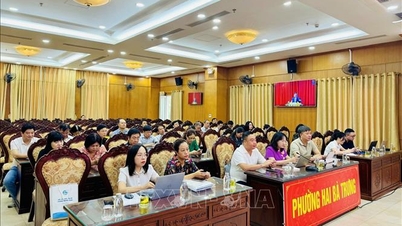
Representative Nguyen Thi Viet Nga (Hai Phong) commented that the proposed compensation rate of 0.5 times the basic salary is still too mechanical. If calculated only per working session, it is easily averaged out, failing to accurately reflect the nature, complexity, responsibility, and value of each case. She proposed that the Government regulate the compensation framework based on case groups, with clear verification criteria, a payment ceiling, and a strict control mechanism.
Responding to the opinions of the delegates, Minister of Justice Hoang Thanh Tung said that the drafting agency will study a training framework to serve as a basis for specifying the detailed payment levels, ensuring they are appropriate to the complexity of each case, and also include regulations on a reward system linked to the performance of public lawyers.
Source: https://thanhnien.vn/bao-dam-nhan-dan-duoc-thu-huong-van-hoa-185260422221229175.htm





























































































Comment (0)