

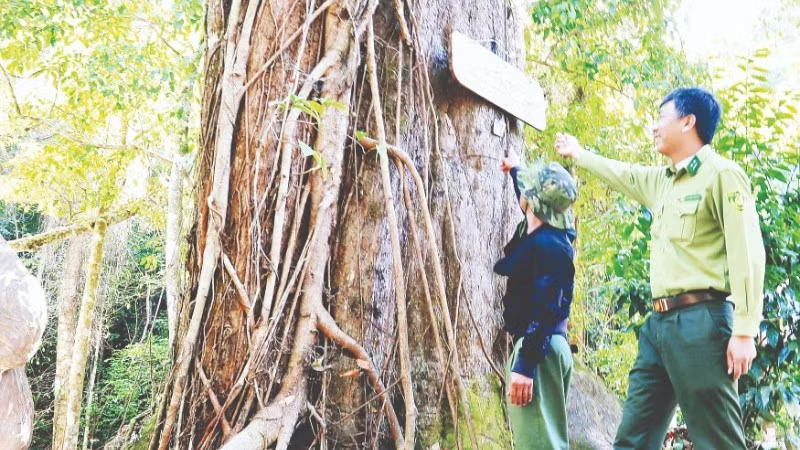
The red pine populations, including ancient trees with large trunks and wide canopies, are considered "red treasures" amidst the lush green forests of southern Central Highlands and are currently under strict protection.
Enhancing the value of red pine trees.
In Vietnam, there are two species: the short-leaved yew (Taxus wallichiana Zucc) found in the north and the long-leaved yew (Taxus wallichiana Zucc) mainly distributed in Da Lat and surrounding areas, such as Bidoup-Nui Ba National Park, the Ho Tien area in Don Duong commune, and the Nui Voi area in Hiep Thanh commune…
The yew tree belongs to group IA, a critically endangered plant group with a high risk of extinction. This species is listed in the Vietnamese Red Book and not only has value in terms of biodiversity, but also opens up new avenues for development in medicinal plant research, genetic resource conservation, and economic development under the forest canopy.
The greatest value of the yew tree lies in its active ingredient taxol and several other valuable compounds that can support cancer treatment; among them, the long-leaved yew tree is more valuable than the short-leaved yew tree.
According to Dr. Nguyen Huu Toan Phan, Deputy Director of the Institute of Life Sciences , Vietnam Academy of Science and Technology, the greatest value of the yew tree lies in its ability to extract diterpenoid compounds, especially paclitaxel (taxol) and the precursor 10-DAB III. These are active compounds that inhibit cell division, recognized by the US Food and Drug Administration and widely used in the treatment of malignant cancers such as ovarian cancer, breast cancer, and lung cancer. Pure paclitaxel has a very high commercial value, reaching hundreds of thousands of USD per kilogram, while the demand for raw materials always exceeds the natural supply. However, yew trees grow slowly and have poor natural regeneration, so the conservation and development of this genetic resource is of great ecological importance.
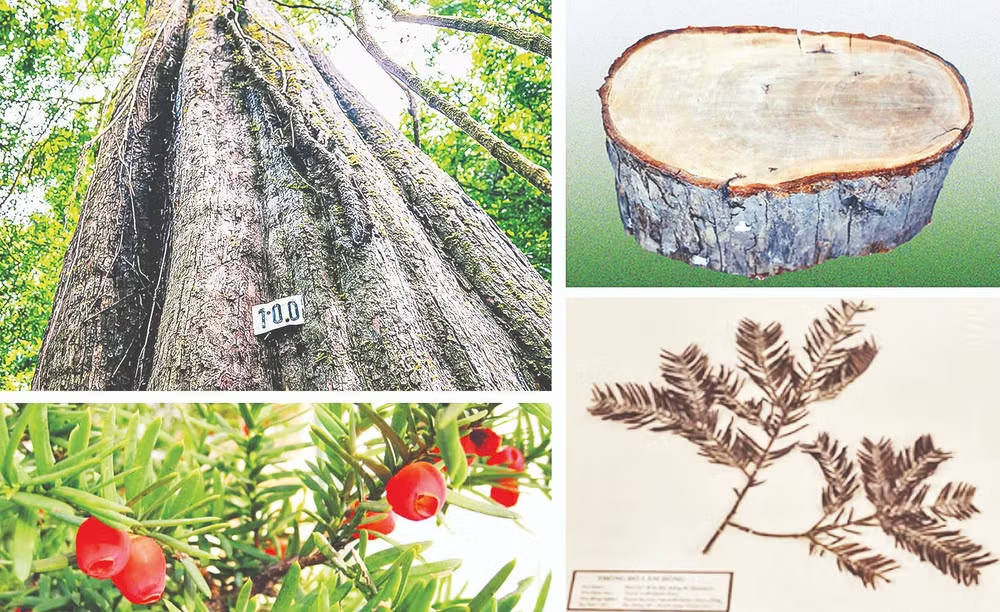
Based on this reality, Lam Dong province has implemented many strict measures to protect this rare tree species. Forests containing red pine have been reinforced with increased security forces, each tree is numbered for tracking, and forest protection contracts have been implemented, along with the application of technology in monitoring forest resources.
Along with that are research programs on breeding and restoring the red pine population. According to Tran Manh Truong, head of the Specialized Forest Management and Protection Station No. 1 in Hiep Thanh commune (Lam Dong province), the red pine population there currently has more than 1,000 trees of various sizes; of which about 224 trees are numbered and have been specially monitored, distributed over an area of about 400 hectares, belonging to Sub-areas 268 and 277A, within the forest area managed by the Duc Trong Protective Forest Management Board. To protect the red pine population at Nui Voi, the Forest Management and Protection Station has increased patrols and assigned members to be on duty continuously throughout the day to promptly handle any arising situations.
Along with their scientific and medicinal value, the red pine forests in Lam Dong are being developed into unique ecotourism products. Currently, a portion of the red pine forest on Mount Voi is managed, preserved, and exploited for tourism by the Mount Voi Pine Forest Tourist Area, under the management of LTC Tourism Joint Stock Company. This area comprises 59 trees ranging in age from 500 to 2,500 years. In particular, a red pine tree with a trunk diameter of over 1.5m, a circumference of nearly 4.7m, and a height of over 30m, estimated to be approximately 2,500 years old and considered a "sacred tree" by the Co Ho people, is given special protection.
Opening the way to sustainable development.
According to Dr. Nguyen Huu Toan Phan, research by the Vietnam Academy of Science and Technology has developed cutting propagation techniques to create a large-scale source of plant material. However, in the commercial production stage, pure pharmaceutical ingredients (APIs) still have to be imported, as domestic raw material sources and extraction scales do not yet meet industrial requirements. Therefore, to produce medicine from yew trees, especially those distributed in Lam Dong, a long-term strategy is needed, combining biological conservation and high-tech commercialization.
According to experts and scientists, to effectively exploit the value of red pine, Lam Dong province needs to build a closed and sustainable value chain, from high-tech breeding and planning suitable planting areas to establishing GACP-WHO standard planting processes. After developing the raw material area, the next step is to improve harvesting and preservation quality; then, invest in extraction plants and build industrial-scale technology lines to extract active ingredients. Finally, commercialization and market positioning are crucial. While waiting for the trees to reach the age for extracting the main active ingredients, research could be conducted on medicinal remedies, herbal teas, or health care products with strict quality control processes using the tree's by-products.
In addition to medicinal plant harvesting and scientific research, the red pine also holds significant value in terms of landscape, environmental education, and experiential tourism. At the Elephant Mountain Pine Forest Tourist Area, visitors can not only explore the beauty of the primeval forest but also learn about the history, biological value, and conservation efforts of this rare tree species.
Deep within the southern Central Highlands, red pine trees have silently flourished for centuries. This rare species is opening up a green development path, where economic value is built on the foundation of nature conservation. Currently, the Lam Dong Museum is displaying images and specimens along with QR codes providing information about red pines, contributing to raising community awareness in protecting and developing this rare plant species for today and tomorrow.
Source: https://nhandan.vn/bau-vat-do-giua-dai-ngan-xanh-post964266.html




![[GALLERY] Witnessing the first landing of an Italian F-35B fighter jet on a highway.](https://vphoto.vietnam.vn/thumb/402x226/vietnam/resource/IMAGE/2026/05/24/1779625960562_f-35b-della-marina-militare-2-jpg.webp)









![[Video] Weather forecast for tonight and tomorrow, May 25, 2026: Widespread heatwave intensifies in Northern and Central Vietnam.](https://vphoto.vietnam.vn/thumb/402x226/vietnam/resource/IMAGE/2026/05/24/1779627756334_thumb-dem-png.webp)


























































Comment (0)