

In the early 20th century, perhaps due to the difficulty and high cost of importing steel from France, coupled with a preference for using local materials, engineers decided to construct the floors, ceilings, and roof using reinforced concrete made of bamboo. At the time, this was considered a practical and flexible construction solution. Even after more than a century, the structure still stands, providing valuable data for the Vietnamese construction industry.

Unique villa made of bamboo-reinforced concrete - sketch by architect Vo Tran Gia Phuc

Experts suggest preserving the building as an urban landmark right in the heart of the future commercial center - a sketch by architect Hoang Dung.
Built in the early 20th century, this was a villa belonging to a French official. From 1945, it successively served as the headquarters of the Japanese Gendarmerie, the Chief Court of First Instance, and the headquarters of the Thua Thien- Hue Union of Literary and Artistic Associations. It has been abandoned since 2022. 3. The 100-year-old villa has sections of its walls using unplastered fired bricks, similar to the Notre Dame Cathedral in Saigon - a sketch by architect Bui Hoang Bao.
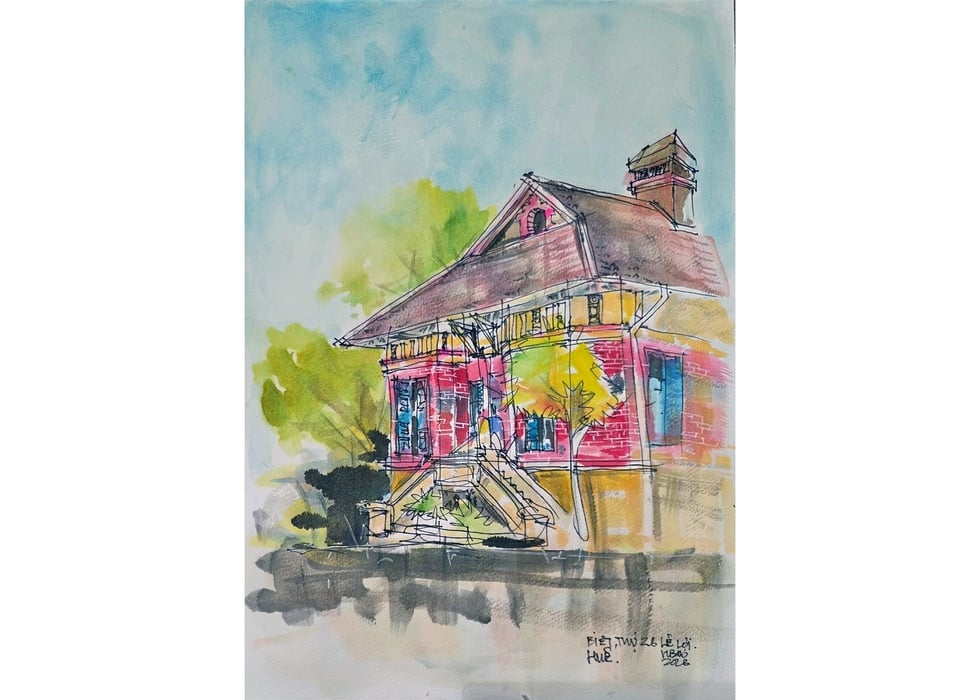
The 100-year-old villa features sections of its walls constructed with unplastered fired bricks, similar to the Notre Dame Cathedral in Saigon - a sketch by architect Bui Hoang Bao.
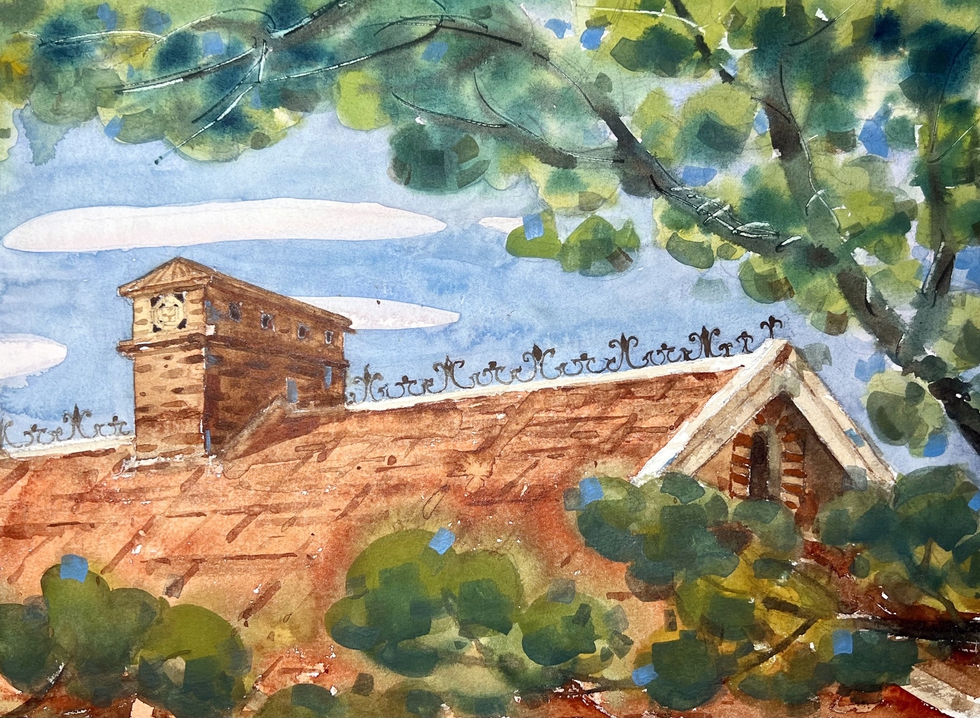
The roof is decorated with a border featuring the royal flower (Fleur-de-lis) symbol of the French monarchy - a sketch by architect Duy Huynh.
The building's symmetry along its central axis creates a sense of solidity. The ground floor is solid, serving as a wine cellar and storage area. The second floor is the living space, elevated above ground level, not only creating a grand appearance but also providing protection from dampness and flooding. The brick walls are 40-50 cm thick.
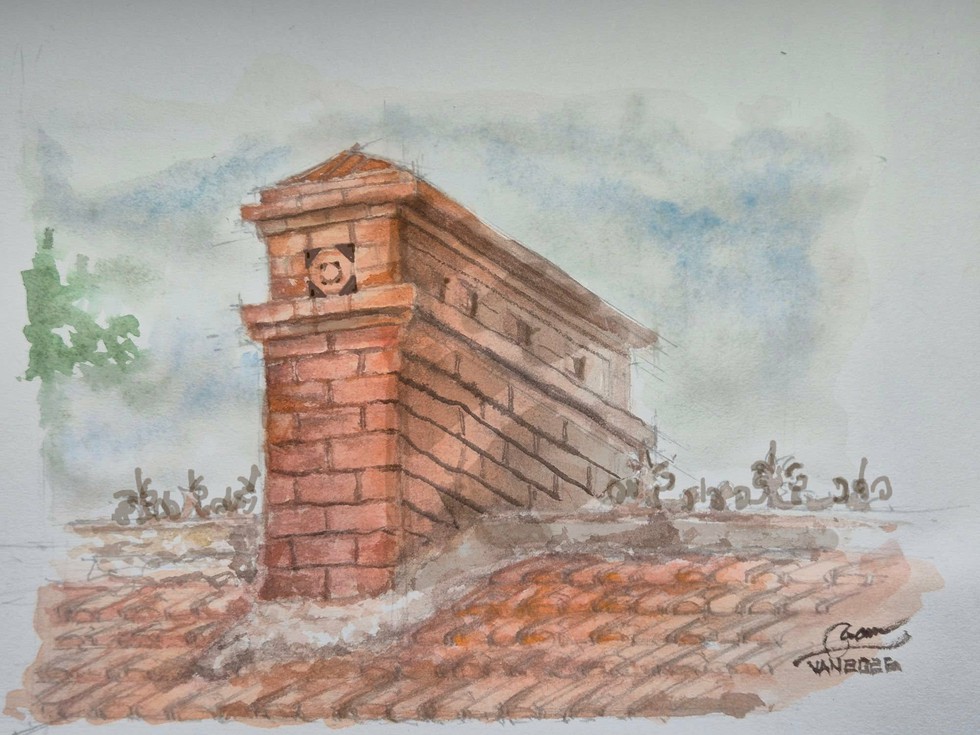
The chimney is one of the characteristic features of French villas in Vietnam in the early 20th century - a sketch by student Huynh Nghi Van, University of New South Wales, Australia.
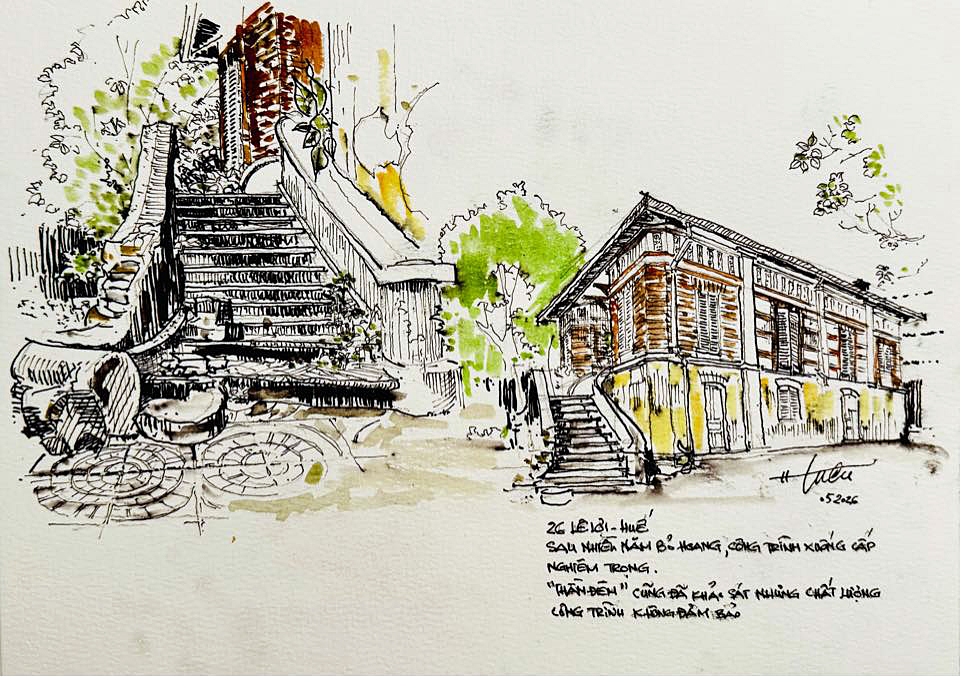
The Hue authorities once invited a "miracle worker" to relocate the structure, but... they were helpless - a sketch by architect Phan Gia Huu Tuan.
The roof's apex is decorated with a series of stylized irises made of iron. Since the Middle Ages (5th-15th centuries), irises have been used as symbols in art, religion, and as emblems of European royalty. The chimney is adorned with octagonal bricks (symbolizing the eight trigrams), inside which is a four-petaled flower (representing the four seasons: Spring, Summer, Autumn, and Winter).
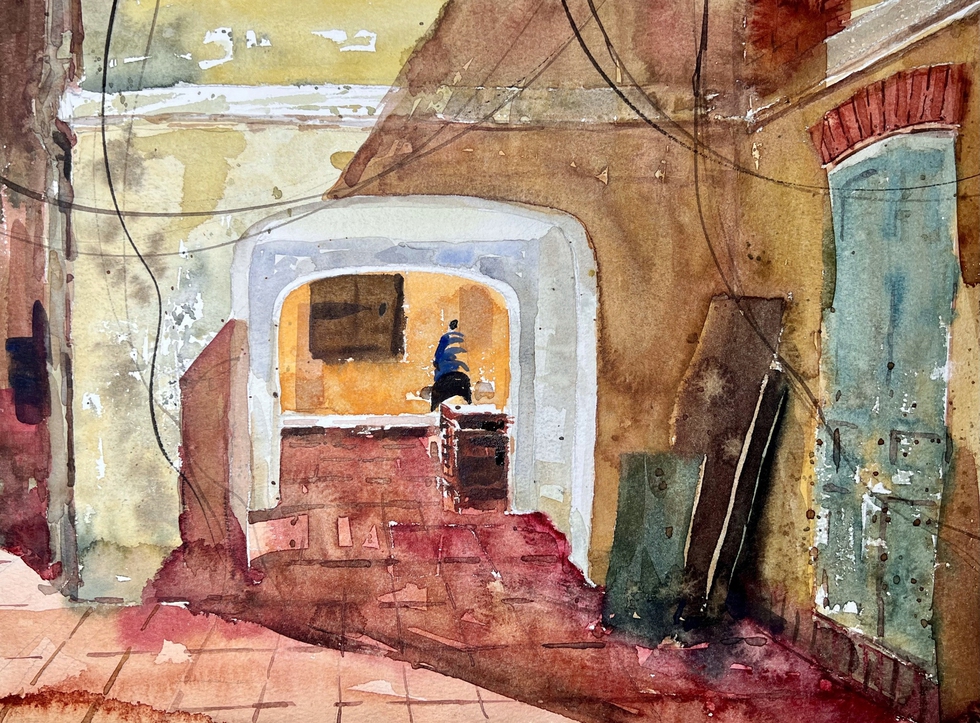
Abandoned for many years, the building has seriously deteriorated - a sketch by architect Duy Huynh.
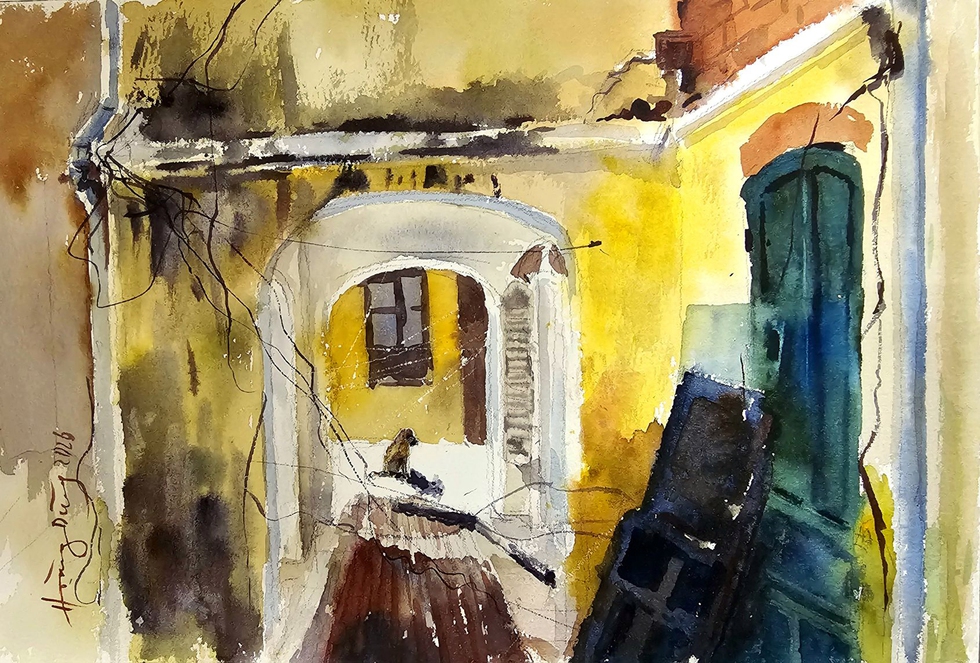
Last April, the authorities decided to demolish the structure - a sketch by architect Hoang Dung.
In 2022, the Hue City authorities invited "master builder" Nguyen Van Cu to calculate the structural integrity of the building, suggesting it be relocated to a nearby vacant plot of land to make way for a high-end hotel project. However, after studying the situation, the "master builder" shook his head, stating that the structure was not safe.
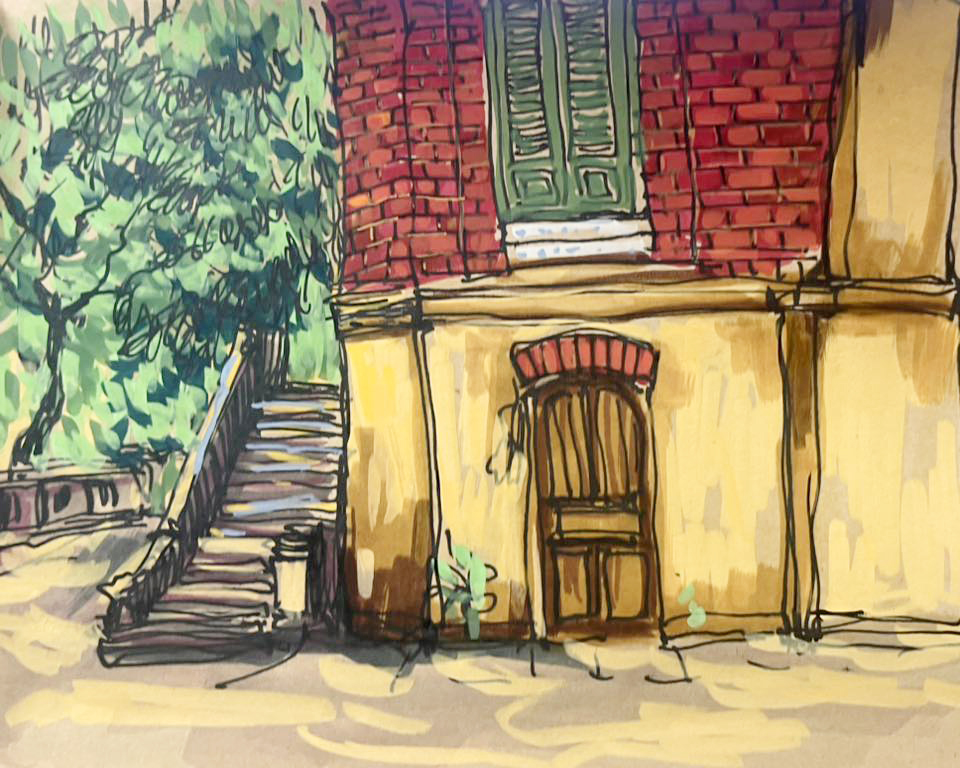
A corner of the villa - a sketch by artist Tran Binh Minh
Last April, the authorities decided to demolish the structure.
In the Journal of Science and Technology (Faculty of Science, Hue University), based on eight criteria of historical, cultural, social, and artistic value, experts assessed the building as having relatively high architectural value.
Since this area is planned to become a commercial service center, in order to preserve it, the research team, consisting of PhDs, Masters, and Architects, proposed renovating and retaining the building as an urban landmark, transforming it into a check-in point right in the heart of the future commercial center.
Source: https://thanhnien.vn/biet-thu-be-tong-cot-tre-hon-100-nam-o-hue-185260523194714564.htm






























































































Comment (0)