

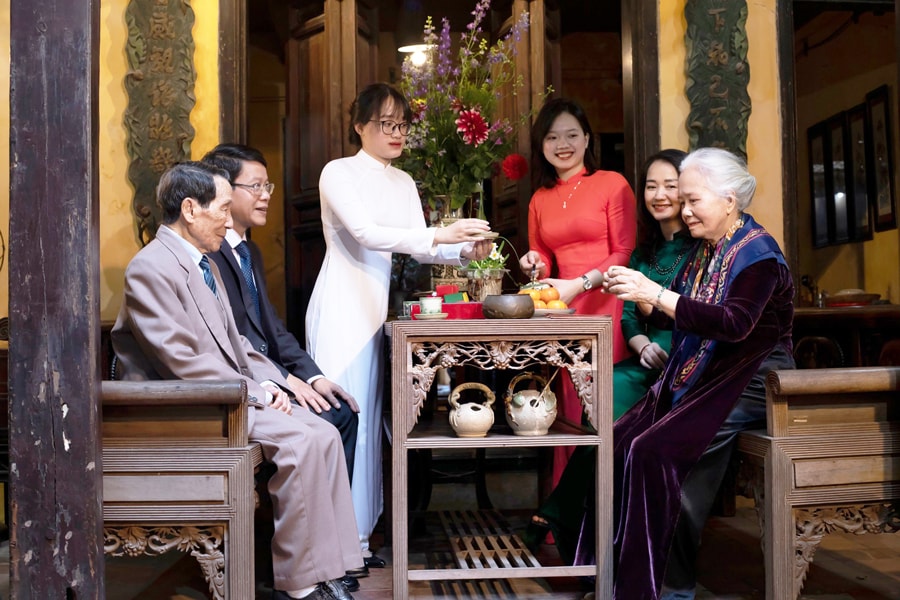
The character of the people of Thang An
The first core of this identity is an underlying pride, a form of self-respect that is sometimes mistaken for arrogance or even... "showing off"! Native Hanoians don't flaunt their wealth with glittering jewelry or flashy cars. Their riches and status are often hidden behind weathered wooden doors or in simple yet impeccably neat silk garments. This pride is most clearly manifested in an extreme level of meticulousness in the art of enjoyment. In Hanoi, food and drink are never called "food"; they are called "gifts." Eating a bowl of vermicelli, sipping a cup of tea, is considered receiving a gift from the skillful hands of people and the essence of nature. The concept of "gift" elevates filling the stomach into a cherished cultural act, a conscious enjoyment.
Look at how a true Hanoi resident "examines" a bowl of bun thang (a type of Vietnamese noodle soup). It's not about eating, but about appraising art. Everything from the pork sausage and omelet to the chicken breast must be sliced into thin, delicate strips, arranged harmoniously like a watercolor painting. The broth must be crystal clear, deeply sweet yet light, and especially subtly infused with the legendary aroma of water beetle essence. This "pickiness" is a natural filter, a kind of "soft power" that helps Hanoi preserve its finest values in an era where everything can be faked or done quickly just to get it over with.
Alongside their pride is an elegant demeanor that has become their trademark, but it's an elegance ingrained in their blood, not just on their lips. Hanoians value titles as much as their own honor. The way they use "yes" and "okay" at the right time and place creates a graceful and refined rhythm.
Particularly within this peculiar "village within the city, city within the village" structure, one still sees the humble demeanor of the elderly. There are elderly women in these ancient villages, now transformed into cities, with hair as white as snow and backs bent, yet they maintain a warm and welcoming manner when strangers ask for directions. The gentle use of "I" and addressing the person as "uncle" or "aunt" when responding to a stranger of any age by an eighty-year-old woman is not a sign of self-abasement but the pinnacle of humility and respect. This is a family tradition forged over generations, transforming everyday interactions into something softer and more humane.
It is this very way of behaving that has nurtured a strong sense of community, something that has been "concretized" in many modern cities. In Hanoi, people still maintain the custom of visiting each other in times of illness and supporting each other in their own unique way. A precious gift, a delicious bowl of soup brought over to a neighbor is not just food, but a sharing. The village structure hidden within the city is the glue that binds strangers together, transforming the solemn "hang" streets or the intricate network of alleys into a warm community. Although Hang Gai Street is now resplendent with industrial silks, and Hang Bac Street no longer bustles with the sounds of handcrafted hammers as before, the meticulous, compassionate way of life of the city dwellers still lingers somewhere behind the moss-covered tiled roofs. This is the unique natural urbanization of Hanoi – where modernity has not diminished the original human connection.
"Identifying human heritage"
However, we must also be honest that this character also contains a rather strong sense of conservatism. This is a form of positive self-defense mechanism of a city that has experienced so much upheaval. Hanoians are often suspicious of anything that is too new, too fast-paced, or seems to lack cultural depth. They prefer stability, values that have been "tested" over time. This very conservatism has saved Hanoi from being "invaded" by soulless concrete structures for decades. But in this 4.0 era, if Hanoi clings to its old ways without adapting, it could easily become a silent and rigid museum. The challenge is how to innovate without losing its essence, how to modernize without losing its inherent elegance.
I believe it's time we developed a strategy for "identifying human heritage." Hanoi shouldn't just focus on preserving honeycomb stone walls or fish-scale tile roofs, but must also preserve the people who hold the soul of the city. We need to honor and support these "living artisans"—those who preserve the recipes for traditional crafts, the families maintaining the exemplary three-generation living arrangement. Why not turn them into "cultural ambassadors" right where they live? Instead of leaving them to live in obscurity in narrow alleys, let's place them at the heart of a smart urban ecosystem.
Imagine a digital cultural operating system where every citizen or visitor can connect with the "soul" of the city with just a tap on their phone. Walking through Hang Ma or Hang Dong streets, virtual reality technology not only reveals layers of history but also connects you to the story of a family tradition that has existed there for seven generations. Values of elegance, the humble way elderly women address each other, or the art of enjoying a bowl of bun thang or bun oc (traditional Vietnamese noodle soup) will be vividly conveyed through digital applications. This is how we "digitize" Hanoi's self-respect, transforming old values into a digital asset with extremely high educational and economic value, making young people see that living elegantly and valuing friendship is just as "cool" as global trends.
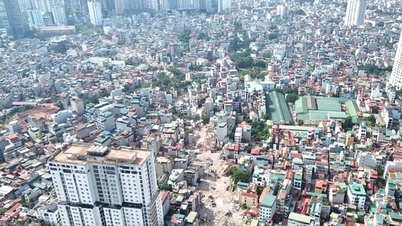
Hanoi in the coming decades will undoubtedly have more overpasses, highways, and magnificent skyscrapers and shopping centers. But if, within this modern metropolis, people no longer know how to speak politely, no longer appreciate a gift from their hometown, or lack the warm neighborly spirit, then Hanoi will be nothing more than a soulless shell. The most sustainable development of the capital must begin with awakening and nurturing the humane essence within each person. We don't need to impose an outdated model, but we need to create a cultural environment strong enough so that anyone who sets foot here feels the desire to live more decently and elegantly.
It can be seen that the character of the people of Hanoi is like an underground stream, sometimes calm, sometimes powerful, but never ceasing. It is the filter that separates the good from the bad, the measure that adjusts behavior, and also the spiritual foundation that allows us to confidently step into the era of innovation. When we understand and appreciate the core values ingrained in the city's bloodstream, we will have the courage to create a Hanoi that is both modern and rich in identity.
Source: https://hanoimoi.vn/boi-dap-cot-cach-nhan-van-trong-moi-con-nguoi-748228.html

























































































Comment (0)