

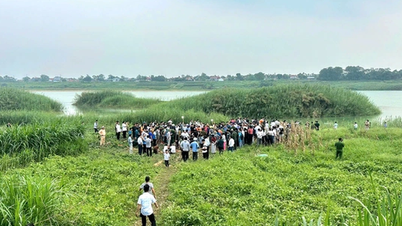
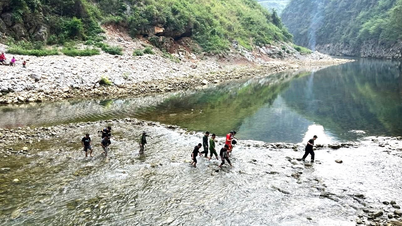
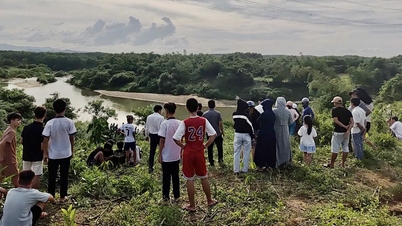
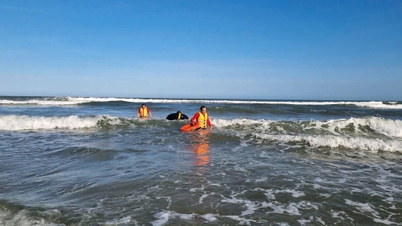
Every summer, the worry about drowning accidents among children becomes a pressing issue. There have been numerous tragic cases of children drowning in ponds, lakes, rivers, streams, and canals, plunging many families into tragedy.
According to statistics from the Ministry of Education and Training, approximately 1,800 children drown in Vietnam each year. Within the education sector alone, the number of student deaths remains high: 616 students were recorded in 2021; 634 in 2024; and a projected decrease to 574 in 2025.
Although the number of deaths among students has decreased by about 1-2% each year, the rate of child deaths due to drowning in Vietnam remains alarmingly high, eight times higher than in developed countries. This shows that drowning is still one of the leading causes of death among children and students today.
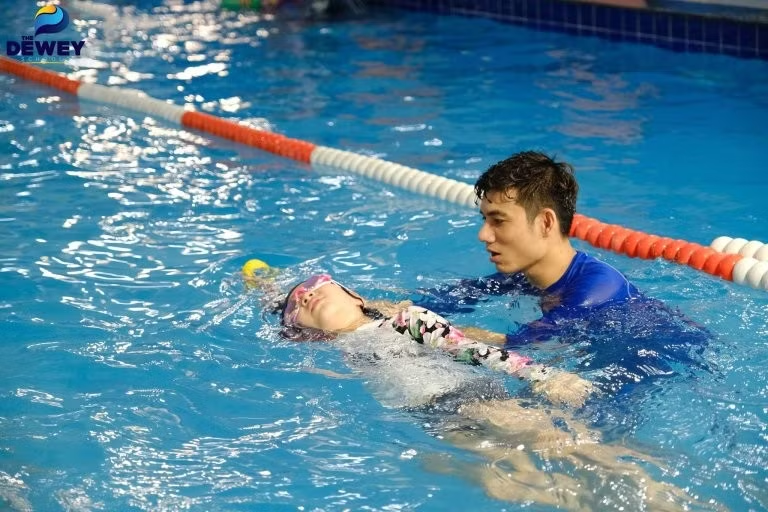
One of the major reasons cited by experts is the low percentage of students who know how to swim.
According to the Ministry of Education and Training, the percentage of students who know how to swim is low, at just over 33%. At the primary school level, the percentage of students who know how to swim is only nearly 27%. Meanwhile, this age group is at high risk because their self-protection skills are limited, they are easily hyperactive, and they lack adult supervision during the summer holidays.
At the lower and upper secondary levels, the percentage of students who know how to swim is higher, reaching approximately 41.5% and 42% respectively, but it is still quite far from the goal of universalizing water safety skills for children.
| Level of education | Number of schools with swimming pools | Total number of schools | Percentage (%) |
| Elementary | 1,327 | 12,475 | 10.63% |
| junior high school | 662 | 10,029 | 6.6% |
| High School | 195 | 2,803 | 6.95% |
| Medium | 2,184 | 25,307 | 8.63% |
Not only do many students lack swimming skills, but they also lack the necessary skills to handle situations when accidents occur in the water. As a result, some children have died while trying to save friends or others due to a lack of safety skills.
There is a shortage of both swimming instructors and swimming pools.
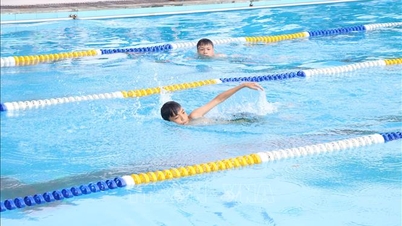
Another noteworthy fact is the limited availability of swimming facilities in schools. Nationwide, only 2,184 schools have swimming pools, accounting for approximately 8.63% of the total number of schools. Of these, primary schools have the highest percentage of schools with swimming pools, but even then, it's only slightly over 10.6%. At the secondary and high school levels, this rate is only around 6-7%.
In fact, many schools in provinces and cities have invested in building swimming pools with the hope of helping students learn to swim and prevent drowning. However, in reality, many school swimming pools, after a short period of operation, have fallen into disrepair and been abandoned.
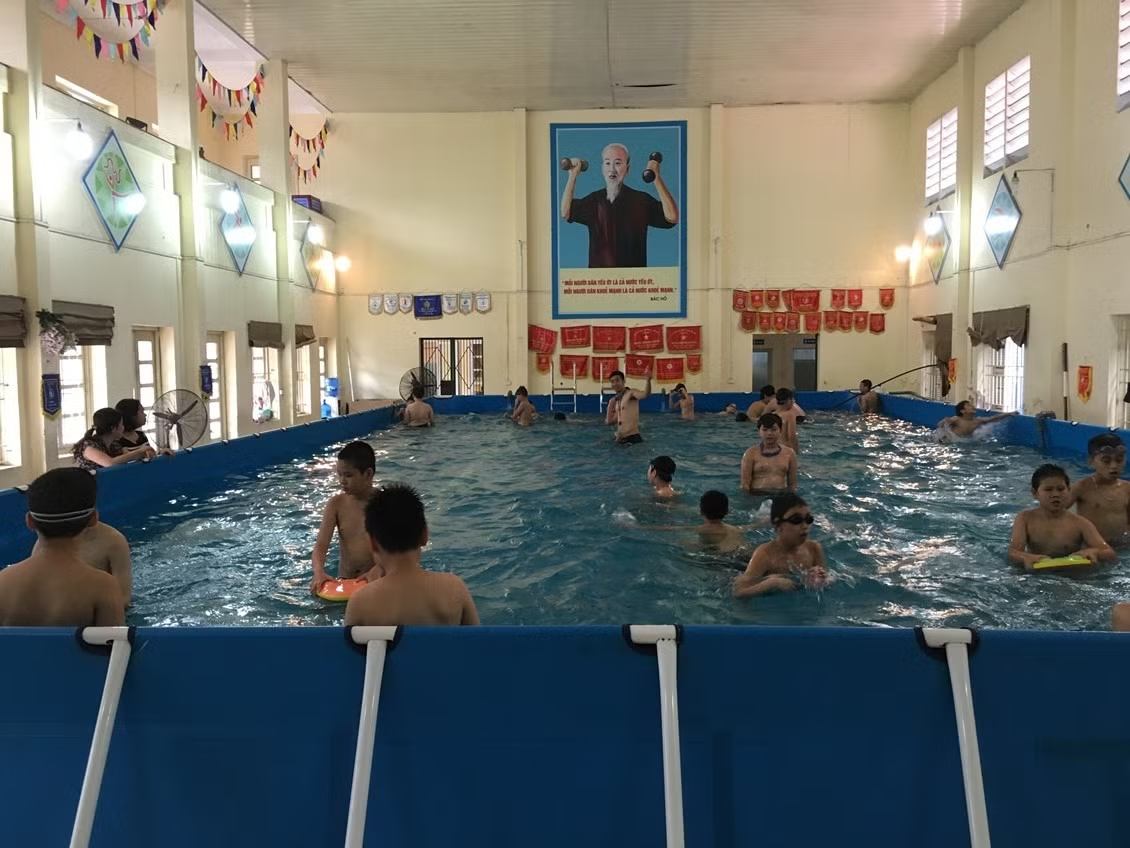
The main reason is the lack of funding for system operation and maintenance. In addition, many schools lack qualified swimming instructors and lifeguards, making it impossible to organize swimming lessons. Furthermore, the pressure of the academic curriculum and the reluctance to take responsibility for student safety have led to many school swimming pools being drained and abandoned, despite the urgent need for swimming lessons and drowning prevention for students.
In Hanoi , several private schools have been operating swimming pools for their students. However, there have been cases of ninth-grade students drowning during swimming lessons. This tragic incident highlights that, in addition to facilities, effectively operating a school swimming pool requires strict safety procedures, trained instructors, professional lifeguards, and close supervision during each lesson—all of which have been lacking until now.
In many localities, especially in rural and mountainous areas, students have almost no access to formal swimming lessons. Investing in swimming pools is difficult due to the high costs. Many schools have to use portable pools or partner with external sports centers to organize swimming lessons for their students.
Leaders of the Ministry of Education and Training once said: "The shortage of swimming instructors is also a difficult problem." Currently, only about 60% of physical education teachers are able to teach swimming. Many schools do not have swimming pools or lack the funds to operate them.
In light of this situation, the Ministry of Education and Training stated that it will continue to promote communication and education on drowning prevention skills for students; encourage children to participate in sports activities, physical training, and safe swimming lessons. The education sector is also developing a safe swimming program for students, and aims to have at least two qualified swimming instructors in each school by 2030.
In addition, the Ministry of Education and Training requested localities to increase investment in infrastructure, build school swimming pools, allocate funds to maintain their operation, and promptly issue mechanisms to support swimming lessons for students.
Prior to the summer break, which runs from the end of May to the end of August this year, Deputy Minister of Education and Training Nguyen Thi Quyen Thanh signed a document requesting provincial Departments of Education and Training to coordinate with relevant sectors to disseminate knowledge and skills on accident and injury prevention, including drowning prevention, to students so that they can have a safe and healthy holiday.
During the period 2021-2025, the Ministry of Education and Training only organized training for approximately 3,000 core teachers at the Departments of Education and Training. This number is still quite modest compared to the actual needs of tens of thousands of schools nationwide.
Source: https://tienphong.vn/ca-nuoc-moi-chi-co-hon-33-hoc-sinh-biet-boi-post1845070.tpo























































































Comment (0)