

Desk plants help reduce stress and bring green energy to the workspace. Succulents are always a favorite among office workers thanks to their small size, variety, and auspicious feng shui meanings, and they are not difficult to care for. However, the enclosed office environment, lack of natural sunlight, and overuse of air conditioning pose challenges to the growth of this plant.
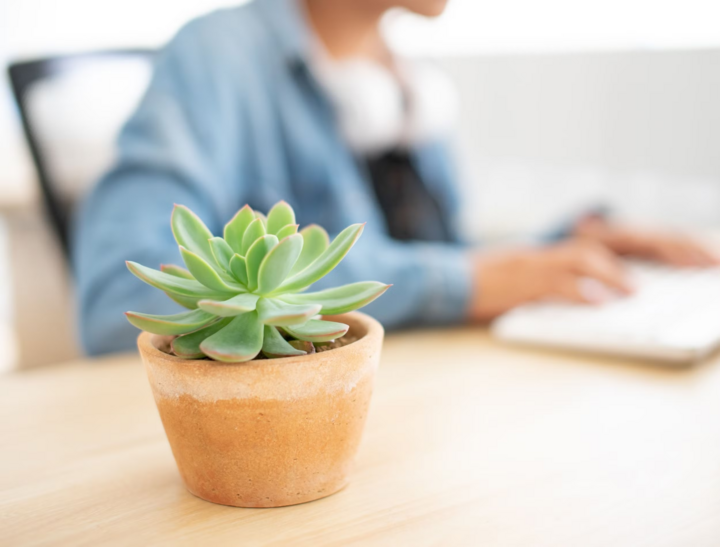
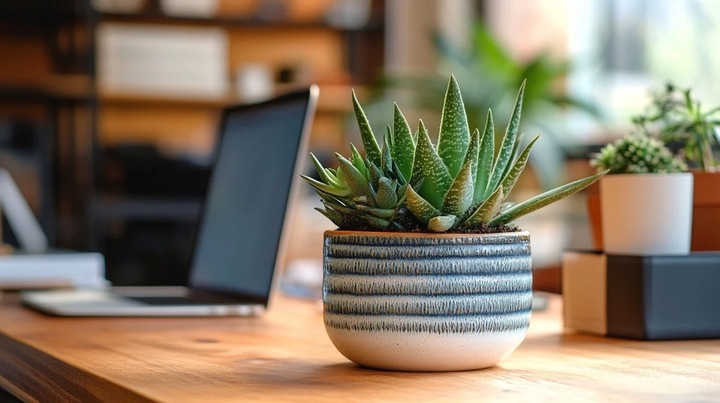
Succulents are a favorite plant among office workers. (Photo: iStock)
How to care for succulent plants in the office.
Many people often face problems with their succulents developing root rot, leaf decay, or wilting just a few weeks after being brought to their desks. Caring for succulents in the office isn't difficult if you understand the plant's characteristics and apply the right methods.
Utilize light sources
Light is a vital factor determining the color and shape of succulents. The most common reason why office succulents wilt, have sparse leaves, and turn pale green is a lack of sunlight.
To remedy this, the ideal location for potted plants is a windowsill or areas near glass walls where they can receive indirect natural light. If your desk is deep inside the room and completely shaded from the sun, try bringing your succulents out to the balcony or window to get some early morning sunlight about 2-3 times a week.
Between 7 am and 10 am is when the sunlight is gentlest, just enough for plants to regenerate energy without worrying about burning their leaves.
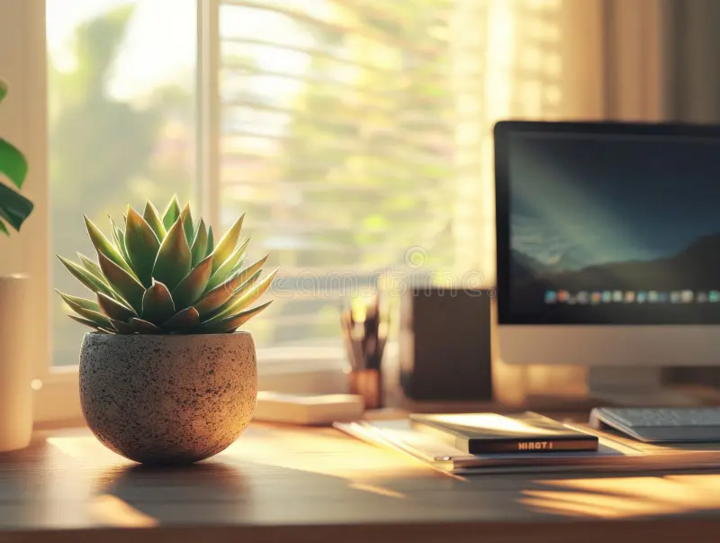
Succulents need to be exposed to sunlight regularly every week to stay healthy. (Photo: Dreamtines)
Watering principles
Living in a constantly cool, air-conditioned environment, the rate of water loss from the soil is much slower than in a natural environment. The biggest mistake office workers make is the habit of watering their plants every day as a way to relieve work stress.
For succulents, overwatering is the quickest way to root rot and plant death. The golden rule when caring for office succulents is to only water when the soil is completely dry. You can check by inserting a toothpick deep into the soil; if the toothpick comes out dry, then you can add water.
When watering, water directly at the base of the plant or around the edge of the pot. Absolutely do not pour water from the top of the plant, as water accumulating in the crevices of the leaves in an air-conditioned environment can easily cause mold. You should only water once every 1-2 weeks.
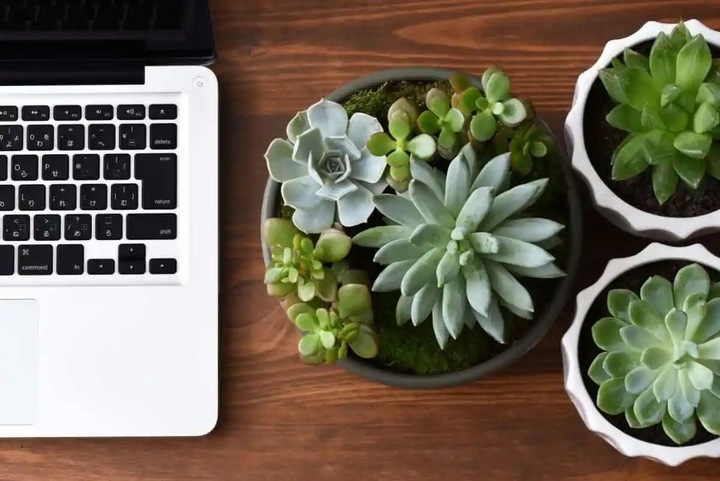
The ideal time to water succulents is about once every 1-2 weeks. (Photo: iStock)
Suitable planting pot
Office environments are inherently poorly ventilated, so the growing medium and pots play a crucial role in allowing the plant roots to breathe. Ordinary clay soils tend to retain water for a long time and are easily compacted, making them unsuitable for succulents.
You should replace it with a specialized, highly porous, well-draining soil mix by blending clean soil with components such as perlite, pumice, crushed coal slag, or rice husk ash. The spaces between the stone particles will allow excess water to drain quickly, keeping the root system dry and airy.
Besides the soil, the material of the pot also needs careful consideration. Unglazed ceramic or terracotta pots are always the perfect companions for succulents due to their excellent water absorption and drainage capabilities.
If you prioritize aesthetics and choose ceramic, glass, or plastic pots, make sure the bottom of the pot has sufficiently large drainage holes. Growing succulents in glass cups without drainage holes requires extremely strict water management techniques and is not recommended for beginners.
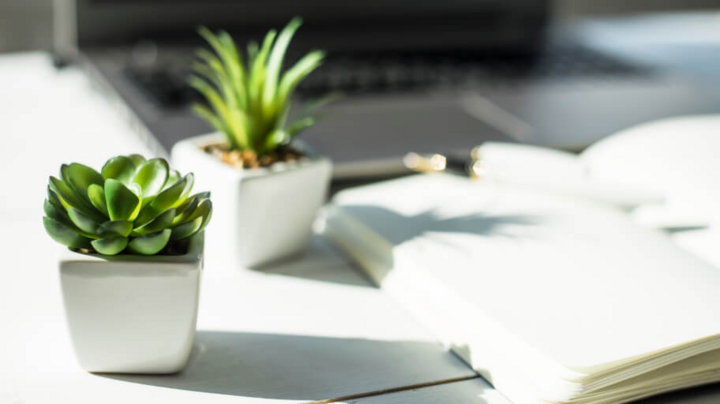
It's advisable to research the appropriate type of pot before buying succulents. (Photo: Dreamtines)
Maintain good ventilation.
Succulents are plants that prefer dry and well-ventilated conditions. Office environments, often with closed doors and air conditioning, inadvertently create a stuffy atmosphere lacking natural airflow.
Lack of ventilation combined with moisture from watering creates an ideal environment for bacteria and fungi to thrive, causing the leaves to turn black and rot. To improve this, you should place the potted plants in locations with good air circulation, such as near entrances or where there is a gentle breeze from a fan.
Avoid placing succulents directly under the air conditioner's vent, as the constant blast of cold air will cause thermal shock, localized dehydration, and massive leaf drop. At the end of the day, before leaving the office, if possible, move the plants to more airy areas so they can enjoy the natural night air.
Succulent plants should not be placed directly under air conditioning, as this will cause them to wilt quickly. (Image: iStock)
Regular trimming
No matter how carefully they are cared for, indoor succulents are still susceptible to certain health problems. Regularly observing and caring for your plants every day not only helps you relax mentally but also allows you to detect early signs of any abnormalities.
The aging and wilting of the leaves at the base of the plant is a completely normal physiological phenomenon, but you should proactively use tweezers to remove them immediately to prevent moisture buildup and the creation of hiding places for mealybugs.
Mealybugs are the number one enemy of succulents in the office, usually appearing as small, cotton-like white spots in the crevices of the leaves. When you spot mealybugs, you can use a cotton swab soaked in rubbing alcohol to clean the affected areas or isolate the plant from other plants to prevent widespread infestation.
At the same time, if you notice the plant tending to lean to one side to find light, rotate the pot 180 degrees every few days to help the plant grow symmetrically, maintaining its round and beautiful flower shape.
Source: https://vtcnews.vn/cach-cham-care-cay-sen-da-tai-van-phong-ar1019467.html





































































































Comment (0)