

The explosion of online transactions in recent years has not only brought convenience but also increased the risk of personal data leakage, especially bank card information. With just a few basic information such as card number and CVV code (abbreviation of Card Verification Value. This code is used to verify Visa cards including credit cards and debit cards), criminals can make unauthorized payments, causing direct damage to cardholders. Therefore, understanding the information structure on the card and knowing how to check security is an important requirement to protect yourself in the digital environment.

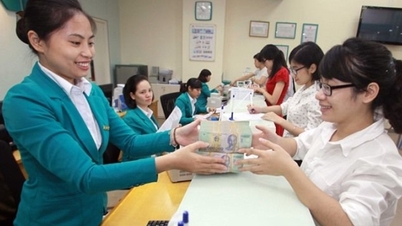
Users need to keep card information absolutely secure and regularly check for leaks to protect their bank accounts. Illustration photo.
In each payment card, the account number and the card number are two completely different series of numbers but are often confused by users. The card number, consisting of 12 to 19 embossed digits on the surface, is used to authenticate transactions. Accompanying it is the CVV code consisting of 3 - 4 digits printed on the back of the card, especially important for international cards such as Visa or Mastercard. This is the "key" for criminals to be able to make transactions without a physical card. Therefore, revealing the card number or revealing the CVV code both pose a very high risk of losing money.
When suspecting that a payment card has been leaked, users can quickly check it through the tool of CyRadar - a cybersecurity company underFPT Group. This system allows users to enter the first 6 digits and the last 4 digits of the card to compare with the database of previously leaked cards. The entered data is not stored, helping to ensure absolute security. The check is done online at breach-check.cyradar.com and takes only a few seconds to get the results.
In case the card is on the leaked list, the cardholder should immediately lock the card and suspend all online transactions, and contact the bank to get a new card. If the email is on the leaked list, the user should change the password, enable two-factor authentication and check the login log to detect unauthorized access early.
Protecting payment card information depends not only on banking technology but also on each person's careful habits. Not sharing card numbers and CVV codes, limiting card photography, and regularly checking data security will help users minimize risks in the context of increasingly sophisticated high-tech crimes. Proactive prevention is always the most effective "shield" in the digital transaction environment.
Source: https://congthuong.vn/cach-nao-kiem-tra-the-thanh-toan-co-bi-lo-thong-tin-hay-khong-433813.html

![[Photo] Urgently help people soon have a place to live and stabilize their lives](/_next/image?url=https%3A%2F%2Fvphoto.vietnam.vn%2Fthumb%2F1200x675%2Fvietnam%2Fresource%2FIMAGE%2F2025%2F12%2F09%2F1765248230297_c-jpg.webp&w=3840&q=75)
![[Photo] General Secretary To Lam works with the Standing Committees of the 14th Party Congress Subcommittees](/_next/image?url=https%3A%2F%2Fvphoto.vietnam.vn%2Fthumb%2F1200x675%2Fvietnam%2Fresource%2FIMAGE%2F2025%2F12%2F09%2F1765253019536_a1-bnd-0983-4829-jpg.webp&w=3840&q=75)




















































































Comment (0)