

On December 23rd, the Department of Agriculture and Environment of Can Tho City held a conference to review the project "Sustainable development of one million hectares of high-quality, low-emission rice cultivation associated with green growth in the Mekong Delta by 2030" for the 2024-2025 period and the 2026-2030 plan.
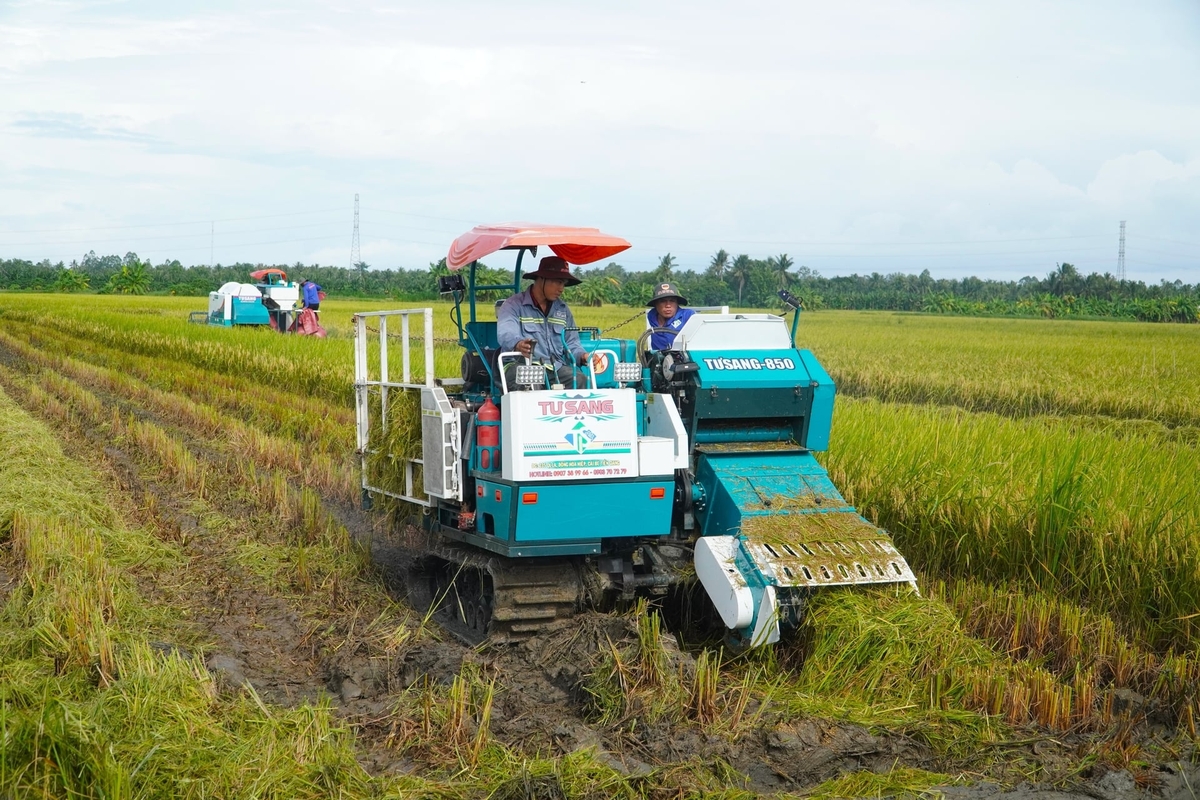
During the period 2026-2030, Can Tho City plans to increase the area of low-emission rice cultivation to nearly 171,000 hectares. Photo: Kim Anh.
Reduce emissions, increase profits.
Currently, 64 out of 103 communes and wards in Can Tho City are participating in the Project, with a total implemented area of 104,500 hectares. The models implementing the Project have generally applied high-quality, low-emission rice cultivation techniques effectively. This is demonstrated through economic and environmental benefits such as: a 30-50% reduction in seed usage (depending on the season); a 30% reduction in nitrogen fertilizer; a 2-3 reduction in the number of pesticide applications; and rice yields in the models being 0.3-0.7 tons/ha higher than those of farmers using traditional methods. Consequently, total production costs in the models decreased by an average of 1.1 million VND/ha. Profits in the pilot models were 1.3-6.5 million VND/ha higher than the control group.
In particular, according to greenhouse gas emission measurements by the International Rice Research Institute (IRRI), models in Can Tho City reduced CO2 emissions by 2-12 tons/ha.
Mr. Tran Chi Hung, Vice Chairman of the People's Committee of Can Tho City, assessed that although the project has not been implemented for a long time, the city has successfully developed over 104,500 hectares of high-quality, low-emission rice cultivation areas. This has created a significant change in the production mindset of farmers. In particular, the models have demonstrated a dual benefit: increased productivity, reduced production costs, and a direct contribution to the national emission reduction target.
In fact, at Hung Loi Agricultural Cooperative (Dai Ngai commune, Can Tho city), 46 farming households participated in the project, covering an area of 50 hectares. After four rice seasons, Mr. Vo Van Thanh, Deputy Director of Hung Loi Cooperative, stated that the average yield of the model reached 6.3-6.5 tons/ha. With rice selling prices ranging from 8,800-10,800 VND/kg, cooperative members achieved an average profit of 47 million VND/ha, 4-5 million VND/ha higher than fields outside the model. The model also helped reduce nearly 4 tons of CO2 equivalent per hectare per season.
Obstacles that need to be overcome
However, currently, the provision of mechanized services in production such as: seed planters, fertilizer sprayers, straw balers, etc., is still limited and does not meet the needs. The rate of straw collection from the fields has not met the criteria of the Project. In particular, farmers have not yet fully grasped the benefits of applying technical measures to process straw in the fields and the economic value of straw.
On the other hand, the irrigation infrastructure in Can Tho is still not synchronized or comprehensive. The internal road system in the fields does not meet the needs for travel and goods transportation.
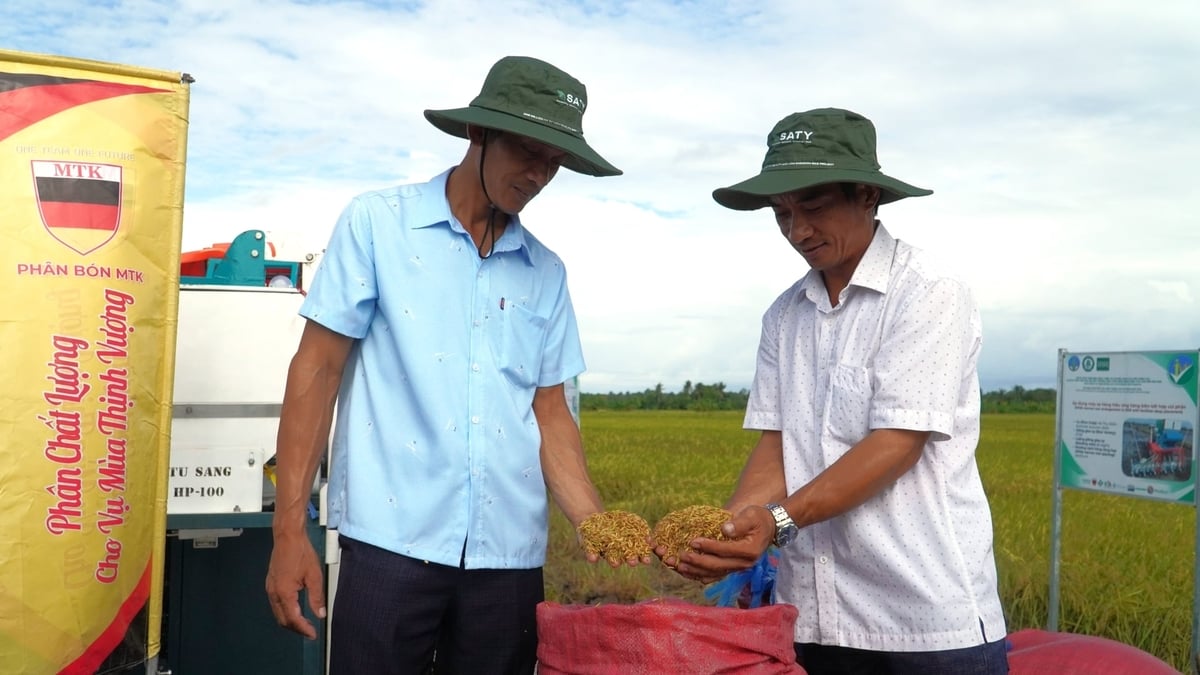
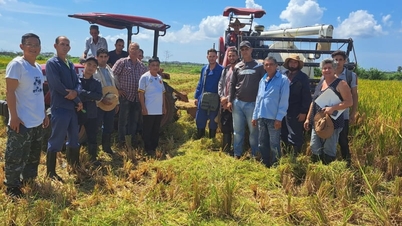
Farmers participating in the 1 million hectare high-quality, low-emission rice project in Can Tho City are enjoying quite good profits. Photo: Kim Anh.
Furthermore, to date, only a few businesses have actually participated in linking up with and purchasing products from cooperatives and farmers' organizations. This limits the ability to build a stable and large-scale consumption chain for the entire rice output of the Project.
Drawing on past experiences, Mr. Vo Van Thanh, Deputy Director of Hung Loi Cooperative, suggested that the relevant departments in Can Tho City should have policies to support straw baling machines to ensure the goal of removing straw from the fields, especially during the summer-autumn crop season. In addition, he hoped that the Department of Agriculture and Environment would have policies to expand the model, creating conditions for farmers to access and apply new techniques in production, limiting environmental pollution and reducing greenhouse gas emissions.
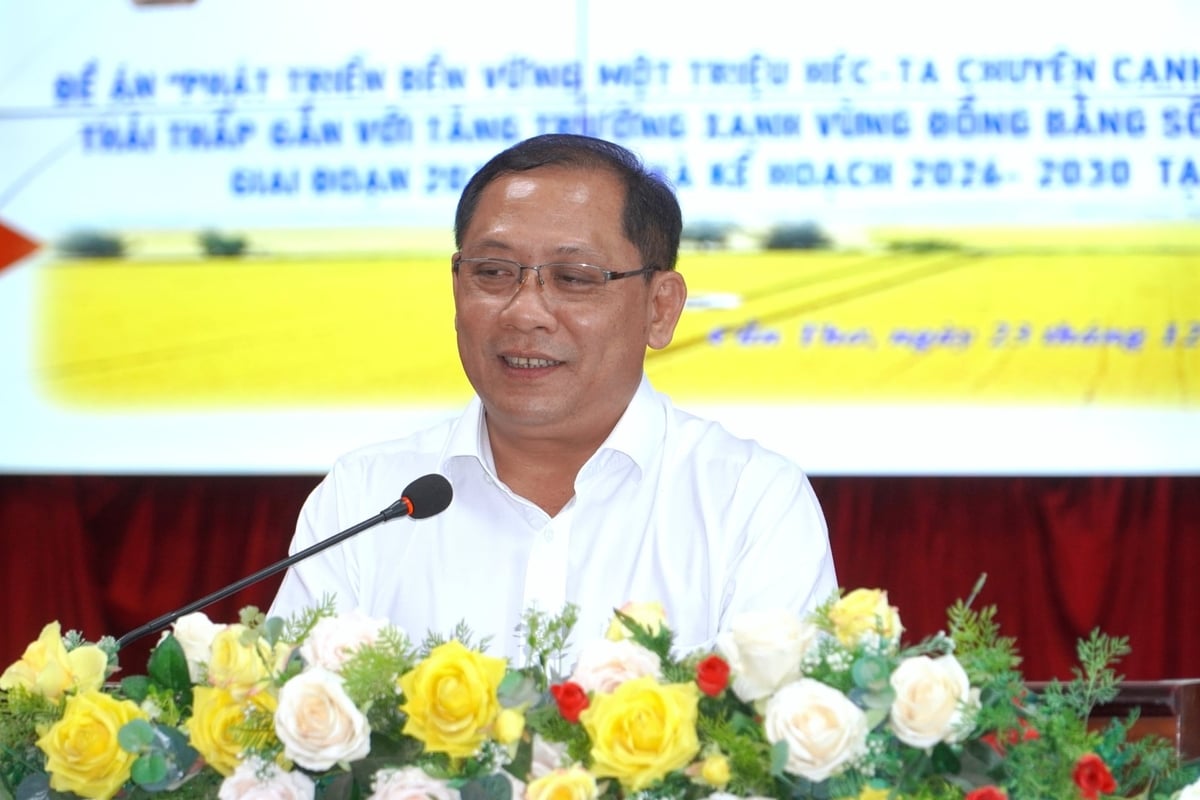
Vice Chairman of Can Tho City People's Committee Tran Chi Hung highly appreciated the efforts of the Department of Agriculture and Environment and localities in implementing the Project in the 2024-2025 period. Photo: Kim Anh.
Expanding rice cultivation area reduces emissions.
According to Ms. Nguyen Thi Giang, Deputy Director of the Department of Agriculture and Environment of Can Tho City, for the period 2026-2030, they will survey the rice-growing areas participating in the Project and create plot maps in these areas. At the same time, the Department will submit to the People's Committee of Can Tho City for approval the planning of high-quality rice production areas, creating conditions for the synchronized implementation of existing policies. It is projected that the area of rice cultivation with reduced emissions will increase to nearly 171,000 hectares by 2030.
The Department will implement measurement, reporting, and verification (MRV) activities for 30 cooperatives during the winter-spring season and subsequent seasons; consolidate and develop 171 cooperatives and farmers' organizations; and implement policies linking businesses and farmers for 76,000 hectares under the Project.
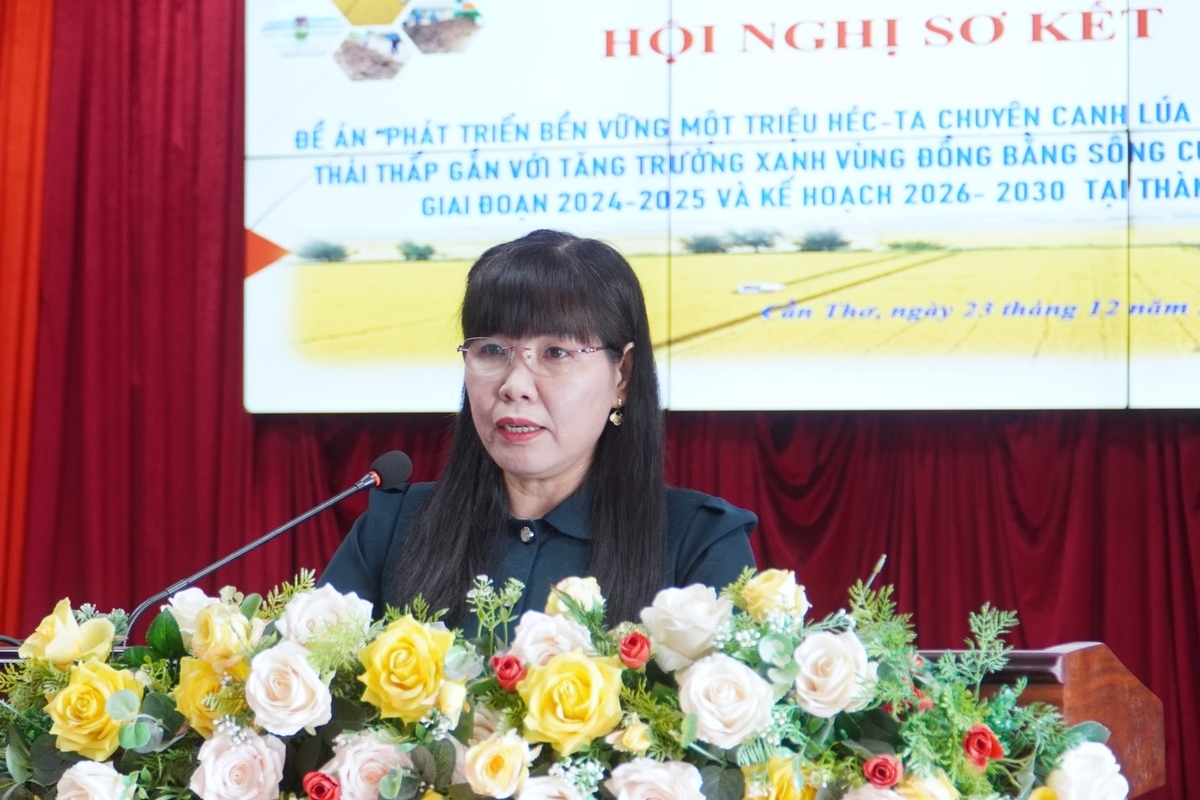
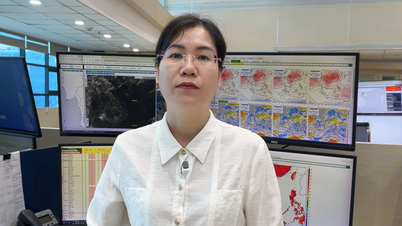
Ms. Nguyen Thi Giang - Deputy Director of the Department of Agriculture and Environment of Can Tho City, outlines the plan for implementing the Project in the 2026-2030 period. Photo: Kim Anh.
For the period 2026-2030, Mr. Tran Chi Hung, Vice Chairman of the People's Committee of Can Tho City, agreed to assign the Department of Agriculture and Environment to take the lead in advising the city's leadership to soon approve the plan for implementing the Project and allocate funds for its activities.
At the same time, he suggested that the city's Department of Agriculture and Environment coordinate with local authorities to review and improve production areas according to the criteria of the Project. Priority should be given to funding from the budget and World Bank loans to invest in irrigation infrastructure and internal field transportation, ensuring suitable farming conditions.
He also noted that the Department of Agriculture and Environment is developing a pilot plan for measurement, reporting, and verification (MRV) starting from the 2025-2026 winter-spring crop season, and will submit it to the City People's Committee for approval. The Department of Finance, in particular, is responsible for allocating funds for the pilot implementation of the registered MRV area.
The Ministry of Agriculture and Environment, in coordination with the Vietnam Agricultural and Rural Development Bank (Agribank), has implemented a loan program for linking production, processing, and consumption of high-quality, low-emission rice products in the Mekong Delta, with a scale of 30,000 billion VND.
As of November 30, 2025, Agribank's total outstanding loans to the rice industry in the Southwest region reached nearly VND 42,300 billion. Of this, outstanding loans under the 1 million hectare high-quality, low-emission rice project amounted to VND 6.9 billion, with 47 customers.
The branches also proactively reached out to 41 businesses, 415 cooperatives/associations, and over 4,900 individual customers to gather information on their eligibility for the Project, their business situation, and their loan applications.
Through this process, the parties exchanged views and agreed on a total committed loan amount of 760 billion VND, provided the customer meets all the loan eligibility requirements as stipulated.
Source: https://nongnghiepmoitruong.vn/can-tho-lam-gi-de-mo-rong-vung-trong-lua-phat-thai-thap-d790904.html





















































































Comment (0)