

- Perfecting planning, creating momentum for the southernmost region of the country
- Need to perfect regulations on electronic enforcement, protection of enforcement officers and adjustment of digital assets
- Perfecting the legal framework, controlling risks and creating breakthrough mechanisms
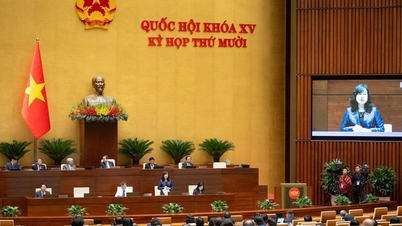
At the meeting, delegate Le Thi Ngoc Linh ( Ca Mau Delegation), Vice President of the Vietnam Fatherland Front Committee of the province, President of the Women's Union of Ca Mau province, Member of the National Assembly's Culture and Social Committee, gave a speech with many important recommendations related to the policy of reducing medical costs for people.
It is necessary to clearly identify priority target groups and implementation roadmap.
Delegate Le Thi Ngoc Linh said: Clause 1, Article 3 of the draft Resolution stipulates that the State budget ensures funding through the Health Insurance Fund (HIF) for periodic health check-ups or free screening at least once a year for groups of subjects that do not have regulations on funding sources.
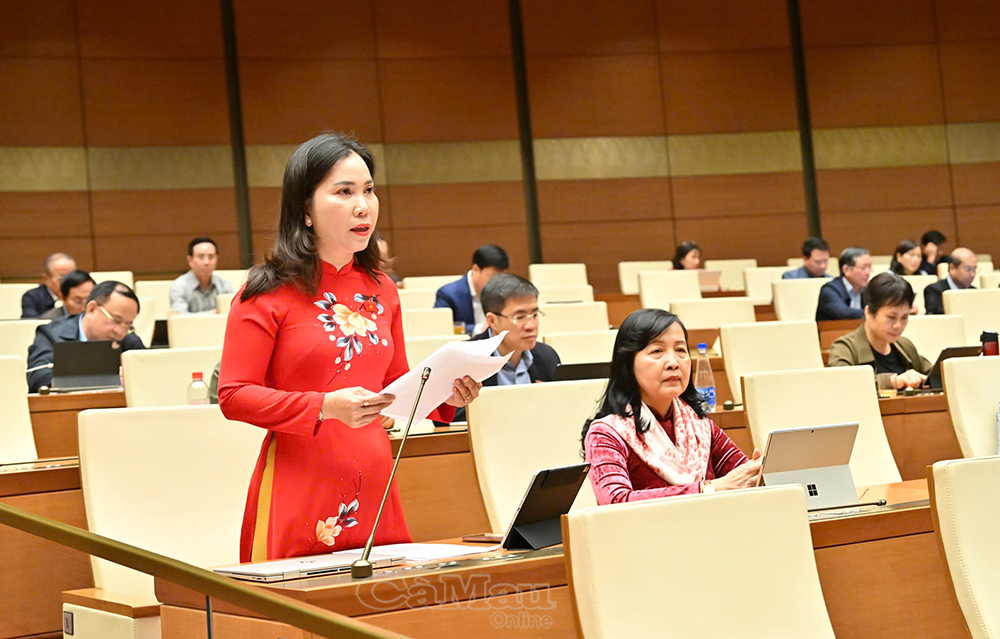 Delegate Le Thi Ngoc Linh spoke, emphasizing the need to clearly define the roadmap and priority groups to avoid confusion when implementing the free periodic health check-up policy.
Delegates believe that this is a humane policy, consistent with the orientation of early health care, from the grassroots level. However, the draft currently "only states general principles", and has not specifically identified priority groups or implementation roadmaps.
Delegates suggested that the drafting agency clarify priority groups first, such as: the elderly, children under 16 years old, people with disabilities, groups of heavy and hazardous workers, or groups at risk of occupational diseases; stipulate a roadmap for implementation in each phase, prioritizing groups at high risk or with difficulty accessing medical services.
According to delegates, clear regulations will help localities proactively arrange resources, avoiding confusion or inconsistent implementation.
Ensuring financial resources
Delegate Le Thi Ngoc Linh commented: Implementing periodic health check-ups for a large number of people will certainly put pressure on the Health Insurance Fund, the grassroots health system and health human resources.
Delegates suggested that it is necessary to carefully assess impacts and forecast costs; have appropriate resource allocation mechanisms; increase the application of digital technology and manage electronic health records to reduce the burden on grassroots levels.
This is to ensure that the policy is implemented in a practical manner, without causing overload or creating unexpected financial burdens.
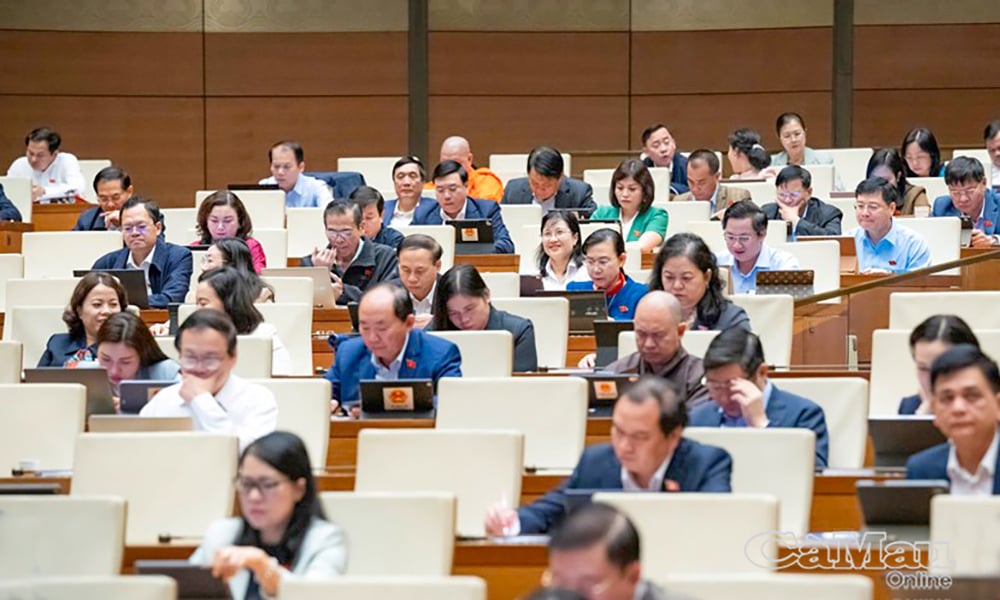 Scene of the discussion session on the morning of December 2.
Proposing to supplement the policy: Health insurance covers 100% for people in difficult circumstances with cancer and serious illnesses, a content that many voters and people are interested in, delegate Le Thi Ngoc Linh especially emphasized expanding the level of health insurance benefits for groups in difficult circumstances but with serious illnesses, especially cancer.
Delegates analyzed three main reasons:
Firstly, the cost of treatment is too high and prolonged. People with serious illnesses, especially cancer, must undergo complicated, expensive, and prolonged treatment. Many families are not considered poor or near-poor on paper, but in reality, their economic situation is extremely precarious: loss of income, sale of assets, high-interest loans, etc., leading to permanent poverty.
Second, it is necessary to expand the support criteria for the “actually difficult” group. Delegates proposed to expand the criteria for beneficiaries of 100% health insurance, not only limited to poor and near-poor households, but also to include the group of families with difficulties but with members suffering from serious illnesses.
According to delegates, this helps reduce financial pressure; increase equity in access to healthcare; limit usury; and reduce the burden on other social security systems.
Third, the policy has profound humanitarian significance. Delegates believe that this policy “not only cures illness but also cures anxiety”, giving families hope to continue living, working and contributing to society.
At the same time, this is a step to concretize the policy of "leaving no one behind" and increase equity in health care.
At the end of her speech, delegate Le Thi Ngoc Linh affirmed that the Resolution needs to be completed in a specific - clear - feasible direction, ensuring the goal of reducing actual medical costs for people and improving the effectiveness of universal health care.
Le Hang
Source: https://baocamau.vn/can-xac-dinh-ro-nhom-uu-tien-va-dam-bao-nguon-luc-de-giam-chi-phi-y-te-a124369.html

![[Photo] Worshiping the Tuyet Son statue - a nearly 400-year-old treasure at Keo Pagoda](/_next/image?url=https%3A%2F%2Fvphoto.vietnam.vn%2Fthumb%2F1200x675%2Fvietnam%2Fresource%2FIMAGE%2F2025%2F12%2F02%2F1764679323086_ndo_br_tempimageomw0hi-4884-jpg.webp&w=3840&q=75)

![[Photo] Parade to celebrate the 50th anniversary of Laos' National Day](/_next/image?url=https%3A%2F%2Fvphoto.vietnam.vn%2Fthumb%2F1200x675%2Fvietnam%2Fresource%2FIMAGE%2F2025%2F12%2F02%2F1764691918289_ndo_br_0-jpg.webp&w=3840&q=75)








































































Comment (0)