

Through countless changes, that land serves both as a livelihood today and as a place where historical memories continue to be preserved and extended.
The Mít Garden - Cô Hầu Field relic site belongs to the Tây Sơn Thượng đạo Special National Relic Complex. According to folklore, this place is associated with the image of Ya Đố and the Bahnar people reclaiming land and planting rice, contributing to supporting the Tây Sơn rebels during their early difficult times.
A land of sediment and a new rhythm of life.
The road leading to the Mít Garden - Cô Hầu Field historical site is now wider and more convenient than before. Both sides of the road are lined with lush green fields.
From early morning, the people of Kông Bơ La commune were already present in the fields to tend to their crops. Within the historical site's grounds, the Cô Hầu rice field appeared with its young, vibrant rice paddies.
Surrounded by coffee plantations, sugarcane fields, and jackfruit orchards, the sounds of water pumps used for drought relief, hoes and shovels, and lively conversations create a peaceful rhythm of life.
Amidst this landscape, it's hard to imagine that in the late 18th century, this place was once a food storage area for the Tay Son rebels during their early days of establishing their power. Distant history and the present seem to intertwine and continue each other through the labor of human hands.
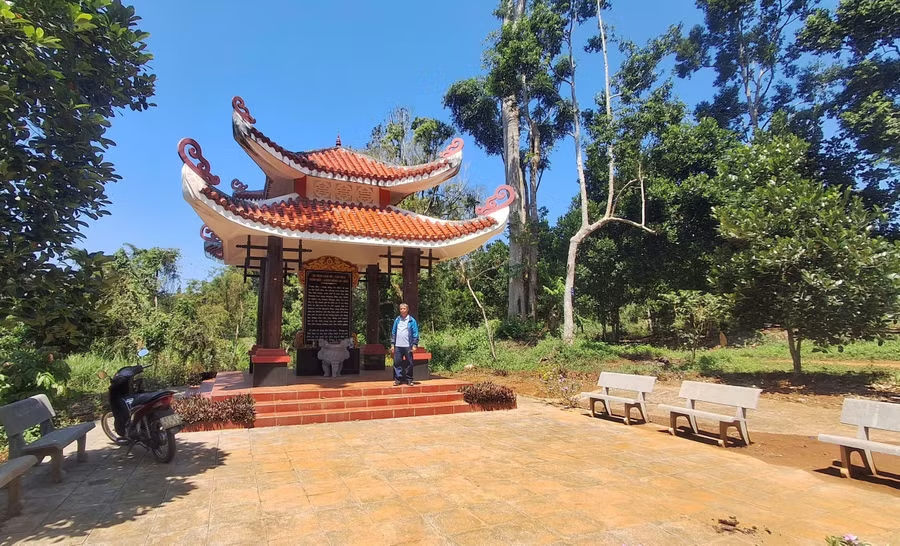
The Mít Garden - Cô Hầu Field historical site has taken on a new look after receiving investment for infrastructure upgrades. Photo: NT
While watering his coffee plantation, Mr. Dinh Van Hmun (from Kuao village) shared: “My family has 4 sao (approximately 0.4 hectares) of coffee and 1 sao (approximately 0.1 hectares) of rice located within the historical site. Thanks to the government's investment in infrastructure, production is much more convenient. The coffee plantation yields an income of about 150 million VND per year, and we have enough rice to last us all year round.”
Mr. Hmun added that previously, this area was a low-lying region, often flooded during rainy seasons, and had slow drainage, resulting in low crop yields. In recent years, the local authorities have leveled the land and built a drainage system, helping to keep the fields dry and allowing crops to grow better.
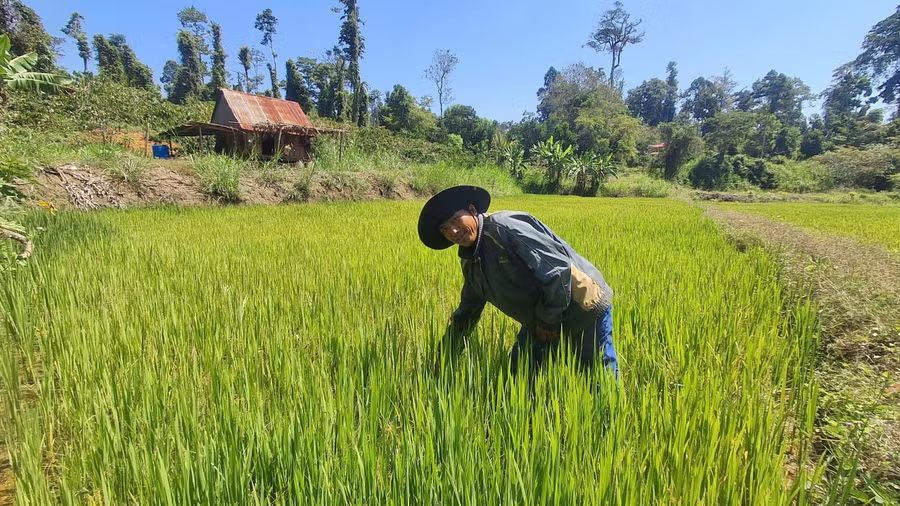
A plot of rice planted in the Co Hau field yields a high harvest, providing Dinh Van Hmun's family with enough rice to eat for the whole year. Photo: NT
Not content with just rice, people have boldly introduced high - value crops such as coffee, sugarcane, and fruit trees into production. As a result, their income has increased significantly. "Some households earn 300-400 million VND per year from sugarcane and fruit trees. Life is much better than before," said Mr. Hmun.
The sprawling fields surrounding the historical site are a testament to the renewed vitality of this land rich in historical significance. From a place that once nurtured the Tay Son rebels, this area continues to sustain its inhabitants with bountiful harvests today.
If the Co Hau field symbolizes fertility, then the Jackfruit Garden is where memories are most vividly preserved. Within the historical site's grounds, ancient jackfruit trees with gnarled trunks and exposed roots clinging tightly to the soil, their branches reaching horizontally like aged arms embracing time.
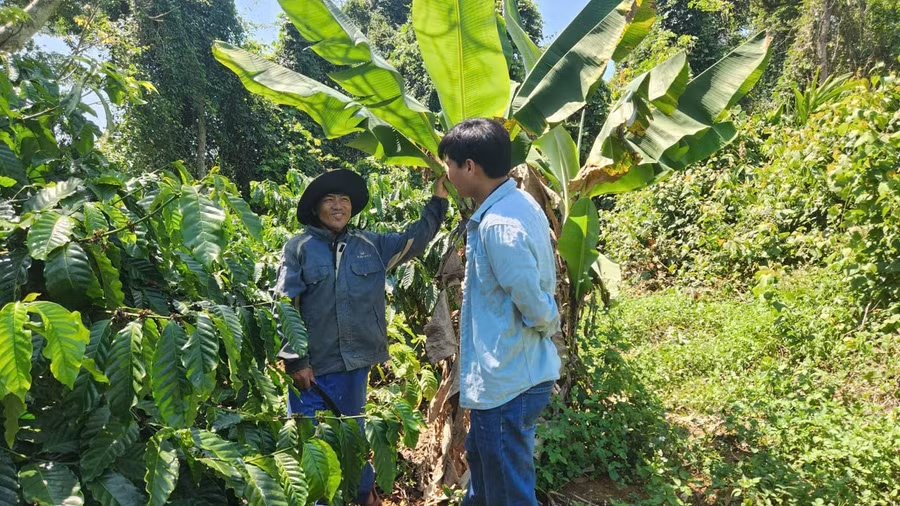
Mr. Dinh Van Hmun grows coffee and rice in the grounds of the Vuon Mit - Canh Dong Co Hau historical site. Photo: NS
Pointing towards the ancient jackfruit trees, Mr. Hmun recounted: "In the past, this area had many old trees, but due to lack of care, they gradually died. Now, only a few old jackfruit trees remain."
After the site was recognized as a historical monument, the authorities planted hundreds of additional jackfruit trees. Now the trees are bearing fruit, some weighing 10-15 kg, and are very sweet and fragrant.”
These ripe, golden jackfruits today evoke a long stream of memories. History is sometimes not present in monumental structures, but quietly in a tree stump, a field, or a story told by the fireplace.
Preserve to open up the future.
According to the People's Committee of Kông Bơ La commune, the Mít Garden - Cô Hầu Field historical site covers an area of over 20 hectares. It was classified as a National Historical Monument by the Ministry of Culture, Sports and Tourism in 1991. In 2022, the Tây Sơn Thượng Đạo historical complex, including the Mít Garden - Cô Hầu Field, was recognized as a Special National Monument.
Ms. Vo Thi Loi, Vice Chairman of the People's Committee of Kong Bo La commune, said: "This is a relic with special value in terms of history, culture, and traditional education . Not only is it a historical testament, but it is also a space for educating the spirit of unity among ethnic groups in nation-building and national defense."
However, conservation efforts face many challenges. Currently, only nine ancient jackfruit trees remain, including two with a diameter of over 1.2 meters. After typhoon No. 13 in 2025, some trees had broken branches, affecting the landscape of the historical site. Time and natural disasters are gradually eroding these precious relics.
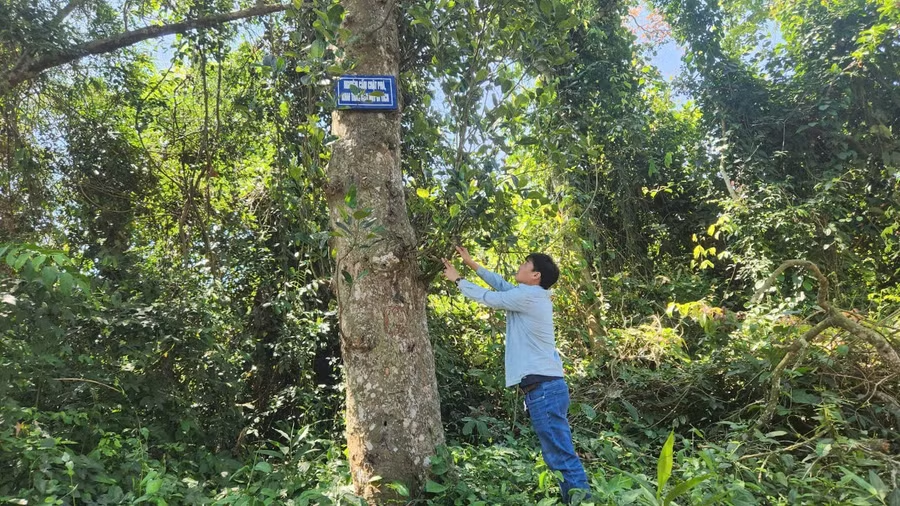
An ancient jackfruit tree in the grounds of the Jackfruit Garden - Co Hau Field historical site. Photo: NS
The fact that the historical site is interspersed with agricultural land makes management complex. There have been instances of unauthorized road construction for transporting agricultural products and displacement of boundary markers. Meanwhile, the security force here is small, and maintenance funds are limited.
Between 2018 and 2021, the former Kbang district invested over 7.4 billion VND to upgrade infrastructure, build a 3.2 km long road leading to the historical site, construct a memorial house, a concrete courtyard, a guardhouse, mark boundaries, build a fence, and install solar power. However, compared to the significance of this national special historical site, additional resources and a long-term strategy are still needed.
Currently, the local authorities are developing a conservation plan that combines preserving the historical site with promoting its value. The focus is on maintaining its current state, caring for the ancient jackfruit trees, planting replacement trees, improving the landscape, and completing the signage system to facilitate visits.
At the same time, the commune is orienting the development of community tourism and experiential tourism associated with the Bahnar ethnic community's culture, along three axes: cultural - historical, ecological - community, and experiential tourism.
Notably, the "Tay Son Imprint in National History" link connects the Vuon Mit - Canh Dong Co Hau relic site with the An Khe relic cluster and the Tay Son Ha Dao relic system, forming a seamless experiential space about the Tay Son movement.
Along with that is the community-based tourism model, bringing tourists closer to the life of the Bahnar people: listening to gong music, enjoying traditional cuisine, experiencing rice planting, etc.
As evening falls, the sunlight fades across the fields. People return home after a day's work, their baskets laden with a few green jackfruit for dinner. On the young trees, the fruit continues to grow larger with each passing season.
Amidst the hustle and bustle of modern life, the Jackfruit Garden - Co Hau Field historical site quietly preserves traces of a bygone era. In the face of daily change, old memories do not fade but remain anchored in the land, enduringly extending to the present.
Source: https://baoangiang.com.vn/canh-dong-neo-dau-nha-tay-son-a485339.html

















































































Comment (0)