

In Ky Hoa commune (Ha Tinh), the hill area that was previously used by people to grow acacia and cassava, low-income crops that were gradually abandoned, has now been "renovated" with more than 8 hectares of pineapple growing area. This transformation not only helps to effectively exploit the hill land fund that has low economic value, but also opens up a direction for sustainable agricultural development for local people.
It is known that in 2023, the pineapple growing model in association with businesses began to be tested. Although it was thought to be just an exploratory step, the pineapple plants have grown very well, becoming a "golden" opportunity for farmers to get rich on difficult land.
After determining that the local hilly land has suitable conditions for growing pineapple, in 2024, the People's Committee of Ky Hoa commune coordinated with the agricultural sector and a business to implement a pineapple growing model on 8.5 hectares of hilly land. On that basis, 13 households joined together to establish the Ngan Ha Pineapple Production Cooperative.
The highlight of the model is that it is organized in a closed value chain, the enterprise provides seeds, technical support throughout the cultivation process and commits to purchasing all products. Thanks to that, farmers can feel secure in production, reduce output risks and improve economic efficiency right from the first crop.
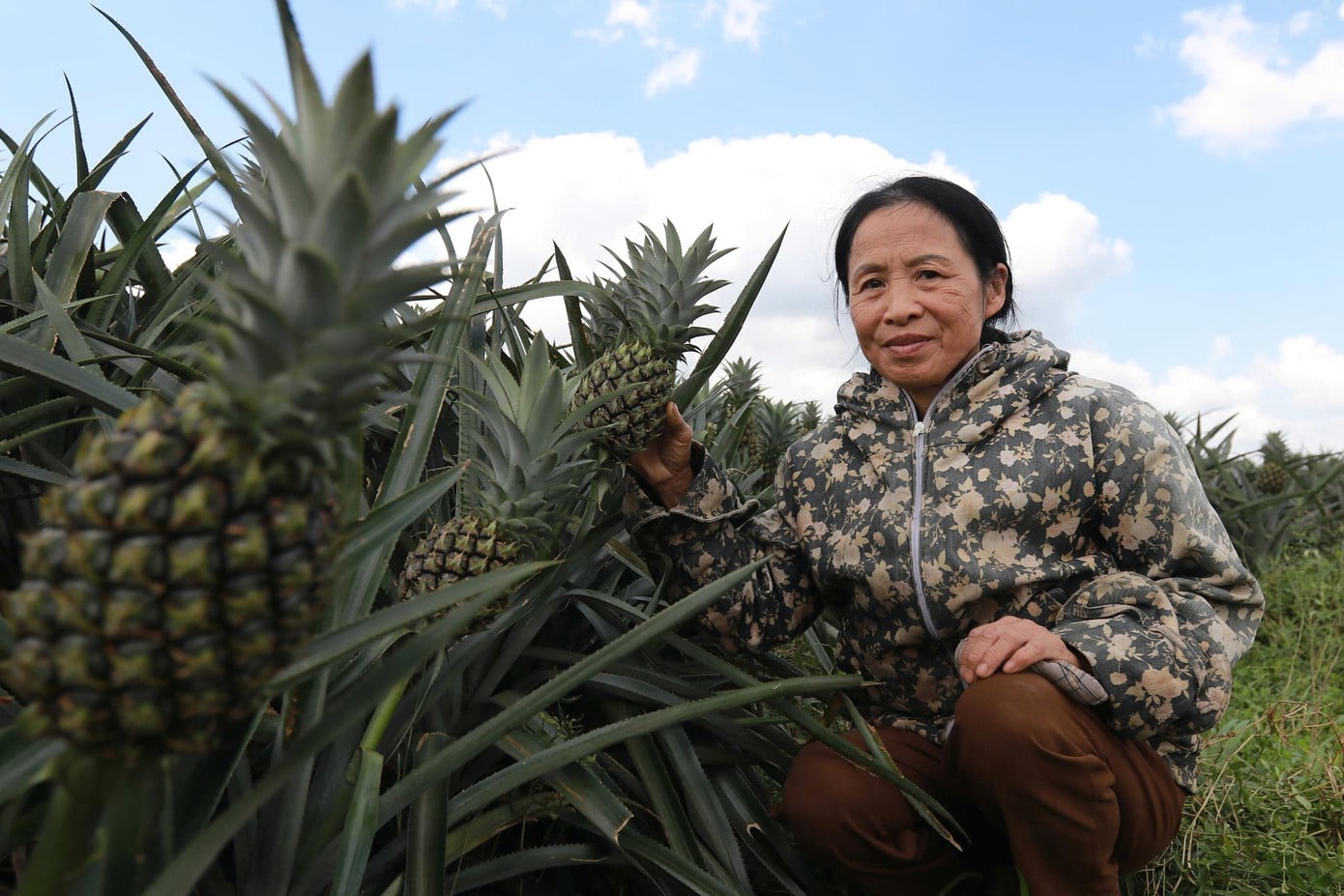
Ms. Nguyen Thi Nguyet was excited when the pineapple yielded high yield in the first harvest.
Standing in the middle of a vast pineapple hill in the harvest season, Mrs. Nguyen Thi Nguyet (Truong Lac village) happily shared that her family has planted 3 hectares of pineapple. Previously, this land used to grow acacia and cassava but the income was low. Now that she has switched to growing pineapple, the first harvest is about 30 tons, and the next harvests are expected to be even higher.
“With a stable purchase price of 12,000-15,000 VND/kg, each hectare brings in an income of about 200 million VND/year after deducting expenses. In addition, I also sell seedlings, earning more than 100 million VND each year. Previously, growing acacia trees had very low income, sometimes working for a whole year without any results. Thanks to switching to growing pineapples, my family has a better life and has the conditions to expand the area in the near future,” Ms. Nguyet said excitedly.
The transition from cajuput forests to pineapple models not only brings a stable source of income, but also helps Ms. Nguyet and many households change their production mindset from fragmented farming to cooperative production, with technical support and product consumption.
Mr. Truong Xuan Ha, Head of the Ngan Ha Pineapple Production Cooperative, said that the group currently has nearly 20 hectares of pineapple grown in Ky Hoa commune and Cam Xuyen district. Thanks to suitable land conditions and technical support from enterprises, the pineapple gardens are growing very well; about 30% of the area has yielded the first harvest. It is expected that in the main crop at the end of 2025 (lunar calendar), the revenue will reach 240-280 million VND/ha, creating a stable source of income for participating households.
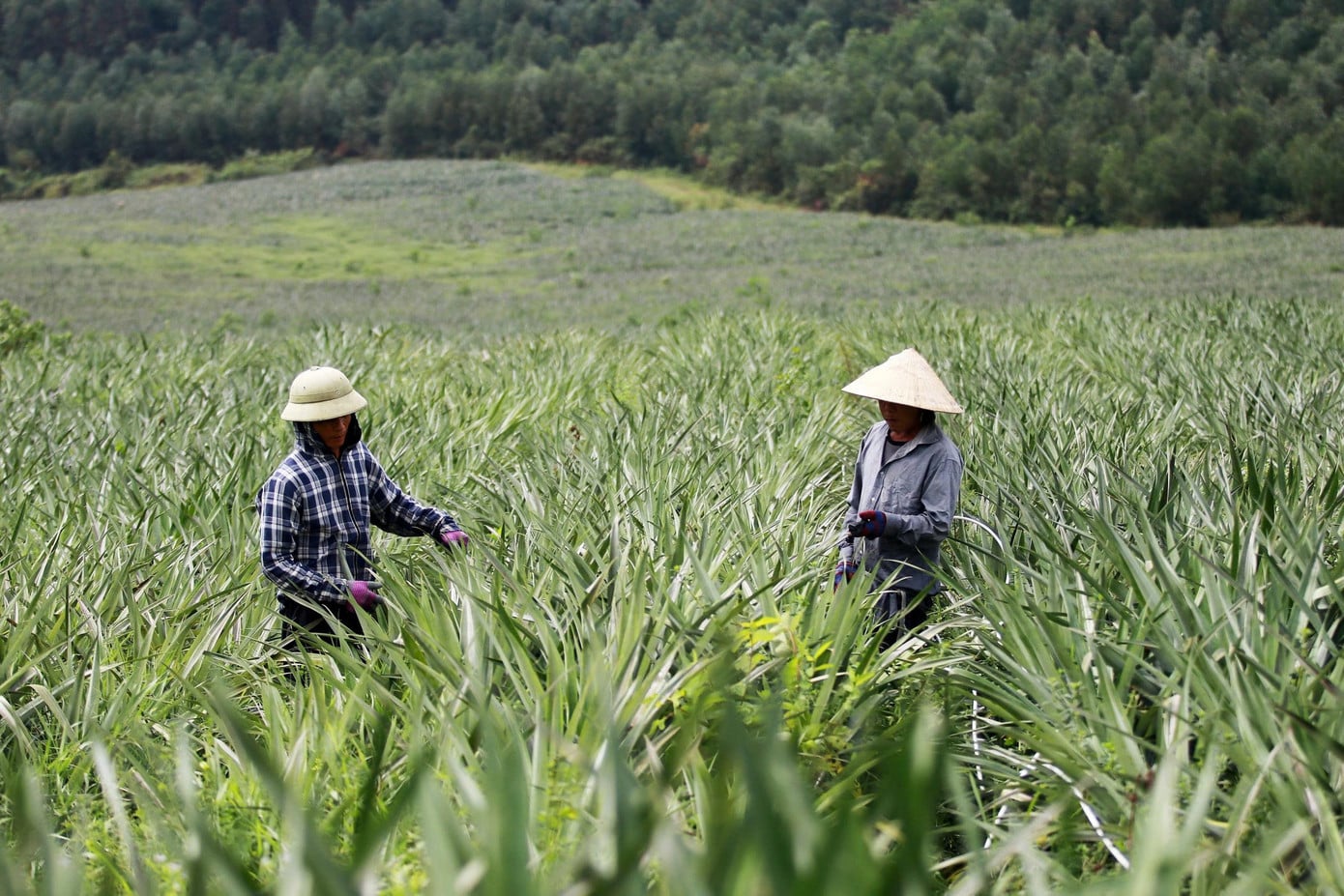
Pineapple tree "found its place" in Ky Hoa land.
According to Mr. Ha, the pineapple growing model not only brings high economic value but also opens up a sustainable way out of poverty for local people. “Many households previously only relied on acacia and cassava, so their income was very unstable. Now, switching to pineapple growing, people have a stable output, their income has increased significantly, and many families have become well-off,” Mr. Ha shared.
According to Mr. Ha, the formation of cooperatives, production according to a closed value chain, and the provision of seeds and technical transfer and product consumption have helped to significantly reduce risks for farmers. These changes are contributing to the building of a sustainable poverty reduction model in Ky Hoa, creating a solid economic foundation for many households to escape poverty and become rich right on their homeland's hilly land.
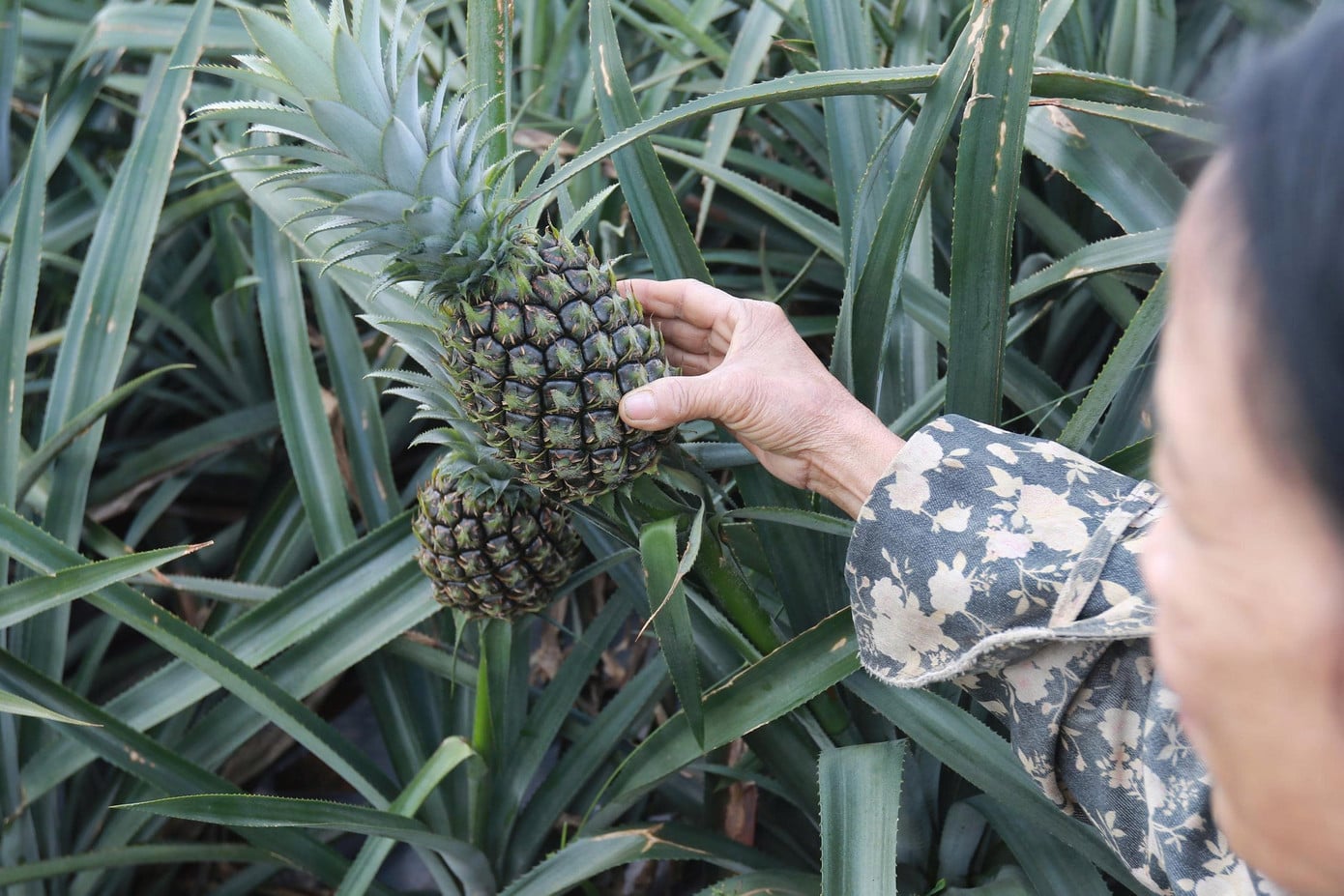
Pineapple trees open up a new direction, helping people escape poverty sustainably.
Ms. Le Thi Thao, Economic Department of Ky Hoa commune, said that after more than 1 year of implementing the pineapple growing model, the first crop results were very positive. According to Ms. Thao, pineapple plants adapt well to the natural conditions of Ky Hoa, have high productivity, stable output, helping people have a sustainable income.
"In the coming time, we will continue to provide technical training and strengthen cooperation with businesses so that people can feel secure in production. In particular, the pineapple model has created a strong spillover effect. Many families who previously lived mainly by growing acacia, which was inefficient, have now decided to improve their land to switch to growing pineapple to boost economic development," said Ms. Thao.
Source: https://tienphong.vn/cay-dua-mo-huong-thoat-ngheo-ben-vung-noi-vung-doi-kho-can-post1801123.tpo



















































































Comment (0)