

 |
| The golden apricot tree in the northern part of Thai Nguyen province is thriving again, gradually asserting its position as a high-value specialty crop. |
In the nearly 6-hectare garden of Mrs. Nong Thi Van's family in Quyet Thang village (Tan Ky commune), rows of apricot trees stretch endlessly. Having been involved with apricot cultivation for over 20 years, Mrs. Van continues to expand her orchard as she recognizes the clear economic benefits.
Although this year's yield is only about one-third of what it was during bumper harvests, the apricot orchard still produces an average of 40-50 tons of fruit annually. The entire area is cared for by Mrs. Van and her husband themselves, which significantly reduces costs and improves economic efficiency.
It's no coincidence that apricots were once a famous product of the northern localities of Thai Nguyen province. With a cool climate, loose, nutrient-rich soil, apricot trees grow vigorously, are resistant to pests and diseases, require low investment costs, and yield stable productivity. In particular, the quality of apricots here is distinctly different: large, uniform in size, with thick flesh, a refreshing sour taste, and a natural aroma... these are crucial factors for developing further processing.
In reality, apricot trees have gone through a period of decline. Before the establishment of a consumption network, the product was mainly sold in small quantities, dependent on private traders, resulting in unstable prices. At one point, the price of apricots dropped to a record low, only a few hundred dong per kilogram, not enough to cover the harvesting costs.
Many households were forced to cut down their apricot trees and switch to growing other crops. In recent years, with the market improving, people have gradually restored the planted area. The return of the apricot tree is linked to the formation of supply chains from production to consumption. Purchasing centers and cooperatives play a central role, helping farmers feel secure in their production.
Currently, each year, local distributors collect thousands of tons of apricots, supplying them to processing facilities, and expanding the consumer market. As a result, the price of apricots remains stable at 16,000 - 20,000 VND/kg, sometimes reaching 30,000 VND/kg.
Not only focusing on fresh fruit consumption, many cooperatives have boldly invested in deep processing. Ms. Trinh Thi Thu, Director of Doan Ket Cooperative in Tan Ky commune, said: "Every year, the cooperative produces about 200 tons of candied apricots with products such as sweet and sour chewy apricots, ginger apricots, etc."
Processing not only extends shelf life but also increases added value and expands the consumer market. Thanks to the application of safe production processes, drying in greenhouses, and strict quality control, the cooperative's two products have achieved OCOP 3-star standard.
 |
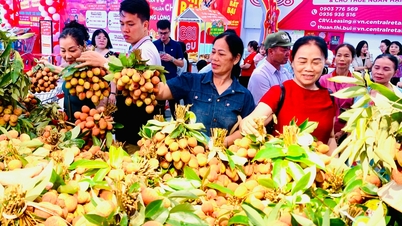
| An apricot purchasing point in Bac Kan ward. |
The economic benefits of apricot trees have been clearly demonstrated. In Tan Ky commune, the key apricot-growing area, with over 400 hectares, is providing a stable source of income for hundreds of households.
Mr. Nguyen Van Lich, from Quyet Thang village, Tan Ky commune, said: "With a density of about 250 trees per hectare, each tree yields an average of 70-80 kg of fruit, and revenue per hectare can reach hundreds of millions of dong. After deducting expenses, many households earn high profits, a significant amount for rural mountainous areas. Besides generating direct income, apricot trees also create seasonal jobs for hundreds of laborers each harvest season, contributing to solving rural employment problems."
Mr. Tran Quang Hiep, Vice Chairman of the Tan Ky Commune People's Committee, said: Besides its economic value, the golden apricot tree also opens up potential for ecotourism development. The season when apricot blossoms whiten the mountains and forests, and the season when the fruit ripens to a vibrant yellow, creates a beautiful landscape that attracts tourists. Some families have begun to develop tourism products associated with experiencing the apricot blossom and harvest seasons, combined with promoting local specialties.
This is considered a promising direction, contributing to diversifying livelihoods for the people. In the coming time, the locality has decided to expand the area of cultivation according to standards, improve seed quality, promote deep processing, build brands, and aim for geographical indications. At the same time, it will create conditions for processing facilities to invest in and develop supply chains, reduce dependence on traders, and enhance the role of cooperatives and associations in the area.
Source: https://baothainguyen.vn/kinh-te/202604/cay-mo-vang-hoi-sinh-tren-dat-kho-bf81380/






















































































Comment (0)