

 |
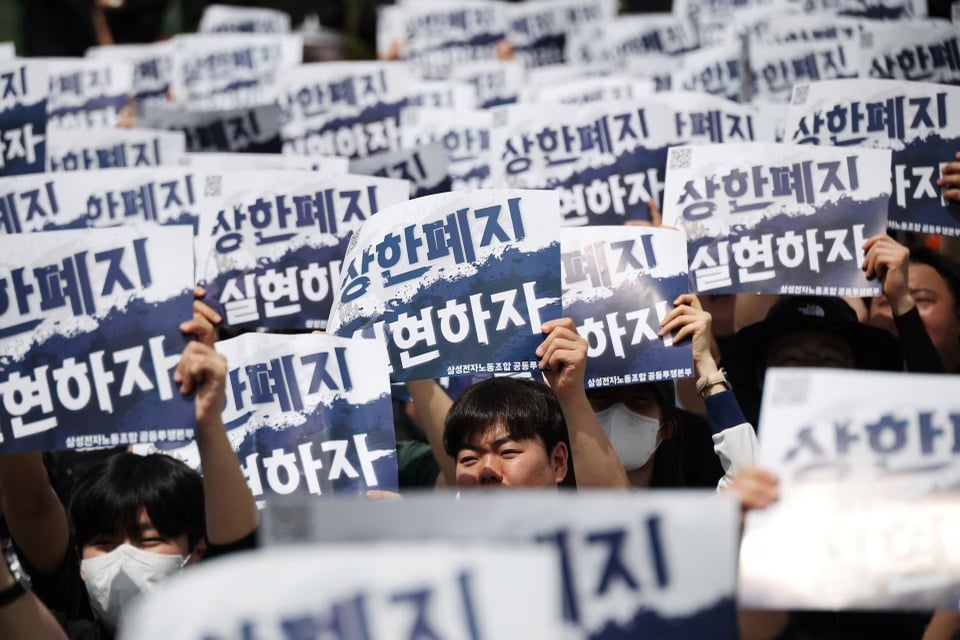
The protests, which began last month, concern Samsung's employee compensation and benefits policies. Photo: Reuters . |
The Samsung Electronics union has decided to postpone its planned strike, scheduled for May 21, after reaching a preliminary agreement on a performance-based bonus system. The agreement, signed on the evening of May 20, ended a negotiation deadlock that had lasted since November 2025 and averted the risk of large-scale disruptions to AI chip production.
The preliminary agreement will be put to a vote by more than 70,000 union members from 2 PM on May 23rd to 10 AM on May 27th. If approved, wage negotiations will officially conclude.
This was the result of a lengthy negotiation session following a mediation session chaired by the National Labor Relations Commission that ended without reaching a consensus the previous day. Labor Minister Kim Young-hoon personally attended the final negotiation session, demonstrating the government 's efforts to resolve the labor dispute at South Korea's largest conglomerate.
Earlier, Prime Minister Kim Min-seok warned that the government could use its emergency mediation power, allowing Seoul to suspend the strike for up to 30 days if the union proceeded with a full-scale strike.
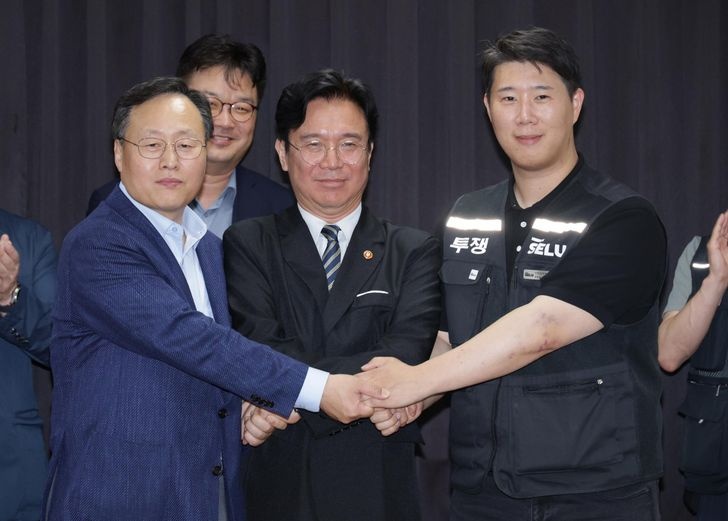 |
Samsung Electronics union leader Choi Seung-ho (right), Labor Minister Kim Young-hoon (center), and Head of Human Resources at Samsung DS Yeo Myung-koo (blue shirt, left) after reaching an agreement. Photo: Press Corp. |
Under the agreement, Samsung will establish a special performance bonus for its DS (Device Solutions) chip manufacturing division, funded from 10.5% of mutually selected business metrics. Combined with an increased base bonus of 1.5%, the total payout ratio will reach 12%. The special bonus will be paid entirely in after-tax treasury stock, a portion of which will be locked for a specified period. The agreement is valid for 10 years and will only be activated when the company reaches a minimum operating profit level.
The final point of contention in the negotiations was the allocation of bonuses within the DS department. Both sides agreed to distribute 40% equally across the entire department and 60% based on the performance of each business segment. Loss-making departments would receive less, but this arrangement had a one-year grace period before implementation.
Previously, the union demanded a 70% equal distribution and a 30% performance-based compensation. The company objected, arguing that the chip foundry and chip design divisions were still operating at a loss, and that increasing the equal distribution would undermine the principle of performance-based compensation.
"Rewarding those who produce results is a fundamental principle of our compensation policy," said Yeo Myung-koo, Head of Human Resources at Samsung DS, after the signing. Union leader Choi Seung-ho also apologized to the public for causing concern and pledged to work towards stabilizing labor relations at Samsung.
As of the evening of May 20th, 48,000 union members had registered to participate in the strike. If the strike occurs, the estimated losses could reach 100 trillion won (approximately $66.3 billion ), according to figures previously released by the union.
The dispute erupted amid Samsung's significant gains from the global AI investment wave. The company currently holds 36% of the global DRAM chip market and approximately one-third of the global NAND flash market in Q4 2025, according to data from TrendForce. Employees argue they deserve more of the record profits the company has recorded thanks to soaring demand for HBM chips for AI infrastructure.
Despite a preliminary agreement being reached, Samsung still faces an internal challenge. During negotiations, union members from the Device Experience division, responsible for smartphones and home appliances, reported that their requests were ignored. Some even filed lawsuits demanding a suspension of negotiations.
Source: https://znews.vn/chien-thang-quan-important-cua-samsung-post1652978.html

























































































Comment (0)