

As the Mekong Delta enters December, a decisive time in the crop calendar, water resource control, flood prevention and salinity regulation are becoming the top concerns of localities. This is the preparation stage for the 2025-2026 winter-spring crop, the largest and most important rice crop of the year. Unusual developments in hydrometeorology: heavy rain, floods, strong tides, and wind-induced water surges, demonstrate the key role of the irrigation system, especially the Cai Lon - Cai Be - Xeo Ro cluster, in protecting production.
According to forecasts from the Southern Institute of Water Resources Planning and the Southern Institute of Water Resources Research , the ENSO phenomenon in 2025 will remain neutral, but rainfall in the Mekong River basin will fluctuate strongly, with many periods exceeding the average of many years. At the same time, from August to November 2025, the East Sea will continuously have storms and tropical depressions, directly affecting the mainland. This is the reason why widespread heavy rains appear more often, putting pressure on the entire drainage system of the Mekong Delta.
In that context, the operation of irrigation works must be implemented promptly, accurately and flexibly to minimize the risk of flooding and ensure the safety of production areas.
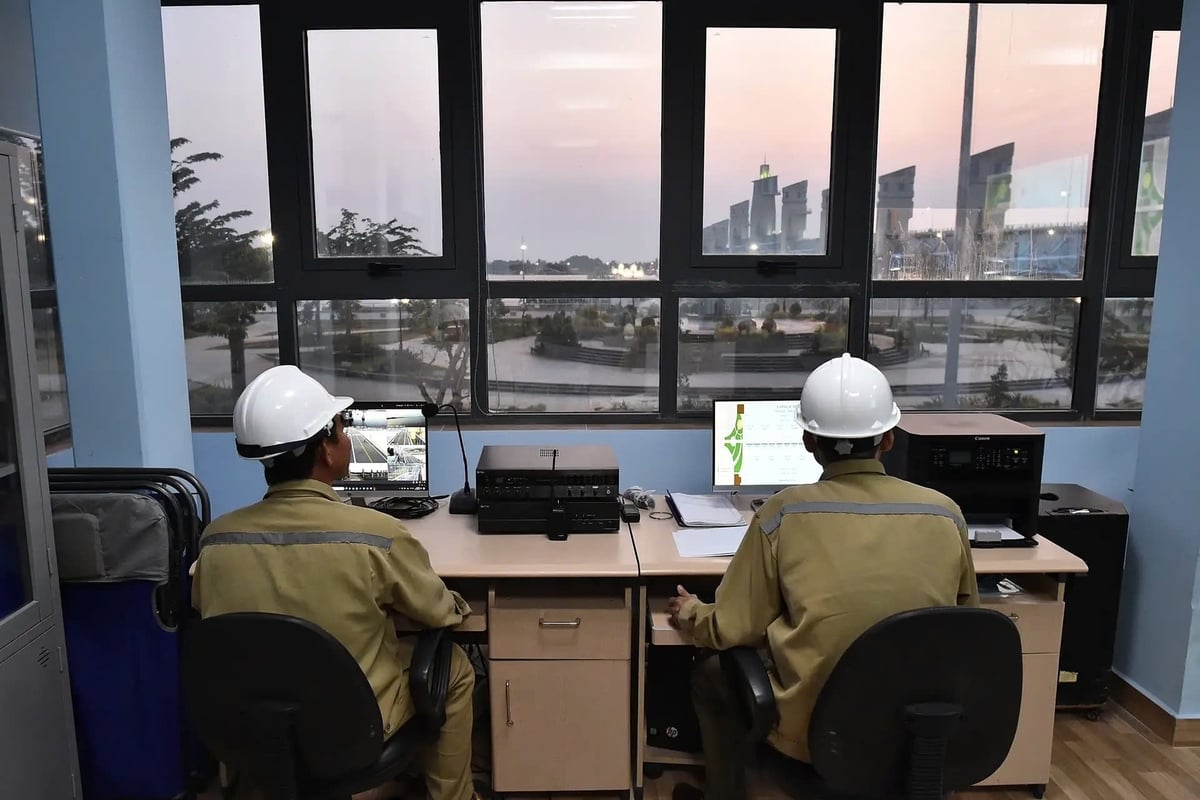
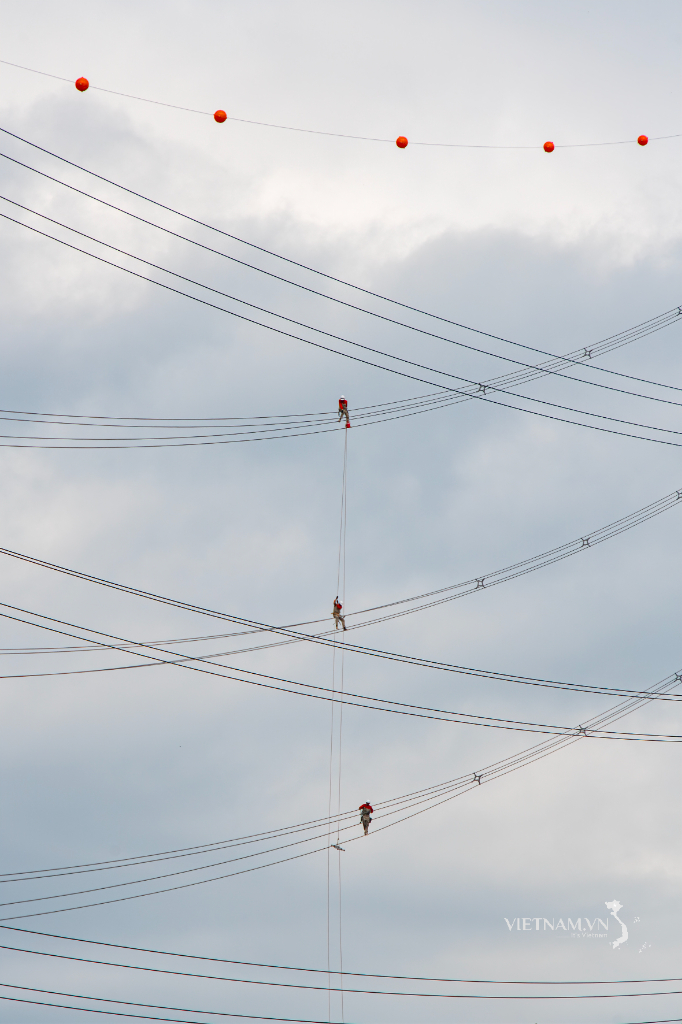
The flexible operation of irrigation works, especially the Cai Lon - Cai Be - Xeo Ro cluster, has helped to keep the water level in the fields stable. Photo: Provided by KTTLMN Company .
Cai Lon - Cai Be cluster operates flexibly
The report of the Southern Irrigation Exploitation Company Limited shows that during the peak flood season months (July-October 2025), the operation of the Cai Lon - Cai Be - Xeo Ro project cluster is carried out closely, closely following the rain - flood - tide developments and local production needs.
Cai Lon sluice alone has been operating for 14 days to control the tide, with 7/11 gates closed for 9-12 hours/day. When the tide recedes, 11/11 gates are fully opened to speed up the drainage. Thanks to that, the upstream water level (at Cai Tu bridge) is kept stable around +0.60m, creating favorable conditions for the internal irrigation system to operate pumping and discharging flexibly. More importantly, the downstream of the sluice does not experience prolonged flooding during the entire operation period.
Cai Be sluice closes 2/2 gates according to each tide, maintaining the water level in the field within the range of +0.60m to +0.76m - the ideal level for both drainage and preparation for sowing. Xeo Ro sluice remains open freely, supporting rapid drainage to the West Sea.
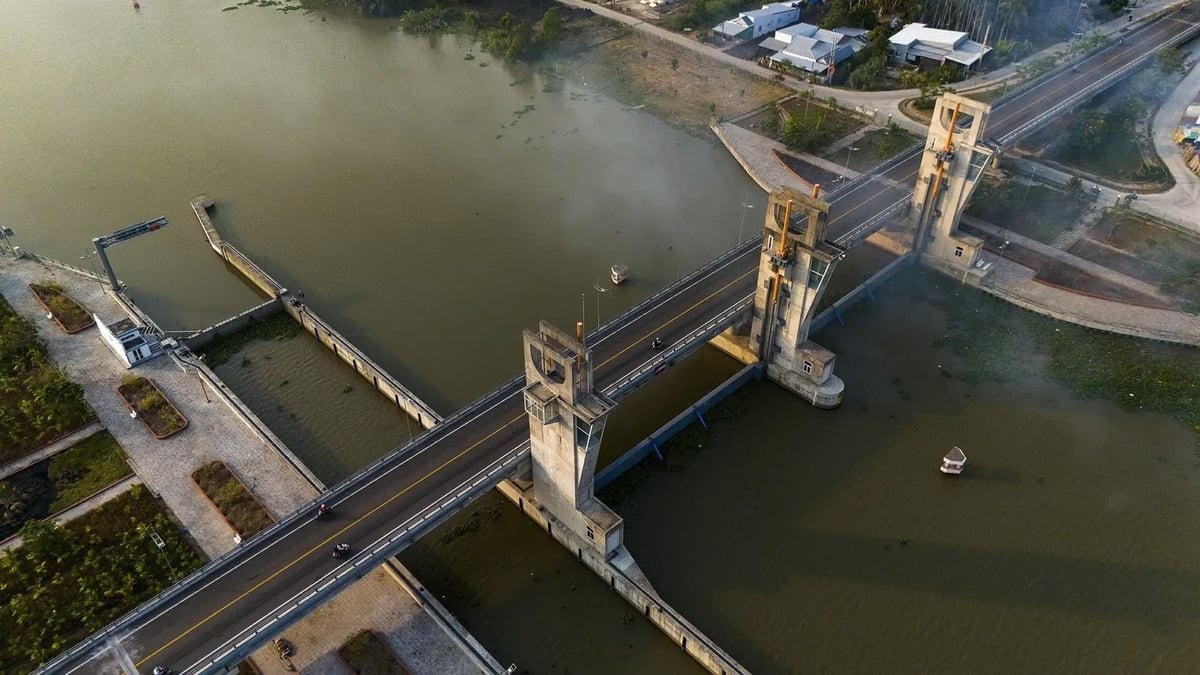
The Mekong Delta is meeting all conditions to enter the 2025-2026 winter-spring crop season in a safe state. Photo: Provided by KTTLMN Company .
The results of the operation are clearly shown: reducing the amount of water overflowing into the fields, extending the drainage time during the day, helping sub-regions maintain the crop calendar. Thanks to that, many localities still harvest summer-autumn crops and sow autumn-winter crops at the recommended time.
All provinces in the project area recorded positive results: An Giang harvested more than 89,600 hectares of summer-autumn crops; Can Tho City (from the old Hau Giang ) completed harvesting 48,551 hectares; Ca Mau harvested 22,175 hectares and deployed more than 4,200 hectares of shrimp-rice. Stable water sources help farmers feel secure in preparing their fields to plant winter-spring crops as soon as the tide recedes.
Ready for winter-spring crop 2025-2026
In December, the transitional season and also the sensitive time of salt water and high tides, proactively monitoring hydrometeorological forecasts, controlling fields, and maintaining reasonable water levels on the field surface are priority tasks.
Experts recommend: farmers should not sow rice before the high tide at the end of the month; need to coordinate closely with local irrigation forces to take in and release water at the right time; prioritize short-term varieties that can withstand salinity and avoid planthoppers. Large construction systems such as Cai Lon - Cai Be - Xeo Ro, Vung Liem, Ninh Quoi are being operated synchronously, in accordance with the procedures of the Ministry of Agriculture and Environment , creating an effective shield against unusual developments at the end of the year.
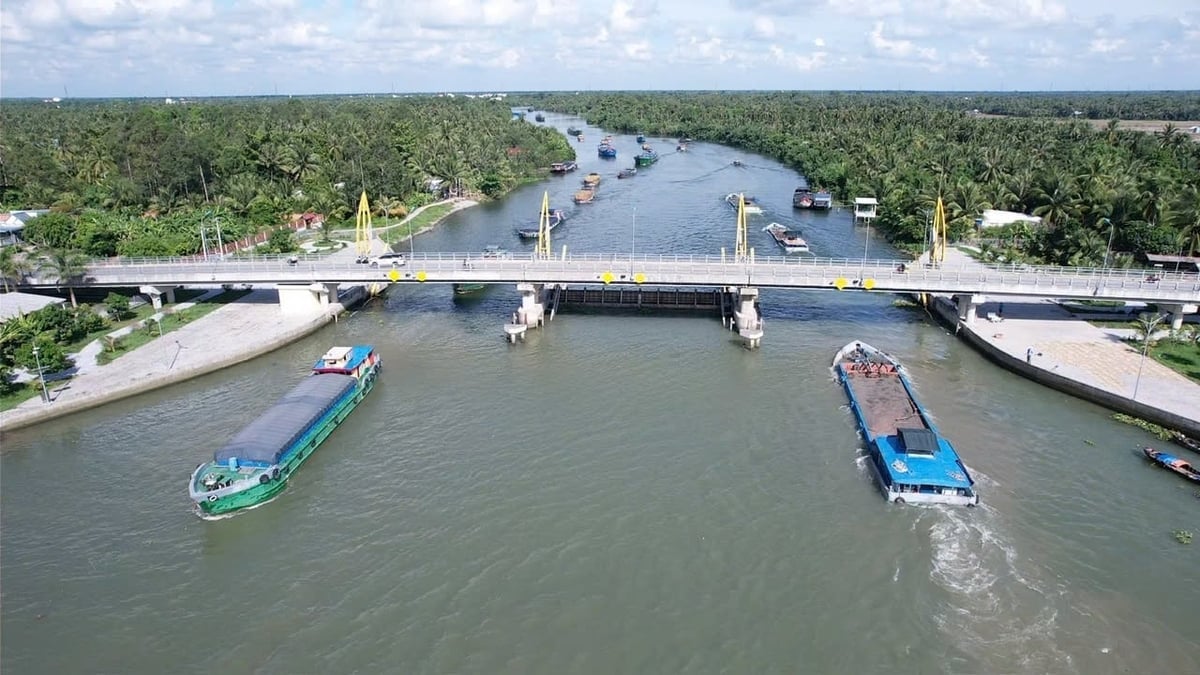
There was no prolonged flooding downstream during the entire operation period. Photo: Provided by KTTLMN Company .
The Southern Irrigation Exploitation Company has also completed the Disaster Prevention Command Board, arranged shock troops, prepared materials and equipment, and developed operational scenarios according to each risk level. This is an important premise to ensure the safety of more than 300,000 hectares of rice in the benefiting area during the rainy season and prepare for the winter-spring crop, expected to bring high productivity and efficiency.
With the initiative of specialized agencies, the coordination of localities and the effective operation of the construction system, the Mekong Delta is meeting all the conditions to enter the 2025-2026 winter-spring crop in a safe and confident state, with the expectation of a bumper crop.
The flexible operation of irrigation works, especially the Cai Lon - Cai Be - Xeo Ro cluster, has helped to keep the water level in the fields stable during high tides and heavy rains at the end of the year. Thanks to that, many sub-regions have avoided prolonged flooding, while maintaining suitable field moisture for land preparation and sowing. This is a decisive factor in helping localities maintain the 2025-2026 winter-spring crop schedule, limiting the risk of early salinity intrusion in the context of extreme weather developments.
Source: https://nongnghiepmoitruong.vn/chu-dong-kiem-soat-nguon-nuoc-bao-dam-an-toan-vu-dong-xuan-2025-2026-d787586.html

![[Photo] National Assembly Chairman Tran Thanh Man receives First Vice Chairman of the Federation Council of the Federal Assembly of the Russian Federation](/_next/image?url=https%3A%2F%2Fvphoto.vietnam.vn%2Fthumb%2F1200x675%2Fvietnam%2Fresource%2FIMAGE%2F2025%2F12%2F02%2F1764648408509_ndo_br_bnd-8452-jpg.webp&w=3840&q=75)







































![[Photo] General Secretary To Lam and his wife attend the 50th Anniversary of Laos National Day](https://vphoto.vietnam.vn/thumb/402x226/vietnam/resource/IMAGE/2025/12/02/1764644139308_1.jpeg)






















Comment (0)