

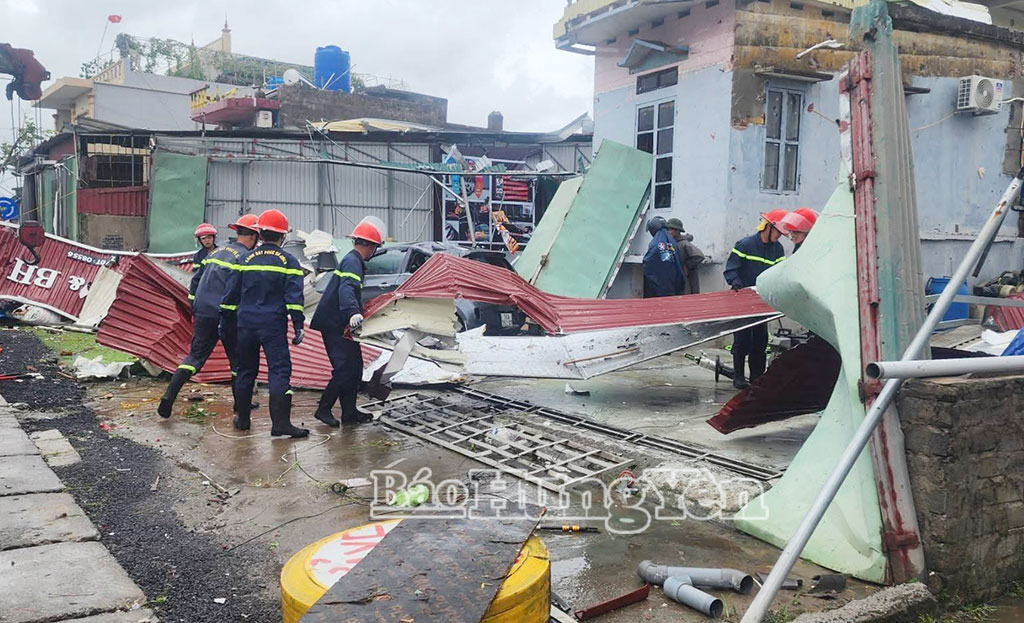
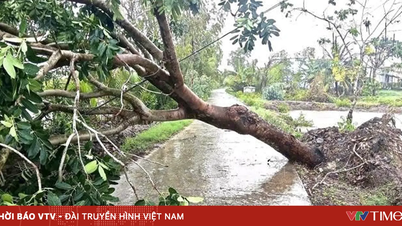
Every year, thunderstorms, tornadoes, and lightning cause serious damage to people and property. In April 2026 alone, the country recorded four periods of widespread rain, accompanied by nine thunderstorms, tornadoes, and hailstorms, spread across all three regions. From the evening of May 2nd to the morning of May 4th, 11 provinces and cities from the northern mountainous region to the North Central region experienced strong thunderstorms, tornadoes, hailstorms, and lightning. The natural disaster injured 12 people; more than 3,100 houses had their roofs blown off or were damaged; nearly 15,800 hectares of rice and crops were damaged; and more than 100 power poles were broken. Lightning struck and broke a storage tank, causing approximately 2,000 liters of molasses to spill out in Nghe An . Many hailstorms recorded large hailstones (4-5 cm), falling densely, accompanied by strong gusts of wind, indicating the development of very strong thunderstorms with the potential to cause significant damage.
According to Mr. Pham Quoc Hung, Director of the Provincial Meteorological and Hydrological Station: Northern and Central Vietnam often experience thunderstorms and lightning during the transitional periods from cold to hot (April-May) and from hot to cold (September-October) each year. April and May are particularly crucial months for the clash between the Northeast and Southwest monsoon systems. This clash results in weather disturbances such as strong thunderstorms, tornadoes, lightning, and hail. This year, an additional factor is the earlier-than-average increase in temperature, causing the air near the ground to become hotter, more humid, and accumulate more energy. Thunderstorms in the late afternoon and evening are not unusual as they are part of the seasonal transition. However, considering the intensity, frequency, and extent of damage, the recent thunderstorms show clear signs of extreme weather patterns.
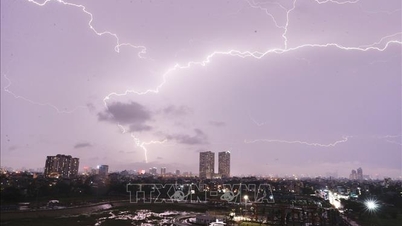
Scientific studies show that thunderstorms usually arrive very quickly, within 15 minutes, and move at a speed of 40 km/h. Signs of a thunderstorm include dark clouds, a drop in temperature, and the wind picking up. If lightning occurs, a flash of light will be seen at a certain point in the sky, followed by thunder. The shorter the time between the flash and the thunder, the closer the lightning strike is, meaning the danger increases. In such cases, it is necessary to quickly find a way to avoid the lightning.
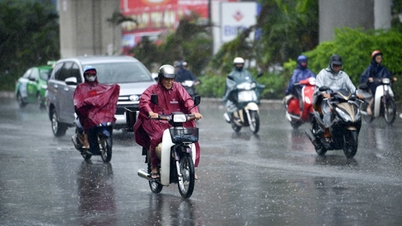
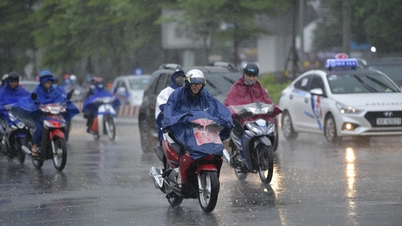
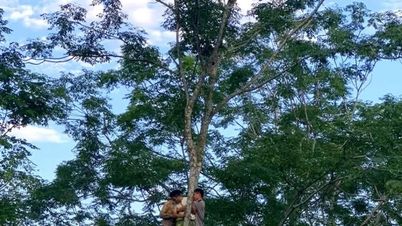
According to recommendations from the Provincial Standing Office for Disaster Prevention and Control, when rain or thunderstorms are imminent, people should seek safe shelter, such as buildings, offices, or sturdy structures equipped with lightning protection. People should absolutely avoid sheltering under trees and stay away from metal objects such as bicycles, motorbikes, iron fences, hoes, and sickles. When outdoors, avoid standing in groups as lightning strikes can easily cause catastrophic accidents. Avoid damp and wet areas; find a dry place, preferably low, stand on tiptoes, cover your ears, and do not lie down on the ground, minimizing contact between your body and the ground.
During thunderstorms, if you are participating in sports involving metal equipment, immediately remove the equipment from your body. If indoors, stay away from windows, doors, electrical appliances, and damp areas such as bathrooms, water tanks, and faucets. Stay away from power lines and absolutely do not use your phone during a thunderstorm to avoid short circuits or lightning strikes. You can resume normal activities 30 minutes after hearing the sound of thunder.
To proactively respond to, mitigate, and minimize damage caused by thunderstorms, tornadoes, and lightning, the Provincial Civil Defense Command requests that civil defense commands at all levels and sectors closely monitor disaster and weather warnings and forecasts. They should promptly inform and guide local authorities and the public to proactively prevent and avoid adverse weather phenomena, including thunderstorms, tornadoes, lightning, and hailstorms that may continue to occur in the coming days. They should direct and organize inspections and reviews of response plans appropriate to the specific conditions of each locality. They should proactively prepare equipment and materials, especially tarpaulins and roofing sheets, and mobilize rapid response forces at the grassroots level to be ready to assist the public in responding to and mitigating the consequences quickly, promptly, and effectively. Furthermore, they should strengthen the dissemination of information and guidance to the public on how to recognize and respond to thunderstorms accompanied by tornadoes, lightning, hailstorms, and strong winds. This includes focusing on measures to take shelter and ensure safety during thunderstorms, tornadoes, and lightning strikes; reinforcing, shielding, and protecting property, crops, and livestock according to specific conditions to minimize damage. For livestock farms and production facilities in remote areas, it is necessary to invest in installing a lightning protection system that meets standards to ensure safety when lightning strikes occur.
Source: https://baohungyen.vn/chu-dong-phong-tranh-dong-loc-set-3194859.html






























































































Comment (0)