


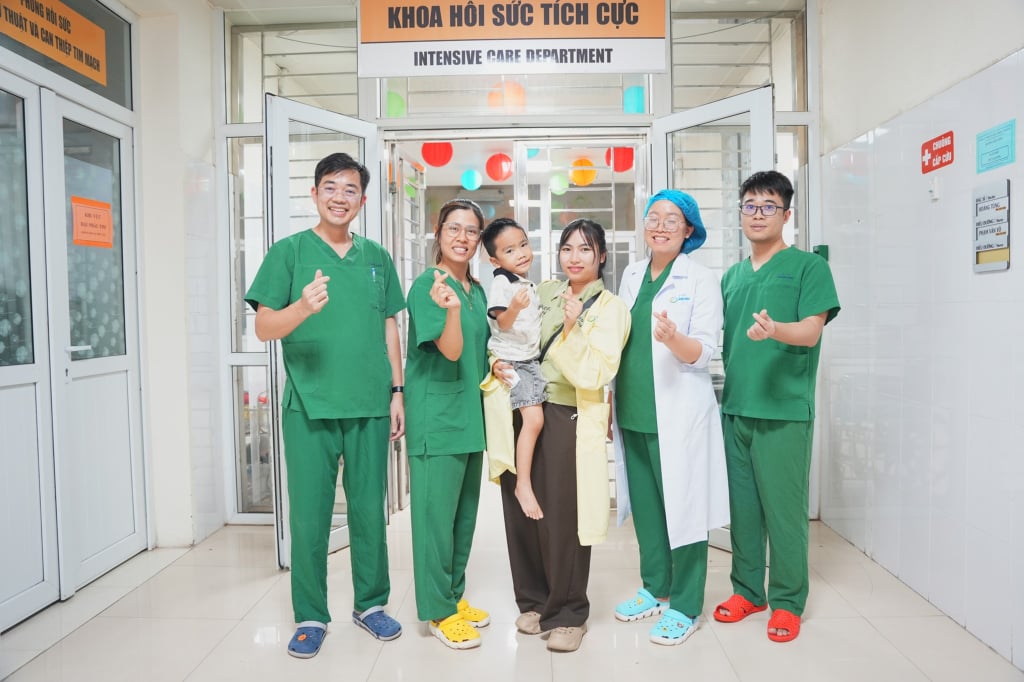
In early May 2026, doctors at the Intensive Care Unit (Quang Ninh Obstetrics and Pediatrics Hospital) successfully treated a 4-year-old child with hand, foot, and mouth disease (HFMD) at stage 4 – the most severe level of the disease. Prior to admission, the child presented with a high fever on the third day, frequent vomiting, fatigue, rapid breathing, and weakness in the limbs. Upon examination, doctors noted lethargy, cyanosis of the lips, cold extremities, weak peripheral pulse, elevated heart rate, and oral ulcers. Recognizing this as a severe case with a high risk of death, the medical team promptly intubated the child, provided mechanical ventilation, administered cardiovascular support medications, gave intravenous immunoglobulin, and implemented intensive care measures.
During treatment, the child's condition continued to worsen, developing respiratory and cardiovascular disorders, severely reduced myocardial contractility, and excessive inflammation causing damage to multiple organs. Faced with this critical situation, doctors ordered emergency continuous hemodialysis, combined with treatment to control the inflammatory response. After 5 days of intensive care, the child was weaned off hemodialysis, weaned off the ventilator, and gradually reduced circulatory support medication. After 2 weeks of treatment, the child was discharged from the hospital, able to eat, walk, and carry out normal activities.
According to Dr. Phi Xuan Thi (Head of the General Planning Department, Quang Ninh Obstetrics and Pediatrics Hospital), who directly participated in the emergency care and treatment of the child, hand, foot, and mouth disease is an infectious disease caused by enteroviruses, commonly found in children under 5 years old. Most cases are mild, but some can quickly become severe, causing neurological complications, myocarditis, acute pulmonary edema, respiratory failure, hemodynamic instability, and even death if not detected and treated promptly. Severe cases are often associated with the EV71 strain, which has high virulence and a high risk of long-term sequelae.
Notably, over the past month or so, the number of children with hand, foot, and mouth disease seeking examination and treatment at Quang Ninh Obstetrics and Pediatrics Hospital has been increasing; the number of severe cases is higher than in previous years. Many children have been hospitalized for treatment, most testing positive for the EV71 virus strain. From the beginning of 2026 to date, the province has recorded 197 clinical cases of hand, foot, and mouth disease. Although most cases are classified as mild and are scattered, the recent severe case treated at Quang Ninh Obstetrics and Pediatrics Hospital shows that parents cannot be complacent. Parents should take their children for examination immediately if they show any unusual symptoms such as high fever that is difficult to bring down, startled reactions, trembling hands and feet, frequent vomiting, unexplained crying, lethargy, rapid breathing, or altered consciousness.
Besides hand, foot, and mouth disease, many other infectious diseases continue to be recorded in the province. From the beginning of 2026 to the present, Quang Ninh has recorded 50 cases of Covid-19; 93 cases of measles-like rash, of which 49 tested positive; 26 cases of dengue fever; 2 cases of whooping cough; 1 case of tetanus; 1 case of meningococcal meningitis; and 1 case of leptospirosis. Regarding rabies, no cases were recorded in the first four months of the year, but the entire province had 3,329 cases requiring post-exposure prophylaxis, an increase of 20.1% compared to the same period in 2025.
The above figures show that infectious diseases always pose a potential risk in the community. Some diseases can erupt into outbreaks if the rate of community immunity decreases, especially among children who are unvaccinated, have not received all the required doses, or have not received booster shots on schedule. For young children, whose immune systems are not yet fully developed, illness can progress rapidly, causing severe complications requiring intensive care, which is costly and leaves a long-term burden on families.
Among preventive measures, vaccines are considered a proactive, effective, and sustainable solution. Many dangerous infectious diseases in children now have vaccines available in the expanded immunization program or private vaccination services, such as measles, pertussis, diphtheria, tetanus, hepatitis B, polio, Japanese encephalitis, Hib, rubella, rotavirus, meningococcal disease, and seasonal influenza. For rabies, timely vaccination and administration of anti-rabies serum after exposure is particularly important to prevent the disease from developing. Regarding hand, foot, and mouth disease, a vaccine against the EV71 virus – a strain often associated with severe cases in young children – is now available. This is an important preventive option, especially for children in high-risk age groups, when advised and vaccinated according to the guidelines of the relevant authorities.

However, vaccines are only effective when children receive all necessary vaccinations on schedule and as indicated. Therefore, families should proactively review their children's vaccination records; take their children for any missing doses or booster shots as recommended; and not delay vaccination unless there are professional contraindications.
Source: https://baoquangninh.vn/chu-dong-tiem-chung-bao-ve-tre-em-3407139.html

































































































Comment (0)