

The word “chang” is written as “chang”, “toi” is written as “tui”, “tao” is written as “tau”, “may” is written as “maai”, and “va” is written as “ua”. The Vietnamese script, thus, was once a phonetic transcription in the Quang accent before becoming a complete system as it is today.
Traces of Quang Nam
Not stopping there, in a rare text remaining from the Jesuit conference in Macao around the mid-17th century, people found the baptismal phrase approved for use in Vietnamese: “Tau trau maai trong danh Cha tua Con tua Spirito Santo”. Just a short line, but fully resounding with the Quang accent, the pronunciation is unmistakable, familiar to anyone who grew up in Quang Nam. Historical linguistic researchers believe that this is the first evidence of the Vietnamese form recorded in local phonetics, showing the embryonic stage of the Latinized character system for the Vietnamese language.
No need to look far, the national language, the language that the whole nation is using today to write, to learn, to love each other via text messages and to argue online, was conceived in Quang Nam. From the quiet study sessions in the heart of Thanh Chiem Citadel in the early 17th century, where Western missionaries first picked up a pen and used the Latin alphabet to write down the words of the Quang people in the way they pronounced them.
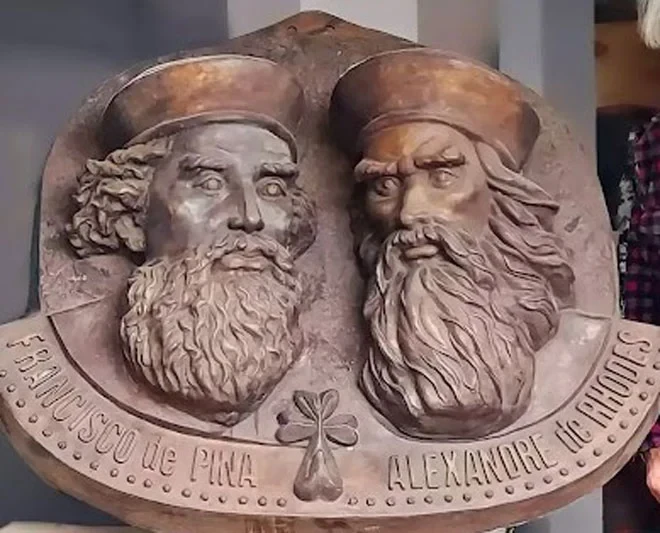
In 1619, the Portuguese Jesuit Francisco de Pina arrived in Annam through the trading port of Hoi An, not to trade but to preach and learn Vietnamese. Pina was considered the first person to be able to speak Vietnamese fluently, as Alexandre de Rhodes himself later admitted: “I learned Annamese from Father Francisco de Pina, who understood the language better than anyone else.”
From Hoi An, he went up to Thanh Chiem - at that time the Quang Nam Citadel, the administrative and military center of the entire Dang Trong region. In a letter to the Jesuits, Francisco de Pina wrote: "Here, the language is more standard, easier to learn, and does not have many accents."
Thanh Chiem was not a bustling urban area in the sense of trade, but a riverside area with many mandarins, scholars and indigenous people living by farming and handicrafts. It was this natural, coherent, unadulterated communication environment that made this place the starting point for Vietnamese to be transcribed using the Latin alphabet, laying the foundation for the formation of the Quoc Ngu script later.
Pina lived among them, learned their language, preached in Vietnamese and began experimenting with recording Vietnamese in Latin script. He bought a large house from a Quang Nam native to live in and then welcomed local students to live with him, studying and teaching each other. Quang Nam natives at that time, whether it was a buffalo herder boy, a village scholar, or a newly baptized believer, all became his first teachers of Quoc Ngu.
Modern linguistics calls this process “Romanization of Indigenous Phonology”, which means recording the spoken language in Latin characters in the way foreigners hear it. And when Pina began experimenting, he did not invent a writing system theoretically, but simply transcribed the sounds he heard by ear. That is why, in his early manuscripts, one can see many word forms that reflect the correct Quang Nam accent: “tui ciam biet”, “chang co chi sot”, “eng an mec te”. This is not only a trace of the local language, but also the first phonetic evidence in the history of Vietnamese recorded in Latin letters.
No one knows the names of the people who taught Francisco de Pina Vietnamese with local words such as: rang, rua, hi, mo te so that he could understand and pronounce them correctly, but they certainly spoke with a Quang Nam accent. And when Pina began to transcribe Vietnamese into Latin, he wrote down exactly what he heard such as: “tui ciam biet”, “chang co chi sot”, “eng an mec te”. From then on, a new type of writing was born, with a distinctive accent of the lower Thu Bon River.
Contribute to shaping the national language
Speaking Vietnamese with a Quang accent did not stop at Pina. Alexandre de Rhodes, who was later considered the systematizer of the Quoc Ngu script, also learned Vietnamese in Thanh Chiem, from Pina himself and his native colleagues. Later, when he published the Vietnamese - Portuguese - Latin Dictionary and the Eight-Day Teaching, everything still had a distinct Quang Nam accent: from the way of placing tones to the way of writing marks, from the choice of letters to the rudimentary but familiar grammar. Researcher Truong Vinh Ky once commented that: "The letters and tones in Dac Lo's books are a reflection of the Central region's accent, where he lived and studied."
The priests of the same period such as Gaspar do Amaral, Antonio Barbosa, Christoforo Borri… all learned from the locals and wrote according to the native pronunciation. There were maps that showed “Thanh Chiem” as “Cacham”, then “Cacciam”, some were written as “Dinh Cham”, and then gradually became “Ke Cham”. That evolution was not decided by anyone, but by the ears and mouths of the Quang people guiding the writing.
Even when De Rhodes left Vietnam, the Vietnamese he brought back to Europe was still Quang Nam accent. An Italian priest named Marini once “complained” that De Rhodes spoke Vietnamese with a “Quang accent, rough and rustic”. He was so critical, but De Rhodes’s books printed in Rome in 1651 were the first standard of the national language. And that standard, strangely enough, was not Hanoi accent but Quang Nam accent.
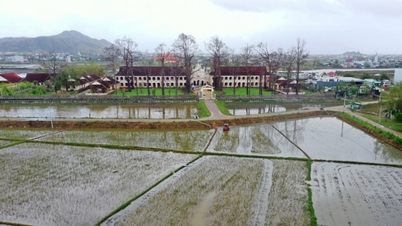
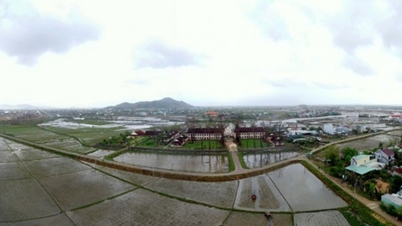
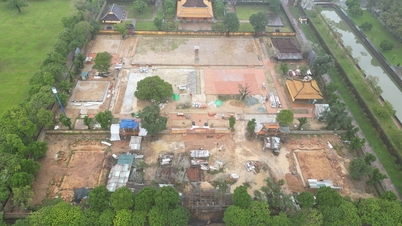
Thanh Chiem Palace, where Pina and De Rhodes lived, wrote, and studied, was once the first Vietnamese language academy, where natives taught Vietnamese to Westerners and together experimented with writing Vietnamese using the Latin alphabet. In those classrooms without blackboards or lesson plans, there were Quang Nam teachers teaching Nom, Portuguese priests looking up pronunciation, and even Quang Nam children playing in the yard, accidentally reading aloud a word that foreigners were struggling to pronounce.
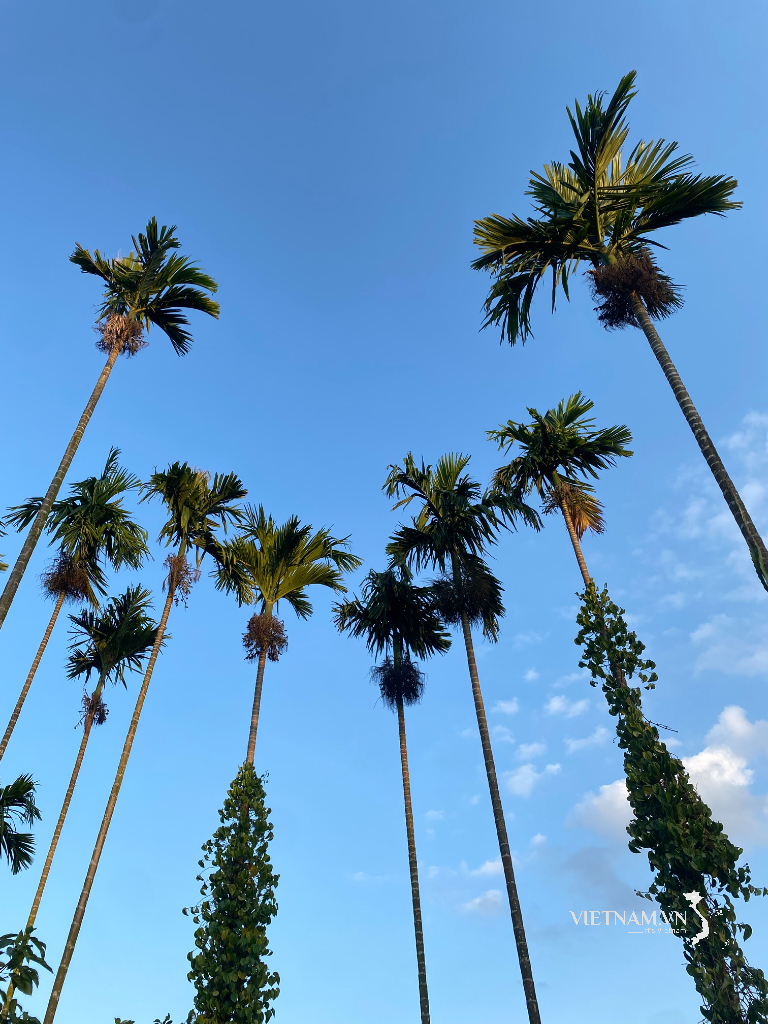
I imagine the first class of the “National Language School” not in the school, but in a three-room tiled house, under an areca tree, on a wooden bench in Thanh Chiem. On one side was a Westerner bent over copying words, on the other side was an old scholar correcting pronunciation. Next to him was a young boy from a local family, eating cold rice with braised mackerel, chewing and saying: “It’s not cha, it’s choa!” - prolonging the “a” sound to be in the correct Quang tone. And so it became words.
But the propagation of the national language at that time was not easy. In the context of the Nguyen Dynasty's strict prohibition of religion, it was not easy for the people in Thanh Chiem to secretly take in Western missionaries. Francisco de Pina himself wrote that he had established a good relationship with the governor of Quang Nam. The openness of the local Confucian scholars created conditions for him to establish a Vietnamese language class right at the Citadel, gathering Western missionaries and local Confucian scholars. That class was considered the first form of a "Vietnamese language academy" in Dang Trong - where Vietnamese was taught and studied seriously according to a new method: using Latin script to record.
The Quoc Ngu script was not born from any academy, but from the cultural symbiosis between Quang Nam people and missionaries, from faith in words, and from patiently learning from each other with all our hearts. There was no grand intention. No thought that it would later become the script of the entire nation.
None of the Quang people living in the 17th century thought that their language would become the model for a new writing system. They did not claim to be the creators of the script, nor did they sign any books. But they were the first to speak Vietnamese in Quoc Ngu script, before it was used by the whole country.
That word was born not only from reason, but also from sentiment. And from a poor land but with an abundance of words and courage to open its heart to let words come and stay and become forever family.
Source: https://baodanang.vn/chu-quoc-ngu-o-cuoi-song-thu-bon-3313960.html



















































































Comment (0)