

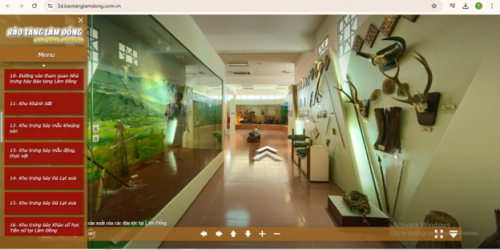
Virtual Museum on Lam Dong Museum Website
Digitizing museums to fit into modern life
The fourth industrial revolution, or industry 4.0, digital age, technology application, digital transformation,... are extremely familiar phrases in recent years, which are being transformed and applied by all industries, and the cultural industry is no exception.
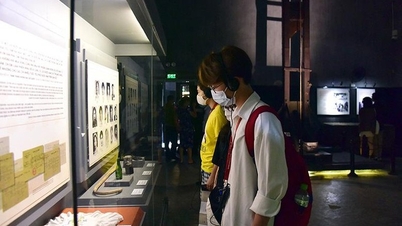
Museums are cultural institutions with the functions of research, collection, preservation, and at the same time display and introduce the value of cultural heritage to the public. Applying technology and keeping up with general trends is an indispensable part of the development process of museums, aiming at the goal of managing cultural heritage systematically and scientifically , improving the quality of public service. Especially for the younger generation, who are easily attracted to activities that possess the achievements of digital technology.
In fact, if in the past the public often depended on information provided by museum guides, now with the support of technology, public access (from individual visitors to group visitors) has gradually shifted to a more proactive trend, allowing them to experience, explore and exploit information about artifacts through digitization.
In the digital age, the public has many opportunities to access activities, experiences that are fast, highly entertaining and updated with the development trends of science and technology. Therefore, museums also need to innovate, integrate into modern life to become the public's priority choice, contributing to promoting the image, culture, country and people of Vietnam.
Step by step new look for the museum
Realizing the benefits of technology, taking a tour around museums in Vietnam, we can easily see digital technology in places that were once considered "dry" and "static" below:
Since 2013, the National Museum of History has applied 3D virtual reality technology, becoming the first museum in Vietnam to apply digital technology to introduce thematic displays, exhibitions, education, etc., helping visitors to visit 3D space, bringing new experiences.
Since 2015, Quang Ninh Museum has applied 3D virtual interactive technology and virtual museum to introduce basic contents and exhibition spaces,...
Since 2017, the Cham Sculpture Museum has applied technologies such as automatic explanation systems, managing artifacts in the warehouse using QR code scanning technology, VR360 virtual tour application, etc.
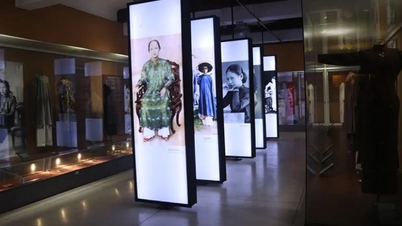
In 2020, the Southern Women's Museum inaugurated a Gallery applying modern technology and techniques so that visitors only need to stand in front of the information kiosk, "click" on the place they need to go, open the content of the artifacts they want to see, look up articles or artifacts, historical lessons will be presented specifically and vividly through technological equipment...; The War Remnants Museum uses 3D technology to recreate 5 large prisons in Southern Vietnam during the resistance war against the US, helping visitors to truly feel the old prisons,...
In 2024, the Hue Monuments Conservation Center won the awards for "Top Science, Technology and Innovation Organization/Enterprise", "Vietnam Digital Transformation Award 2024". This is the result of the unit's efforts in applying digital technology to preserve and promote heritage values, such as exploiting the application of Hue Monuments tour guide, or VR3D virtual reality experience technology...
It can be said that the modern transformation has helped museums attract visitors. The clearest evidence is that the number of visitors to smart museums is constantly increasing. At Quang Ninh Museum, daily statistics show that there are about 300 - 400 visitors, and on weekends, more than 1,000 visitors. Or at the Vietnam Fine Arts Museum, thanks to the active application of digital technology in introducing works of art and modern communication on cyberspace, the number of visitors has increased by 200 - 300% compared to previous years. The results show that, in addition to innovating the display and explanation work, the application of technology and digital transformation has created a "push" to attract visitors. Since then, museums have not only become familiar places for studying, researching, and improving knowledge, but also attractive tourist destinations.
Lam Dong Museum is constantly innovating.
In recent years, to keep up with the trend of advanced museums, Lam Dong Museum, in addition to upgrading and adjusting the display system, organizing educational activities, connecting tours, also focuses on innovation and applying technology, bringing the public a multi-dimensional, easy and convenient experience. Technology and digital transformation are urgent solutions not only in displaying, promoting the value of cultural heritage, attracting the public, but also in managing, preserving and inventorying artifacts.
Just sitting anywhere with a smart device connected to the Internet, visitors can easily access the 3D Museum (Virtual Museum) of Lam Dong Museum, "walk" around the main exhibition house, admire the collections, precious artifacts, or the exterior space in three dimensions. With a "click", visitors can observe every angle of the artifacts and learn information fully.
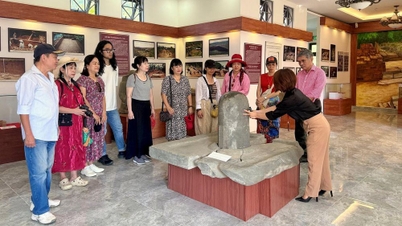
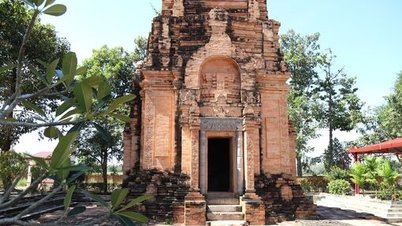
When coming to Lam Dong Museum, or Cat Tien Archaeological Special National Monument, the public can easily grasp information about artifacts through hundreds of QR codes that have been set up. Or just by scanning the QR code at the Da Lat Children's Prison National Monument, the public can easily read information, or listen to automatic explanations at the locations and exhibition spaces.
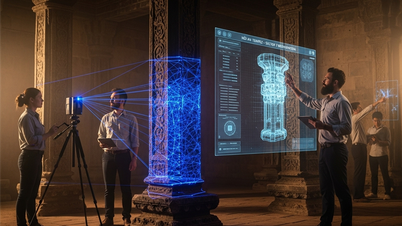
Management has reduced traditional methods, such as handwriting artifacts' histories, or inventorying, importing and exporting artifacts on paper and books, and instead using artifacts management software. Applying technology has helped management become convenient, scientific, systematic, and exploiting information effectively.
With clear results, it can be affirmed that the application of technology and digitalization is indisputable, one of the important solutions to the "problem" of attracting the public to museums. However, that does not mean that technology or online museums can replace real museums. Therefore, the application of 4.0 technology to museum operations needs to be specifically calculated, have a clear direction, and choose applications suitable to actual conditions to help research, display, preserve, educate and introduce cultural heritage values to the public to ensure quality and efficiency.
Thi Thao - Lam Dong Museum
Source: https://baotanghochiminh.vn/chuyen-doi-so-loi-giai-cap-thiet-cho-bai-toan-thu-hut-cong-chung-den-voi-bao-tang.htm




![[Photo] National Assembly Chairman Tran Thanh Man receives First Vice Chairman of the Federation Council of the Federal Assembly of the Russian Federation](/_next/image?url=https%3A%2F%2Fvphoto.vietnam.vn%2Fthumb%2F1200x675%2Fvietnam%2Fresource%2FIMAGE%2F2025%2F12%2F02%2F1764648408509_ndo_br_bnd-8452-jpg.webp&w=3840&q=75)































































Comment (0)