

Strategic milestone on the cultural industry map
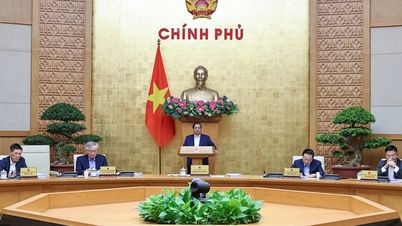
Prime Minister Pham Minh Chinh affirmed: Developing the cultural industry is the path to "internationalizing Vietnamese culture and nationalizing the quintessence of humanity", and at the same time is a condition for artists to make a living from their profession, contribute to society and enhance the national position.
The success of recent concerts shows that political music can both inspire and connect the community. From revolutionary songs to contemporary compositions, national spirit is nurtured and aspirations for the future are aroused. More importantly, these programs are proving the economic power of the cultural industry. Tens of thousands of people attend each event, tourism and service revenue increase, thousands of jobs are created directly and indirectly. That is the foundation for the cultural industry to become a spearhead economic sector.
The year 2025 marks the implementation phase of the National Target Program on Cultural Development 2025 - 2035, with the goal of the cultural industry contributing 7% of GDP by 2030. This is an ambitious but feasible goal when the performance market is "heating up", just having a concert will attract not only young people across the country to "go to the festival".
At the 2024 Cultural Industry Conference, Prime Minister Pham Minh Chinh emphasized: “If we only rely on the State budget, it will be difficult to develop. We must mobilize social resources, businesses, and the community.” Two years ago, the figure of 350,000 billion VND for the Cultural Revitalization Program was considered very large. But now, with the explosion of concerts and cinema, Vietnam has a basis to expect the resilience of the cultural industry.
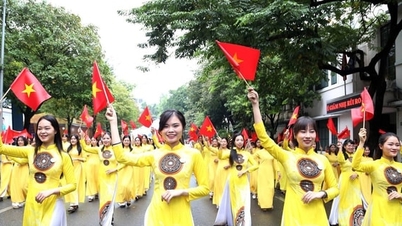
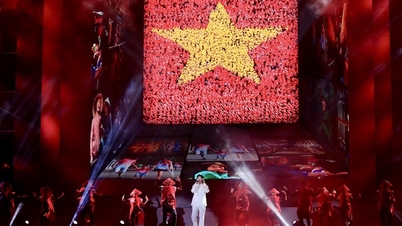
“National Concert” originated from the parade program, the parade to celebrate the 50th anniversary of the Liberation of the South, the reunification of the country, this phrase is used by young people to refer to large-scale art programs, with meticulous content, message and staging techniques. When the consecutive big music festivals were held on the occasion of the 80th anniversary of the August Revolution and National Day September 2, the “hotness” of this keyword was pushed to an unprecedented level.
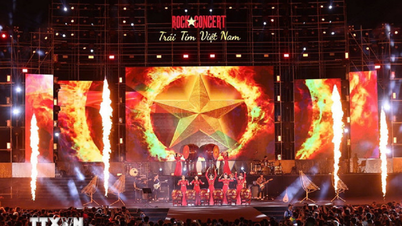
The tens of thousands of spectators have demonstrated a fundamental change in the public's habit of enjoying culture and art. "V Concert - Radiant Vietnam" and "V Fest - Radiant Youth" organized by VTV attracted up to 25,000 young spectators each night at the Vietnam Exhibition Center. The "Fatherland in the Heart" concert organized by Nhan Dan Newspaper and Hanoi People's Committee "dyed red" My Dinh Stadium with more than 50,000 attendees. "Proud to be Vietnamese", a program hosted by the Central Propaganda and Education Commission, also recorded more than 30,000 people present at the national stadium.
These are unprecedented records for political programs, a genre that is considered “difficult to attract audiences”. Not only bringing emotional experiences to the audience, the “National Concerts” are contributing to shaping a new generation of audiences: willing to go and spend for quality cultural products. The enthusiasm in hunting for tickets, from free to sold, is clear evidence.
The registration portal for “Fatherland in the Heart” sold out after 9 minutes, recording 3 million visits. Tickets for “V Concert - Radiant Vietnam” sold out in just a few days. These numbers, which were thought to only appear in the commercial entertainment market, are now happening with political programs, affirming their appeal beyond expectations.
Economically, each large-scale program coordinates and creates jobs for hundreds, even thousands of workers. But the value does not stop at the event. When the stage, lighting, and message are spread on social networks, millions of views have turned the concert into a "digital square" where national spirit is nurtured, the image of a youthful, integrated, and modern Vietnam is promoted to the world. That spread paves the way for the creation of "made in Vietnam" music products capable of connecting with the international market, a key condition for the cultural industry to contribute to economic growth.
Dr. Nguyen Viet Chuc, former Vice Chairman of the National Assembly's Committee on Culture and Education, emphasized that the key factors that help these programs break through are the creativity of young people, the support of technology and the general atmosphere of the country in the new era. Emotional political art programs, combining traditional and modern elements, have created a strong resonance among the public. He believes that this is the "open door" for Vietnam's cultural industry, which has both political, cultural and economic values and contributes to cultural diplomacy, a soft but sustainable factor in international integration.
When concerts are connected with travel, cuisine, fashion...
If in the past, large-scale music festivals were often the "play" of large entertainment companies, now, the appearance of national concerts shows the pioneering role of state agencies and local authorities in building modern cultural spaces.
From a media perspective, many experts suggest developing large-scale cultural infrastructure from theaters, performance centers to event squares to meet the growing demand. When concerts are connected with tourism, cuisine, fashion, handicrafts and digital content industry, a cultural - tourism - economic value chain can be formed.
Associate Professor Dr. Bui Hoai Son, full-time member of the National Assembly's Committee on Culture and Society, affirmed that if professionally organized and combined with other service sectors, the "National Concerts" will become a driving force for sustainable development of Vietnam's cultural industry. These art programs are not simply entertainment events but also valuable cultural products, meeting the spiritual needs of the public and promoting related economic sectors such as tourism, services and communications.
In addition, the public-private partnership model in developing cultural events also needs to be promoted. Combining public and private resources will reduce the burden on the state budget, while bringing dynamism and creativity in organization, helping art events achieve high quality and have strong influence.
At the same time, to create a foundation for the development of the cultural industry, reforming administrative procedures is considered a prerequisite. Currently, art programs, especially large-scale music events, often encounter many barriers in licensing, censorship, safety assessment, etc., leading to waste of time, costs and reduced flexibility. Therefore, the new policy needs to aim at simplifying and synchronizing these processes, ensuring both effective management and creating openness for creativity.
In addition, the State needs to establish financial support funds for highly creative cultural projects that can spread and contribute to promoting the national image. These funds can come from the state budget, but it is also necessary to encourage contributions from the private sector through appropriate socialization models. Stable resources will help artists, producers and event organizers to be qualified to implement large, systematic and prestigious programs.
An indispensable task is to develop a high-quality workforce, from event management, stage directing, art design, sound and lighting engineering to cultural communication and marketing. Only when human resources are properly trained can the cultural industry move towards large scale, high professionalism and international competitiveness.
One approach that many developed countries are adopting is the public-private partnership (PPP) model in the cultural sector. In a resource-intensive field such as organizing large-scale concerts, the combination between the State and businesses is even more important.
Private enterprises have financial potential, technology and organizational experience, while the State plays a guiding role, ensuring the legal environment, linking cultural institutions and supporting communication. This model not only reduces pressure on the state budget but also opens up space for creativity, healthy competition, and mobilizes many socialized resources.
With synchronous participation, the "National Concerts" can become a new cultural brand of Vietnam, both creating a "boost" for the cultural industry and actively contributing to economic growth and promoting the country's image.
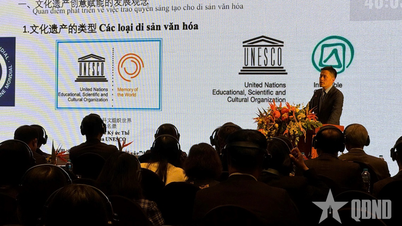
However, according to Vice President of the Vietnam Tourism Association Nguyen Hong Hai, Vietnam's cultural industry still faces challenges: lack of connectivity, lack of creative human resources, technology has not kept up and the exploitation of heritage into tourism products is still limited. He said that localities need to build a cultural industry ecosystem associated with the tourism value chain based on identity - creativity - digital technology.
Source: https://baophapluat.vn/concert-quoc-gia-nhip-dap-cua-mot-viet-nam.html















































Comment (0)