

Reporter of Agriculture and Environment Newspaper had an interview with Ms. Luu Thi Nga, Head of Industrial Management Department - Thanh Hoa Department of Industry and Trade, about policies to support the development of supporting industries and orientation for transition to green production in the province.
Madam, in recent times, to promote the development of supporting industries in priority areas such as textiles, footwear, electronic components, mechanical engineering, automobile assembly and high technology, etc., what specific support policies and programs has Thanh Hoa province implemented? What results has the implementation of these policies brought, especially in linking production with environmental protection?

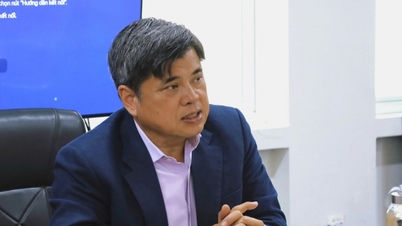
Ms. Luu Thi Nga, Head of Industrial Management Department - Thanh Hoa Department of Industry and Trade. Photo: Thu Thuy.
In recent times, identifying supporting industry as an important foundation for developing processing and manufacturing industries, increasing added value and competitiveness of the economy , Thanh Hoa province has proactively issued and implemented many specific, long-term policies and programs.
Specifically, the Department of Industry and Trade has advised the Provincial People's Committee to submit to the Provincial People's Council a series of important resolutions, including Resolution No. 29/2016/NQ-HDND dated December 8, 2016 on a number of policies to encourage the development of industry, handicrafts and trade in Thanh Hoa province; Resolution No. 121/2021/NQ-HDND dated October 11, 2021 on promulgating policies to encourage the development of industry and handicrafts in the period 2022-2026; and Resolution No. 23/2025/NQ-HDND amending and supplementing a number of articles of Resolution 121/2021/NQ-HDND. In addition, the Provincial People's Committee issued the Project on Developing the Processing and Manufacturing Industry of Thanh Hoa Province to 2030 in Decision No. 506/QD-UBND dated January 28, 2022, clearly orienting the goal of developing supporting industries associated with the global industrial value chain.
These policies focus on supporting businesses in infrastructure, credit, trade promotion, human resource training and application of new technology. Up to now, 43.5 billion VND has been provided in policies in the field of industry and handicrafts, including: 20 billion VND in support for investment in industrial cluster infrastructure; 4.6 billion VND in support for attracting workers in mountainous districts; more than 17.4 billion VND in support for industrial and handicraft production projects and 1.5 billion VND in development of handicrafts.
Thanks to that, Thanh Hoa province's supporting industry has made remarkable progress. Many enterprises have boldly invested in modern production lines, expanded their scale, and focused on green - clean - energy saving factors in production activities. The province also encourages enterprises to apply environmental management systems, invest in wastewater and exhaust gas treatment according to standards, thereby both improving productivity and protecting the environment sustainably.
In particular, the policy of supporting the development of industry and handicrafts has created conditions for traditional craft villages to restore production, apply advanced technology and machinery, and gradually build local product brands. This is a direction that helps Thanh Hoa not only expand domestic production capacity but also create a foundation to participate in the regional supply chain, contributing to the economic restructuring towards modernity and sustainability.
Can you tell us more about the development potential of Thanh Hoa province's supporting industry at the present stage?
It can be said that Thanh Hoa is a locality with great potential to develop supporting industries, especially in the context of the processing and manufacturing industry becoming the main driving force of the provincial economy.
First of all, the province has a strategic geographical position, located in the center of the North Central region, with a synchronous transportation system including Nghi Son deep-water seaport, North-South expressway, Tho Xuan airport and the trans-Vietnam railway. This is a special advantage that helps supporting industry enterprises to conveniently connect and transport raw materials and products to major industrial centers such as Hanoi, Hai Phong, Nghe An, as well as easily export internationally.
Second, Thanh Hoa has formed a system of strongly developed economic zones, industrial parks and clusters, notably Nghi Son Economic Zone, Bim Son, Le Mon, Hoang Long, Lam Son - Sao Vang Industrial Parks... This is an important foundation to attract supporting industry projects, especially enterprises producing components, spare parts, mechanical, electrical and electronic equipment.
Third, the province has an abundant labor force, nearly 2 million people of working age, competitive costs and high adaptability. In recent years, vocational training and skill transfer have been focused on, creating conditions for workers to easily participate in the modern industrial production chain.
Thanks to these advantages, from 2016 to now, Thanh Hoa has attracted many large-scale supporting industry projects. Typical examples include the electric cable production project of THN Corporation, PECI Vietnam Maintenance, Repair and Manufacturing Workshop of PECI Vietnam Co., Ltd. (total investment capital of 11 million USD) in Nghi Son Economic Zone. Or the SAB Industrial (Vietnam) Co., Ltd. project in Bim Son Industrial Park (investment capital of about 20 million USD). These projects not only contribute to GDP growth but also create a spillover effect, helping to form a production network and supply components for many enterprises inside and outside the province.
In addition, Thanh Hoa also has the advantage of developing supporting industries for the textile, garment and footwear industries - a field that is attracting dozens of large-scale FDI enterprises. The development of factories producing raw materials, packaging, accessories, etc. will help reduce import dependence, increase the localization rate and increase the competitiveness of the industry.
With a clear orientation, available potential and the government's decisive participation, Thanh Hoa's supporting industry can completely become an important link in the production value chain of the North Central region and aim for the position of a supporting industry center in the near future.
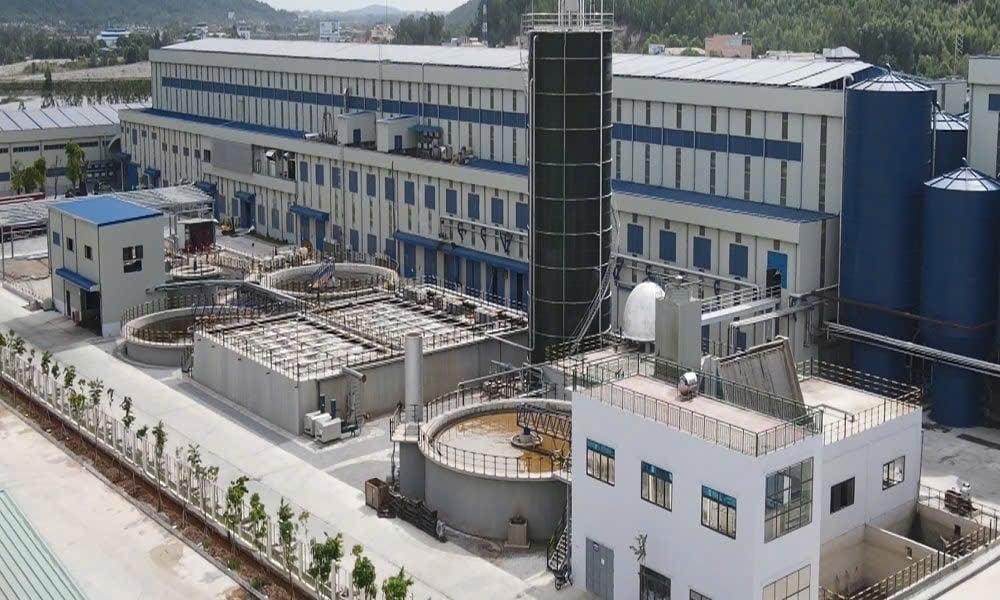
Thanh Hoa promotes the development of supporting industries and promotes green production. Photo: Thu Thuy.
In the process of transitioning to green, smart production and participating in the global supply chain, what difficulties and challenges is Thanh Hoa's supporting industry facing? And what orientations and solutions does the Department of Industry and Trade have to overcome them and promote sustainable development?
It is true that the green transition and integration into global supply chains pose many challenges for supporting industry enterprises. The biggest difficulty is the financial issue – the transition to green technology requires large investments in energy-saving machinery, equipment and modern environmental treatment systems. This is a burden for small and medium-sized enterprises, which account for a large proportion of the industry.
In addition, many businesses lack knowledge and experience in building a green transformation roadmap, as well as information about markets, partners and international standards. Due to limited management capacity and technology, participation in the global supply chain is still mainly limited to processing, with low added value. In addition, the quality of human resources - especially workers with digital and green skills - still does not meet the requirements of modern industrial development.
To overcome these difficulties, on the basis of Decree No. 205/2025/ND-CP amending and supplementing Decree No. 111/2015/ND-CP on supporting industry development, Thanh Hoa Department of Industry and Trade is researching and developing a Supporting Industry Development Program for the period 2026-2035 suitable to local conditions, as a foundation for the new period.
Along with that, the Department will advise the Provincial People's Committee to submit to the People's Council a policy to encourage the development of industry and handicrafts in the period 2027-2032, in which priority will be given to investment projects in green technology, clean energy and circular production. The policies will continue to provide financial support, human resource training, trade promotion, and technological innovation to help businesses improve their competitiveness.
At the same time, the Department of Industry and Trade will create conditions for supporting industry enterprises to participate in domestic and foreign trade fairs and promotion programs to expand markets and connect with partners; Organize training and retraining of green and digital skills, connecting training institutions and enterprises to form high-quality human resources; Encourage international cooperation in technology transfer, support enterprises to invest in modern production lines, save energy, reduce emissions; Promote communication, propaganda and organize seminars to raise awareness of the community and enterprises about the long-term benefits of green economy and sustainable production.
Thanh Hoa aims to form a number of green supporting industrial enterprise clusters in the coming period, closely linked with large domestic and foreign corporations, especially in the fields of mechanics, electricity - electronics and textiles. This will be an important step to turn Thanh Hoa into a supporting industrial center of the North Central region, contributing positively to the goal of sustainable industrial development of the whole country.
Thank you!
Thanh Hoa Provincial People's Committee has issued Official Dispatch No. 11362/UBND-THĐT on organizing the flow, shortening the time to process records and administrative procedures according to the "green lane" priority mechanism. Accordingly, the investment and enterprise sector, which is considered the lifeblood of the economy, has 19 procedures implemented according to the "green lane" priority mechanism, the time to process these procedures is reduced from 33% - 60% compared to regulations. Notably, there are procedures that are reduced by up to 13 working days compared to regulations, such as the procedure for Approval of investment policy by the Provincial People's Committee for mineral exploitation projects, industrial cluster projects, transformer station projects, etc. is shortened from 26 working days to only 13 working days (equivalent to 50% of the time compared to regulations). This is considered a new, creative solution, demonstrating the determination to break down barriers that are making it difficult for businesses.
Source: https://nongnghiepmoitruong.vn/cong-nghiep-ho-tro-thanh-hoa-kho-khan-dan-xen-co-hoi-but-pha-d782729.html



![[Photo] Urgently help people soon have a place to live and stabilize their lives](/_next/image?url=https%3A%2F%2Fvphoto.vietnam.vn%2Fthumb%2F1200x675%2Fvietnam%2Fresource%2FIMAGE%2F2025%2F12%2F09%2F1765248230297_c-jpg.webp&w=3840&q=75)







![Major decisions to develop Thanh Hoa agriculture: [Part 1] Cua Dat Lake - a great migration for the people's happiness](https://vphoto.vietnam.vn/thumb/402x226/vietnam/resource/IMAGE/2025/12/09/1765248819994_z7282526539020_1ee647dc8468da9b9f2428712b435ae7-nongnghiep-165859.jpeg)




































![[Photo] General Secretary To Lam works with the Standing Committees of the 14th Party Congress Subcommittees](https://vphoto.vietnam.vn/thumb/402x226/vietnam/resource/IMAGE/2025/12/09/1765265023554_image.jpeg)




















Comment (0)