

Over the years, US-China competition has increasingly expanded from trade to technology and global power.
No more reciprocal tariffs.
From semiconductors and AI to supply chains, strategic minerals, and international payment systems, a host of issues demonstrate that the confrontation between the world's two largest economies has gone far beyond the scope of a typical "trade war."
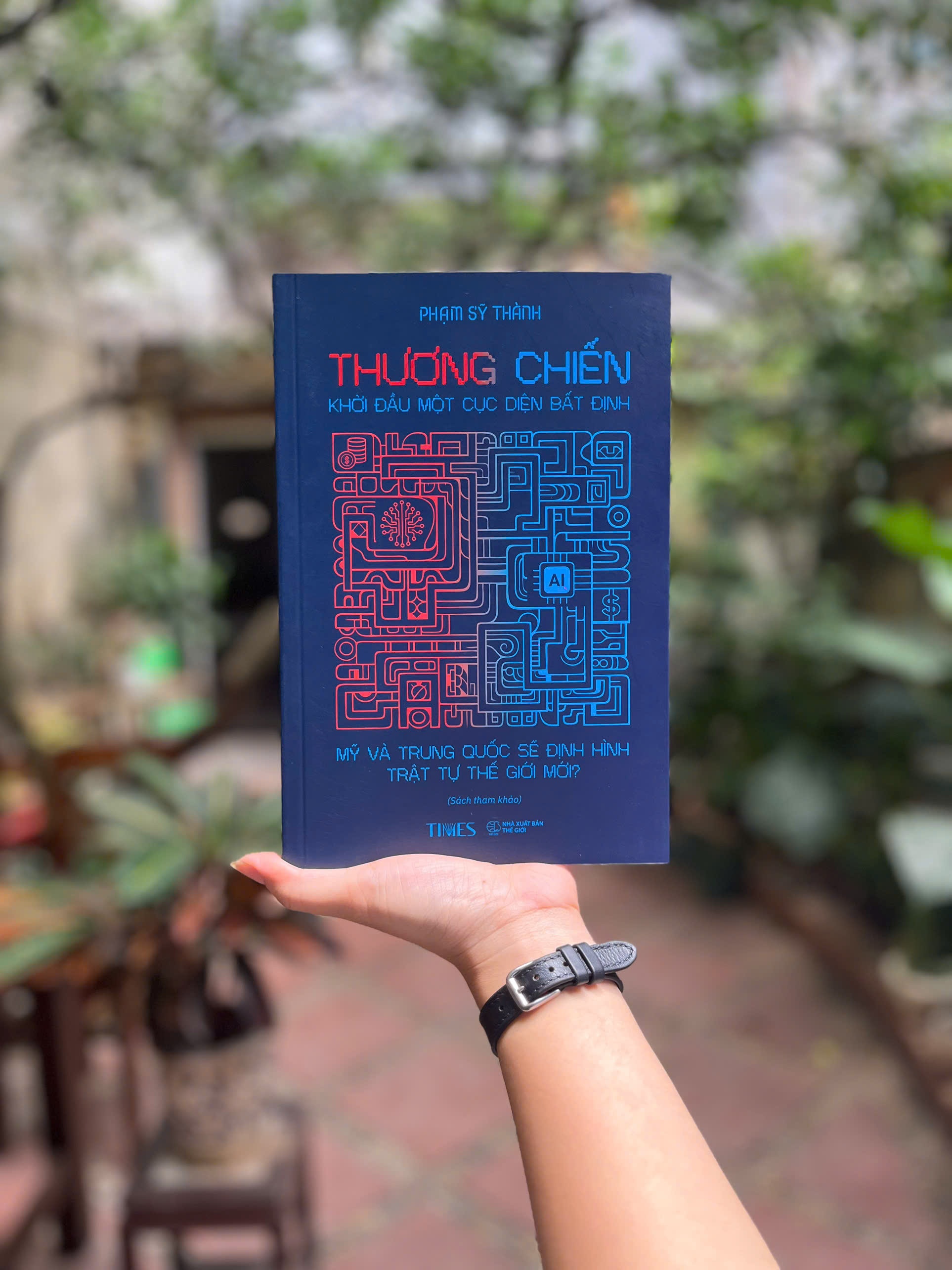 |
The book "Trade War: The Beginning of an Uncertain Situation. " Photo: HT. |
That is also the central theme of Pham Sy Thanh's book , "Trade War: The Beginning of an Uncertain Situation ."
Instead of focusing on short-term developments, the book concentrates on explaining the underlying logic of the US-China competition.
The author argues that this is no longer a matter of reciprocal tariffs, but rather a competition for power, technology, and finance.
From that perspective, the book explains why the US shifted from a strategy of "engagement" to "comprehensive strategic competition" with China. At the same time, the author analyzes how China learned from, emulated, and then counterattacked by building technological self-reliance, resisting coercion, and restructuring its position in the global system.
One of the book's most notable aspects is its systematic approach to the US-China rivalry, structuring it within a unified analytical framework. According to the author, issues such as semiconductor sanctions, AI control, supply chain shifts, dollar competition, cross-border payments, and the race for strategic minerals are not isolated events. They are all placed within a larger picture of the international power struggle.
The book focuses on explaining how a superpower exercises power and creates international influence. From this approach, the author not only analyzes the competition between superpowers but also raises questions about the position of middle-sized economies in a world where the rules of the game are changing.
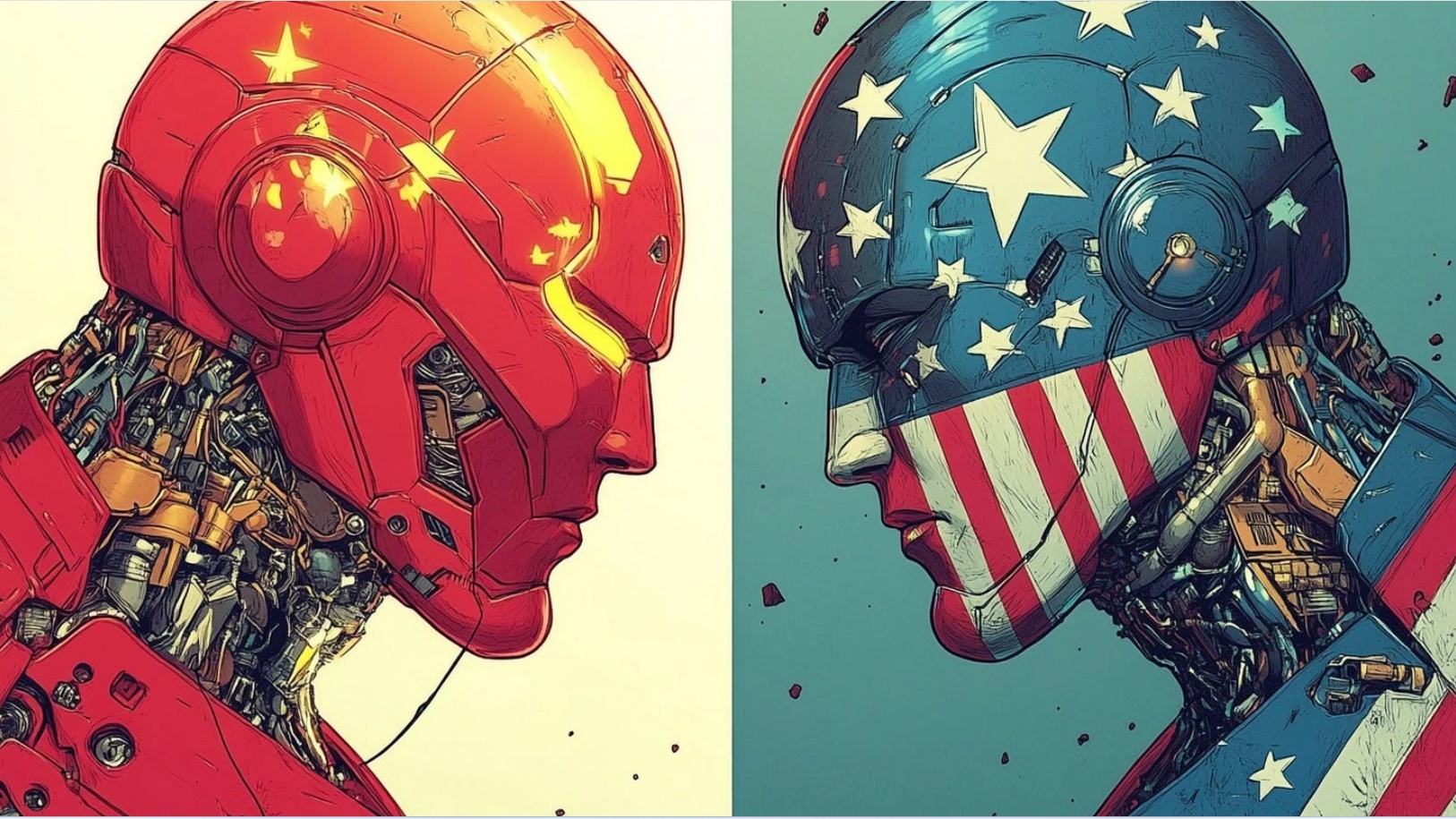 |
The AI war between the US and China is a clash between "absolute power" and "speed of application." Photo: Fasterplease. |
The impact of trade wars on other economies
Another noteworthy aspect of the book is how the long-term competition between superpowers in technology, trade, and finance will affect small and medium-sized economies.
The book addresses many issues directly impacting Vietnam, such as the shift of supply chains away from China, the pressure to choose technology standards, and changes in international trade and payments.
From there, the author raises strategic questions: What opportunities lie behind the wave of global shifts? And how can a middle-sized nation adapt to a world where the rules of the game are changing?
According to the author, this is not simply a book to update news, but rather to help readers understand why the world operates the way it does today and what future trends hold.
Author Pham Sy Thanh is currently the Director of the Center for China Economic and Strategic Studies (CESS) and holds a PhD in Economics from the School of Economics, Nankai University (Tianjin, China). He previously published the book " Semiconductor Battlefield ," which won the B Prize at the 2025 National Book Awards.
Source: https://znews.vn/cuoc-dua-ban-dan-ai-va-quyen-luc-my-trung-post1652777.html













































































Comment (0)