

At the discussion session on the draft Resolution stipulating a number of mechanisms and policies to remove difficulties in implementing the Land Law on the afternoon of December 1, many National Assembly deputies pointed out the shortcomings that are causing frustration for the people and difficulties for the enforcement agencies.
Inadequacies in applying minimum area for land division in civil cases
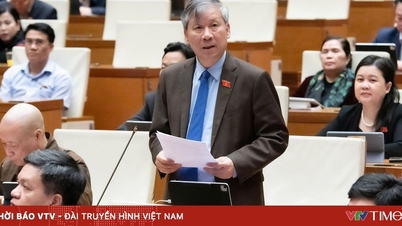
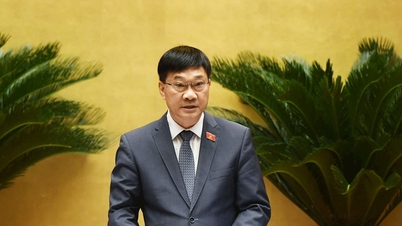
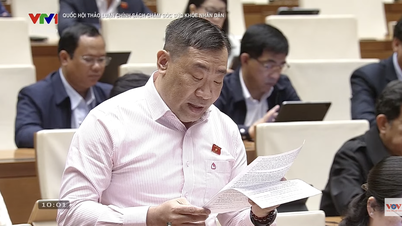
Delegate Phan Thi My Dung ( Tay Ninh ) said that Clause 3, Article 11 of the draft Resolution currently stipulates that in cases where land use rights are divided according to a court judgment or decision without meeting the conditions on minimum area and plot size according to Article 220 of the Land Law, "plot division will not be performed".
According to delegates, this regulation has repeated the contents of the 2024 Land Law but has not resolved the problems that voters have been upset about and reflected on in recent times.
Regulations on minimum land area for land division were originally issued to manage land division and sale activities, but they are also applied to civil cases regarding inheritance and division of common property, leading to many unreasonable consequences.
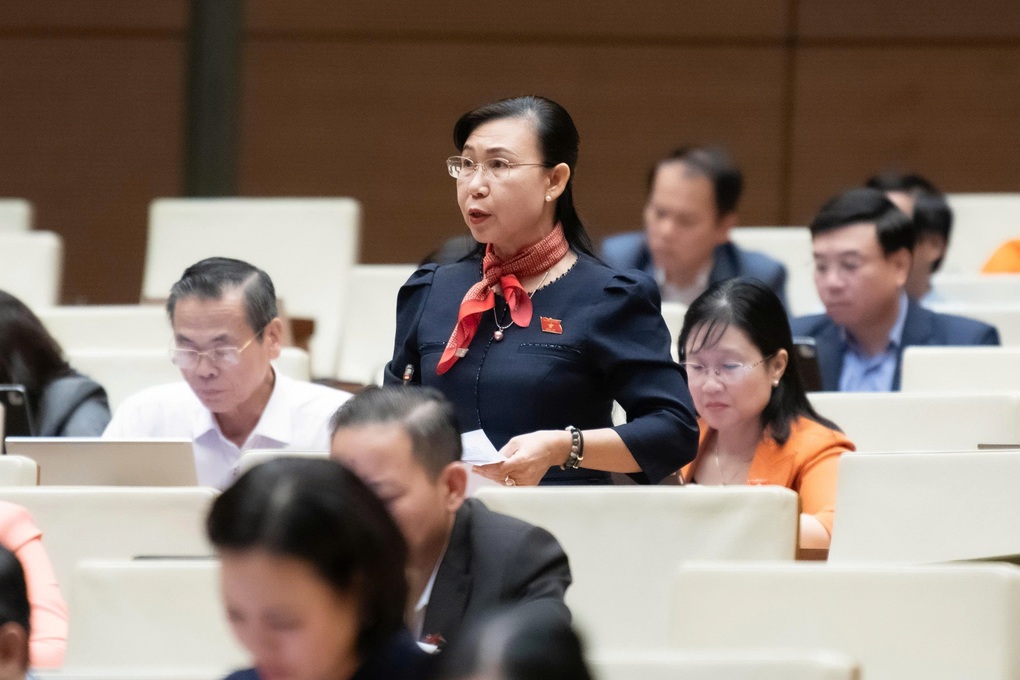
Delegate Phan Thi My Dung (Tay Ninh) (Photo: Media QH).
The delegate gave an example: a 2,000m² plot of land was divided equally among four children by the parents in their will, but the local regulations stipulate that the minimum area for dividing agricultural land is 1,000m². At that time, the court was forced to give the land to two people and divide the money among the remaining two.
"Such a handling method does not guarantee people's wishes, easily gives rise to complaints and prolongs disputes, especially in urban or rural land planning areas," the delegate analyzed.
This content also conflicts with the principle of dividing property in kind according to Articles 659 and 660 of the Civil Code, as well as Article 59 of the Law on Marriage and Family.
The female delegate suggested that the National Assembly and the drafting agency continue to research and supplement appropriate mechanisms to ensure civil rights, inheritance rights and reduce frustration for the people.

The National Assembly discussed the draft Resolution to remove difficulties and obstacles in organizing the implementation of the Land Law (Photo: Media QH).
Proposal to remove difficulties in recording land prices and infrastructure costs
Besides the inadequacies in the minimum area for land division, delegate Phan Thi My Dung also said that the mandatory regulation of recording land prices and infrastructure costs in land allocation and lease decisions is causing many difficulties in practice.
She analyzed that there are currently many urban areas, new residential areas, and industrial clusters that are not yet listed in the land price list, so of course "there is no land price in the land price list", causing the specialized agencies to spend a lot of time to carry out the process of determining land prices to supplement. This poses a risk of pricing not being close to the market, and can even cause budget losses if the documents have to be "rushed to meet the schedule".
Delegate Dung said that the approach being applied in some countries such as Korea, Singapore, and China shows that the decision to allocate land is a management decision, while land price is a financial decision, which is then implemented through an independent process.
Therefore, she proposed that it is not mandatory to record land prices and infrastructure costs in the decision to allocate and lease land, but that the process of determining land prices be separated into the next stage. Investors only fulfill their financial obligations and receive land handover when the competent authority has determined the land price according to regulations.
Sharing the same view, delegate Tran Chi Cuong (Da Nang) said that the regulation requiring the recording of land prices and infrastructure construction costs in land allocation and lease decisions is causing project preparation progress to be prolonged by months, even quarters.

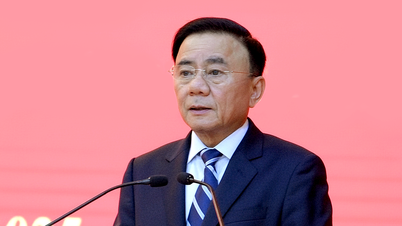
Delegate Tran Chi Cuong (Da Nang) (Photo: Media QH).
According to the Vice Chairman of the People's Committee of Da Nang City, the valuation agency must appraise the reserve, seek inter-sectoral opinions or review data, while the biggest goal is to speed up the progress of putting land into use, creating conditions for investors to carry out procedures on construction, environment, fire prevention and fighting or capital mobilization.
Delegates proposed to consider removing the mandatory regulation of recording land prices and infrastructure costs in land allocation and lease decisions.
"The determination of land prices, infrastructure costs and other financial procedures are carried out in parallel in the period after the decision on land allocation and land lease is issued. Investors only need to pay money and receive land after completing financial obligations according to the results determined by the competent authority," the delegate proposed.
Regarding the determination of specific land prices according to Clause 2, Article 257 of the Land Law, delegate Cuong proposed applying the land price table and price adjustment coefficient at the time of valuation. In case the coefficient has not been issued, the Department of Natural Resources and Environment shall hire a consultant to determine the coefficient as a basis.
This solution, according to delegates, will "completely remove obstacles and speed up progress for slow projects."
On behalf of the drafting agency, Minister of Natural Resources and Environment Tran Duc Thang said that he had received many opinions from delegates and affirmed that this Resolution aims to remove "bottlenecks" in the implementation of the 2024 Land Law. The Minister said that the contents reflected by delegates have been reviewed and will be studied and completed in the process of receiving and revising the draft.

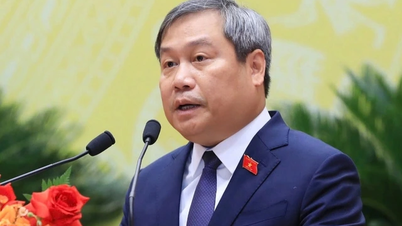
Minister of Agriculture and Environment Tran Duc Thang spoke to receive explanations on the afternoon of December 1 (Photo: Media QH).
Regarding the contents that cannot be included in this Resolution, the Minister said that the Government will fully study the impacts to submit to the National Assembly for consideration when comprehensively amending and supplementing the 2024 Land Law, expected in 2027.
Source: https://dantri.com.vn/thoi-su/dai-bieu-quoc-hoi-neu-nhieu-bat-cap-trong-luat-dat-dai-gay-kho-cho-dan-20251201180445200.htm


![[Photo] National Assembly Chairman Tran Thanh Man receives First Vice Chairman of the Federation Council of the Federal Assembly of the Russian Federation](/_next/image?url=https%3A%2F%2Fvphoto.vietnam.vn%2Fthumb%2F1200x675%2Fvietnam%2Fresource%2FIMAGE%2F2025%2F12%2F02%2F1764648408509_ndo_br_bnd-8452-jpg.webp&w=3840&q=75)













































![[Photo] General Secretary To Lam and his wife attend the 50th Anniversary of Laos National Day](https://vphoto.vietnam.vn/thumb/402x226/vietnam/resource/IMAGE/2025/12/02/1764644139308_1.jpeg)


























Comment (0)