

Clearly identify priority groups for periodic health check-ups from the beginning of 2026
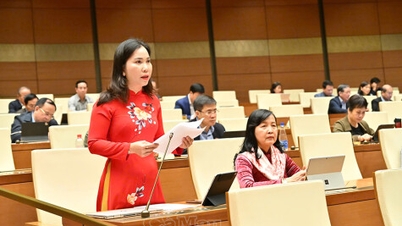
Concerned about health care benefits and reducing medical costs for people according to Article 1 of the National Assembly's draft Resolution on a number of breakthrough mechanisms and policies for protecting, caring for and improving people's health, delegate Dang Bich Ngoc ( Phu Tho delegation) said that this is a very important policy to implement the contents set out by the Politburo in Resolution No. 72.
According to the draft, starting from 2026, people will be able to have regular health check-ups or free screening at least once a year according to the target group and priority roadmap. Delegate Dang Bich Ngoc said that people are looking forward to having a health check-up at least once a year. This requires us to have a preparation roadmap, focusing on regular health check-ups according to target groups and having a priority roadmap in order.
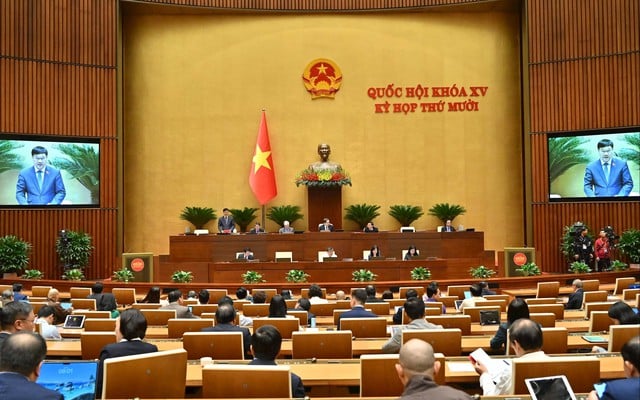
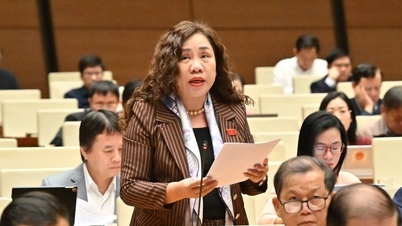
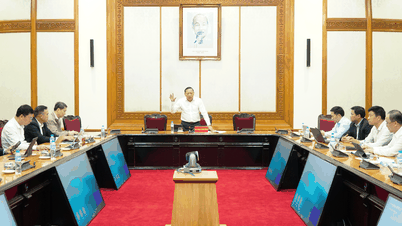
Vice Chairman of the National Assembly Vu Hong Thanh chaired the meeting at the Hall on the morning of December 2. Photo: Media quochoi
The delegates also expressed concern that the current situation of the grassroots health care network in localities is still very difficult and uneven among places and regions in the country, especially in remote areas, ethnic minority areas and areas with many socio-economic difficulties. The physical facilities do not meet practical requirements; machinery, equipment, network systems, and information technology to implement electronic health records for all people are extremely difficult. Along with that, there is a shortage of medical staff, doctors, human resources, and people who can perform tasks in an electronic environment.
"In fact, recently, when the National Assembly delegation surveyed the implementation of the 2-level local government model, it was found that commune and ward health stations still have many difficulties in terms of medical staff and doctors. Facilities and equipment do not meet the requirements for medical examination. Some machines and equipment are too old, only for formality to ensure the prescribed criteria but cannot be used, and there are no doctors to use them. Therefore, it is very wasteful, and it is difficult to meet the initial medical examination requirements for the people," said the delegate.
Based on reality, delegates proposed that the draft Resolution should prioritize the first groups of subjects to carry out periodic health examinations from the beginning of 2026, including: ethnic minorities in remote, isolated and extremely difficult areas; poor households, near-poor households, and vulnerable groups. This will create conditions for these subjects to access and have health examinations; at the same time, ensure that all people have access to medical services, ensuring publicity, transparency and objectivity in the implementation process.
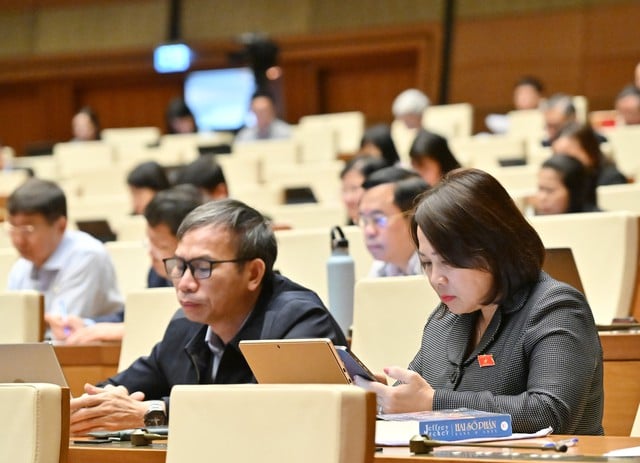
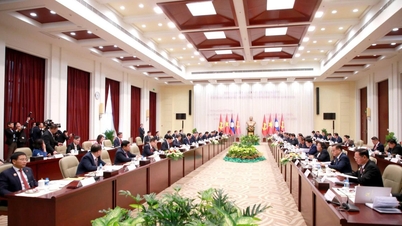
Delegates at the meeting. Photo: Media quochoi
Need a roadmap for creating electronic health records
According to delegate Dang Bich Ngoc, if the draft Resolution stipulates that "by 2026, the creation of electronic health records must be completed", it is not feasible, creating pressure and causing difficulties for localities in the process of organizing and implementing.
The delegate pointed out that in reality, the information technology system at the grassroots level can hardly meet the immediate requirements for creating electronic health records. Meanwhile, in remote areas, ethnic minority areas, most of the elderly do not have phones, smartphones, do not use phones, and do not know how to connect to the internet. "Without the use of information technology, the use of electronic health records is very difficult to implement," the delegate said.
Based on the analysis of reality, representative Dang Bich Ngoc suggested that the draft Resolution should stipulate in the direction of "striving to implement and complete the creation of electronic health books for all people by 2026". At the same time, there needs to be a long-term roadmap, focusing on implementation in areas that meet the requirements of facilities and human resources.
There are breakthrough policies to retain doctors in remote, isolated and border areas.
Delegate Dang Bich Ngoc pointed out a reality: there are many commune health stations in particularly difficult areas that do not have full-time doctors or only have doctors who do many jobs. Because the current policy mechanism is not strong enough to attract and retain qualified doctors to work and stay long-term with the grassroots health system, especially in remote, isolated and economically difficult areas.
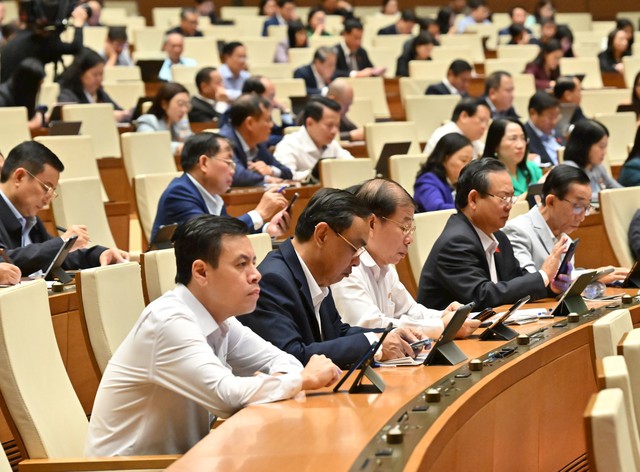
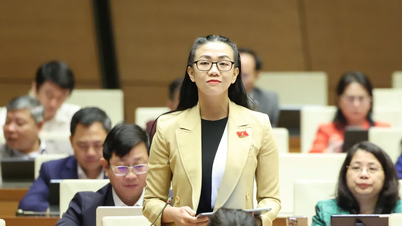
Delegates at the meeting. Photo: Media quochoi
In addition, Ms. Ngoc also frankly pointed out that doctors and nurses at the grassroots level are still limited in expertise and lack practical experience; there is still a situation where grassroots medical staff do not know how to operate or are not proficient in using equipment such as ultrasound machines and electrocardiographs, causing waste and not promoting the effectiveness in primary health care for people.
Therefore, to make a breakthrough in the coming time, delegate Dang Bich Ngoc suggested: It is necessary to develop policies to attract special human resources by region, with training and fostering mechanisms; focus on developing local human resources from ethnic minorities or implementing specific training programs in the form of hand-holding for medical staff in remote areas, ethnic minority areas, and areas with difficult economic conditions. At the same time, rotate upper-level staff to support technology transfer to commune-level levels, promote the application of digital transformation to provide remote medical consultation and treatment.
In particular, the delegate said that there must be an appropriate mechanism to train and develop the local medical staff, especially those who have worked for a long time. Because they are people who have been attached to the village, they are determined to stay with the people for a long time. Creating an appropriate mechanism will build and retain the medical staff at the grassroots level, meeting the requirements of medical examination and treatment at the commune and ward levels.
"Only when solutions are deployed comprehensively, interconnectedly and in accordance with practical conditions can the goal of improving the quality of medical services and ensuring access to health care for people across the country be well achieved," Ms. Ngoc emphasized.
Source: https://phunuvietnam.vn/dam-bao-cong-bang-quan-tam-cham-soc-suc-khoe-nguoi-dan-va-cong-tac-y-te-vung-sau-vung-xa-238251202112409721.htm

![[Photo] Parade to celebrate the 50th anniversary of Laos' National Day](/_next/image?url=https%3A%2F%2Fvphoto.vietnam.vn%2Fthumb%2F1200x675%2Fvietnam%2Fresource%2FIMAGE%2F2025%2F12%2F02%2F1764691918289_ndo_br_0-jpg.webp&w=3840&q=75)
![[Photo] Worshiping the Tuyet Son statue - a nearly 400-year-old treasure at Keo Pagoda](/_next/image?url=https%3A%2F%2Fvphoto.vietnam.vn%2Fthumb%2F1200x675%2Fvietnam%2Fresource%2FIMAGE%2F2025%2F12%2F02%2F1764679323086_ndo_br_tempimageomw0hi-4884-jpg.webp&w=3840&q=75)



















































































Comment (0)