

Towards a humane and creative night-time economy .
Hanoi is facing a new opportunity to awaken the potential of a city that never sleeps, with the official approval of the Nighttime Economy Development Plan until 2030 and a vision to 2045. Determined to make the nighttime economy a key growth driver, the capital aims for this sector to contribute 7% to 8% of GRDP by 2035 and over 12% by 2045, creating a brand of a city with international-level nighttime cultural experiences.
Statistics from the Ministry of Finance show that the country currently has about 20 night markets serving tourists and nearly 10,000 convenience stores operating 24/7, concentrated in Hanoi and Ho Chi Minh City.
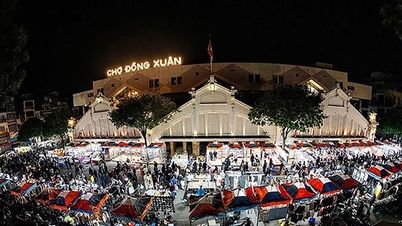
Typically, the night markets in the Old Quarter and the pedestrian streets around Hoan Kiem Lake (Hanoi) take place on the three weekend days, attracting 18,000-25,000 domestic and international tourists for sightseeing and shopping.
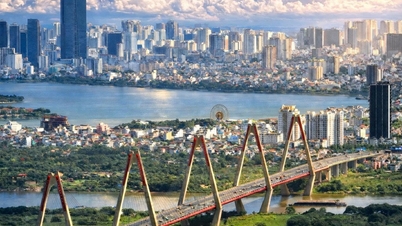
The core strength of Hanoi's night economy lies in the depth of its heritage and unique cultural values, reorganized within a modern urban space. The focus of this strategy is the formation of 6 to 8 concentrated night economic zones along the Red River landscape axis, which will become a dynamic creative economic center with high-value artistic and commercial activities.
According to Mr. Nguyen Van Hieu, Rector of the School of Interdisciplinary Sciences and Arts under the Vietnam National University, Hanoi, developing the night-time economy in the capital city is not simply about extending shopping and dining hours, but rather a process of reorganizing the economic and cultural space in a way that is attractive, safe, and distinctive.
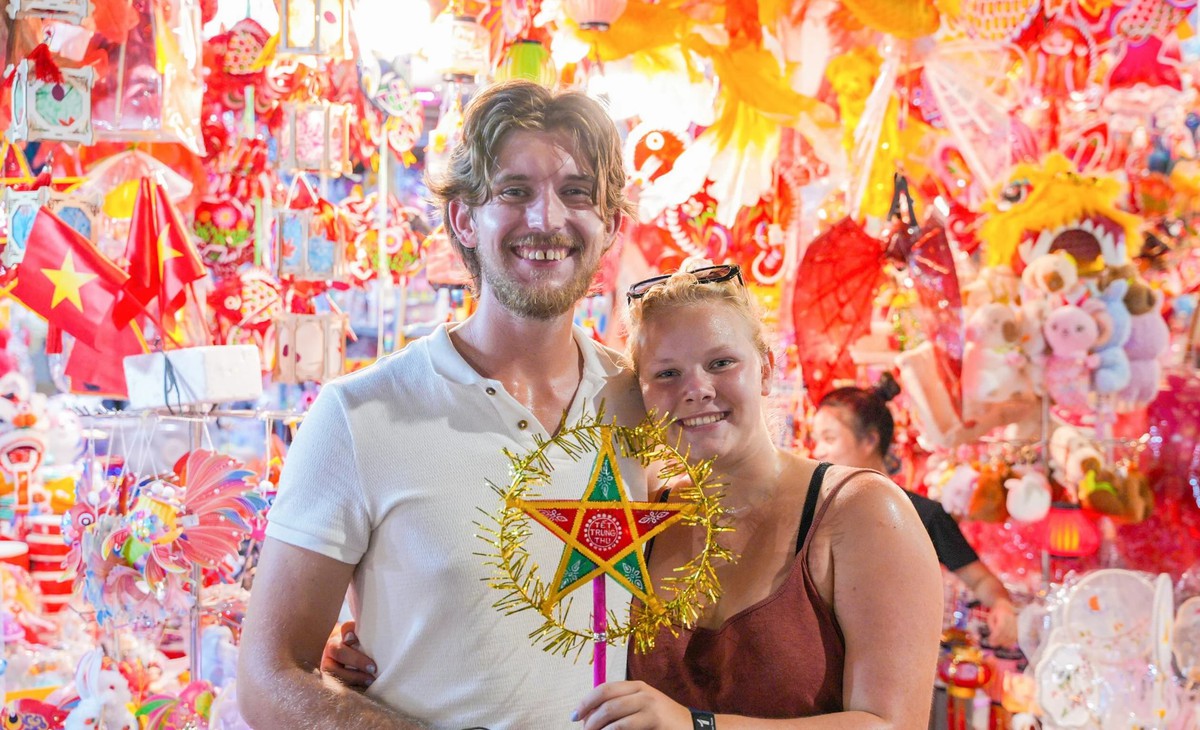
Foreign tourists explore Hang Ma night market in Hanoi. Photo: Tr. Hien
Furthermore, these products also demonstrate their ability to activate local economic value chains, creating numerous job opportunities and income for people through the participation of traditional craft villages and creative communities. New experiential tours such as "Memories of the Flagpole" or exploring the Thiet Ung wood carving village, and green tourism in Thuy Lam show that Hanoi's night tourism is shifting towards sustainability and environmental responsibility. When these products are implemented in conjunction with public transportation systems such as night buses and extended-hour urban railways, Hanoi will truly become a "sleepless" destination, providing profound emotional experiences and high added value for the tourism industry.
In this vibrant economic landscape, experts believe that women are asserting their role as ambassadors connecting culture and services. Fields such as craft village tourism, experiencing traditional crafts in Bat Trang and Van Phuc, or community-based tourism models in suburban areas are fertile ground for women to showcase their sophistication and ingenuity. Recently, the Hanoi Women Entrepreneurs Association signed memoranda of cooperation on building a service-oriented administration and supporting businesses; this demonstrates that women in Hanoi are not only a workforce but also key players in managing and creating high-quality service values.
Ms. Do Thu Hang, Deputy Director of the Hanoi Department of Finance, also commented that activating consumer service momentum through the pilot night-time economy would open up many opportunities for businesses and households, in which female workers account for a significant proportion.
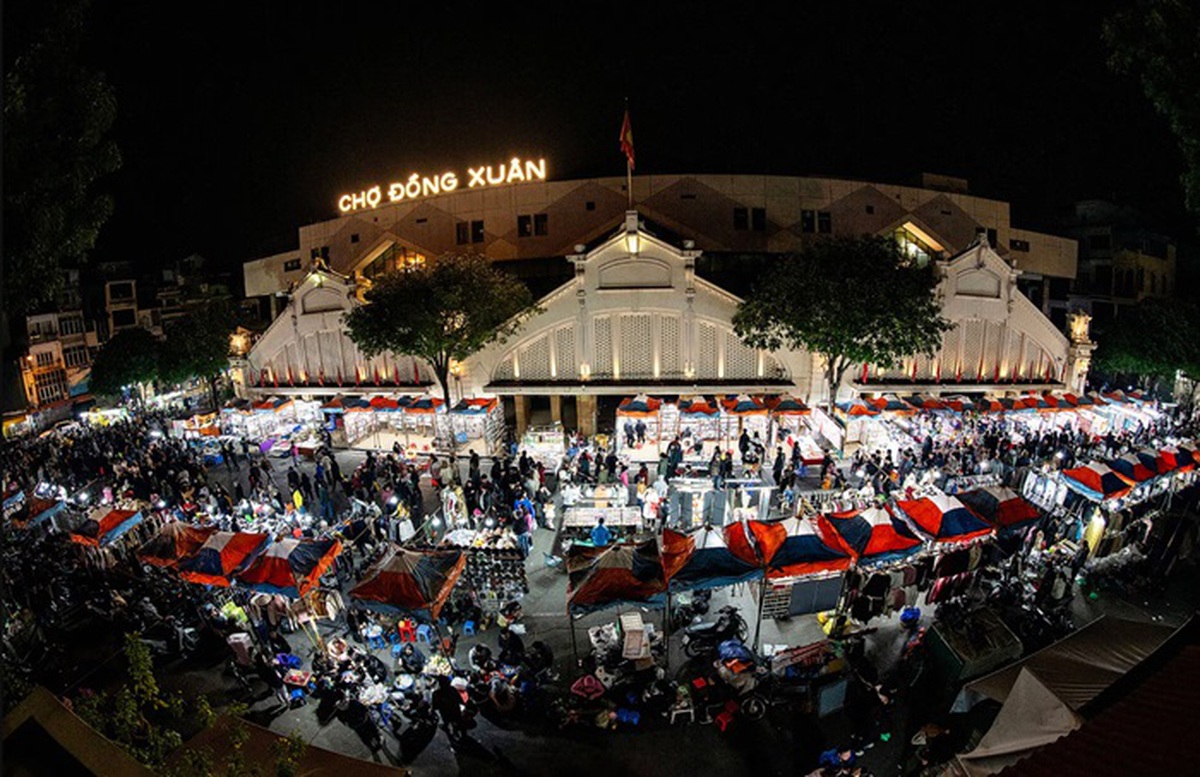
A corner of Dong Xuan night market - Hanoi. Photo: HNM
Untangling knots for sustainable development
For the night-time economy to truly "shine," there are still many obstacles and costly lessons to be learned from the short-lived success of many models in other localities. In reality, many pedestrian streets and night-time food courts in Ho Chi Minh City have either failed or are operating at a minimal level due to a lack of unique products and fragmented investment. Mr. Luu Nhat Tuan, Vice President of the Ho Chi Minh City Culinary Association, frankly pointed out that current night-time service points are still fragmented and have not yet formed a complete ecosystem, while the legal framework regarding operating hours and regulations on alcoholic beverages is not yet flexible enough to meet the actual needs of tourists after 10 PM.
According to many experts, the biggest obstacle in Hanoi today remains the lack of a unified coordinating body among departments responsible for security, order, culture, and transportation. Many nighttime economic activities, when implemented, still conflict with residents' living spaces in terms of noise and environmental impact, requiring clear administrative zoning plans separating active, quiet, and transitional zones.
Regarding policy direction, Associate Professor Dr. Nguyen Ngoc Son (National Economics University) believes that the development of mechanisms and policies for the night-time economy does not necessarily need to focus on financial support and incentives, but rather on building stable and appropriate mechanisms and policies to encourage individuals and businesses to participate in investment. At the same time, there should be a greater focus on management mechanisms and investment in the foundational infrastructure for the night-time economy.
To unlock this goldmine, Hanoi needs unique operating mechanisms, promotion of digital infrastructure and cashless payments, and standardization of brand identity systems to avoid falling into the rut of poor and monotonous night-time economic models.
The project "Developing the Nighttime Economy in Hanoi City from 2026 - 2030, with a vision to 2045" clearly states: By 2035, the nighttime economy will become an important driving force of Hanoi's urban economy, contributing approximately 7-8% to GRDP, with an average growth rate of 12-14% per year in the service, tourism, and cultural industries.
The plan involves establishing 6-8 key night-time economic zones and 15-20 spaces and streets operating after midnight, with integrated planning and connection to the public transportation system; at least 3 of these zones should meet the standards of a regional-level night-time cultural and tourism experience zone.
The night-time economy is managed in a smart city manner, with 80% - 90% of transactions being cashless, and 100% of key areas equipped with security surveillance systems and digital infrastructure.
By 2045, Hanoi aims to become a competitive regional night-time economic hub, with the night-time economy contributing over 12% to its GRDP, establishing itself as a "City of Nighttime Cultural Experiences," possessing several internationally-standard night-time spaces and events, and attracting 8-10 million international visitors to participate in night-time activities annually.
Source: https://phunuvietnam.vn/danh-thuc-kinh-te-dem-thu-do-238260524113811971.htm






























































































Comment (0)