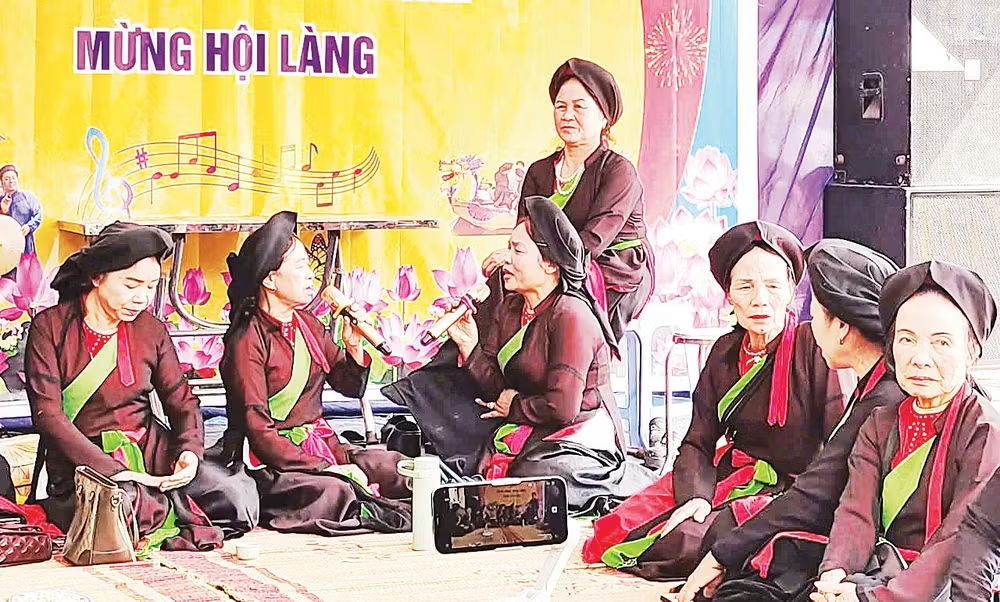
Passing on the Quan Ho folk singing style to young people in Bac Ninh , nurturing a passion for heritage. Photo: LITERATURE
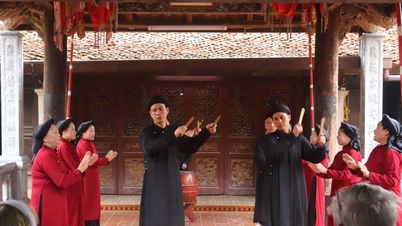
From the Quan Ho folk songs of Bac Ninh, Ca Tru, Cheo singing, Xam singing, water puppetry, the Tam Phu Mother Goddess worship, to traditional festivals in riverside villages…, each heritage is a source of community memory, a way of life, customs, and the depth of the national soul.
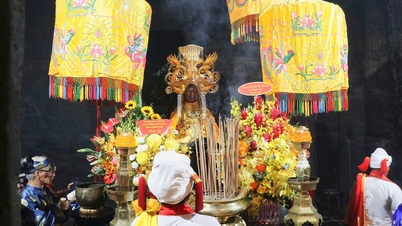
Many of these forms have been honored with UNESCO recognition, such as Bac Ninh Quan Ho folk songs and Ca Tru art (2009), the practice of worshipping the Mother Goddess of the Three Realms by the Vietnamese people (2016), along with other heritages that contribute to affirming Vietnam's cultural position on the world map.
Positive changes
In recent years, the preservation and promotion of heritage in the Red River Delta has seen positive developments. Many localities such as Bac Ninh, Hanoi, Ninh Binh, and Hai Phong have proactively integrated heritage into schools, expanded community performance spaces, and supported artisans in passing on their knowledge to the younger generation. As a result, hundreds of Quan Ho folk singing clubs have been maintained and continuously developed in Bac Ninh; many Ca Tru singing troupes in Hanoi have been revived; and Ninh Binh has focused on preserving Xam folk singing and the practice of Mother Goddess worship associated with spiritual and cultural tourism . Alongside this, some traditional festivals that had faded into obscurity are gradually being restored with increasing participation from local communities in the provinces and cities.
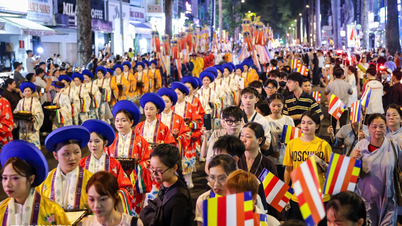
Encouragingly, the approach to heritage preservation is undergoing significant shifts in thinking and implementation. While previously preservation was primarily "framed" and passively maintained, localities are now focusing on reviving heritage within contemporary life. Many programs such as Quan Ho folk singing performances on boats, traditional opera experiences in rural villages, tours exploring folk beliefs, and cultural festivals in the Red River Delta have attracted both domestic and international tourists. As a result, heritage transcends the museum space, entering daily life, imbuing it with a new spirit, gradually creating livelihoods for the people, and contributing to the development of the cultural industry.
Efforts to attract young people
However, behind these promising signs, there are still many concerns and anxieties. The risk of a generational disconnect is becoming increasingly apparent. Many elderly artisans quietly pass on their skills under difficult conditions, and the workforce is dwindling, while the younger generation leaves their hometowns for the cities or goes to work elsewhere, showing little interest in art forms that require long-term commitment, such as Cheo singing, Van singing, or village rituals.
Another major bottleneck is the lack of inter-regional connectivity. The localities in the Red River Delta share many cultural similarities, but the promotion and development of heritage remains fragmented, with each locality acting independently and lacking a coordinated mechanism to form distinctive cultural product lines, clusters, or chains for the entire region. Meanwhile, many types of heritage have a clear inter-provincial and inter-regional spread, such as Ca Tru singing, Mother Goddess worship, and Cheo opera. If preserved solely within administrative boundaries, it will be difficult to create sustainable vitality and fully utilize the unique cultural values of the heritage space.
Furthermore, the process of digitalization and technology application has not kept pace with societal needs. Many valuable documents about ancient songs, folk rituals, and traditional knowledge are still scattered among the people and have not been fully digitized, while the trend among today's youth is to access culture primarily through the digital environment. Many cultural experts point out that heritage only truly comes alive when young people see themselves in it, rather than standing outside to "admire" it and then unknowingly drifting away.
To awaken the wellspring of heritage in a powerful and sustainable way, it is urgent to build a regional linkage mindset through long-term cooperation programs between provinces on conservation and promotion; develop inter-provincial cultural tourism routes; organize rotating folk art festivals; form a network of artisans and heritage clubs throughout the region; and promote exchanges between schools and the community... At the same time, we must boldly innovate methods of teaching and dissemination: create short clips of Quan Ho and Cheo folk songs for distribution on digital platforms; develop hands-on experience programs for students; apply virtual reality to festivals and museum activities; and create a digital database of artisans and folk knowledge. All of this must preserve the original character and identity so that the heritage does not fade away but becomes increasingly relevant and vibrant in modern life.
Preserving and promoting intangible cultural heritage is about safeguarding the spiritual foundation of the community. Each Quan Ho folk song, each Cheo performance in the village square, or each traditional ritual embodies centuries of national memory. When these values are passed down through generations, the community gains a solid foundation amidst the ever-changing currents of life. This, in turn, fosters national pride, fosters creativity, and contributes to the country's powerful transformation.
The heritage of the Red River Delta region is an invaluable asset bequeathed by generations of ancestors, which needs to be preserved and nurtured, becoming an intrinsic driving force and strength for development.
Source: https://nhandan.vn/danh-thuc-mach-nguon-ky-uc-cong-dong-post963798.html





















































































Comment (0)