

Some National Assembly delegates expressed their opinions on the rapid population aging rate but the elderly care system is developing slowly, lacking synchronization; there is a lack of elderly care services. The policy mechanism is not strong enough to attract non-state resources. The physical facilities do not meet the requirements, notably the development of the hospital system and geriatric department has not been specified in the program...
Responding to the development needs of geriatrics
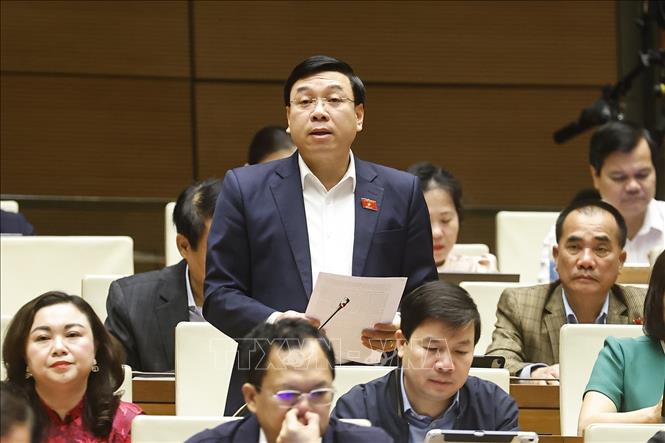
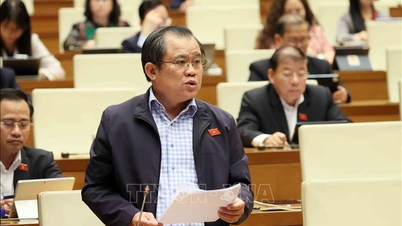
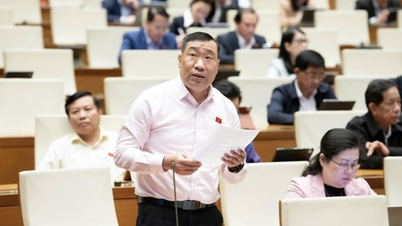
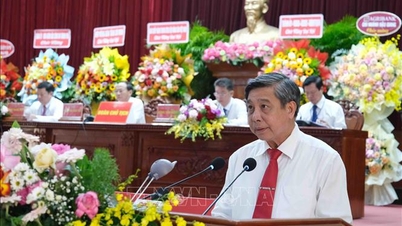
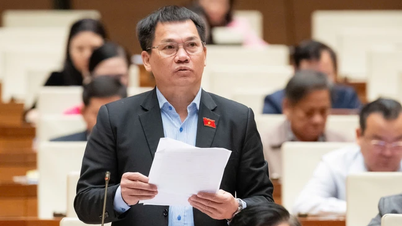
Contributing opinions on the content of responding to population aging, delegate Nguyen Van Manh (Phu Tho) emphasized the need to develop geriatrics in accordance with the spirit of Resolution 72 of the Politburo . Resolution 72 clearly states: each province and city must have at least one hospital or geriatrics department to meet the increasing needs of medical examination and treatment of the elderly.
However, according to the delegate, this content has not been specified in the draft Resolution on Investment Policy for the National Target Program on Health Care, Population and Development for the period 2026 - 2035. Although the sub-projects on improving population quality and adapting to population aging mention related tasks, there is no separate capital allocation for geriatric development. This is a contradiction compared to the orientation in Resolution No. 72-NQ/TW dated September 9, 2025 of the Politburo on a number of breakthrough solutions, strengthening the protection, care and improvement of people's health and the Planning of the health facility network to 2030, with a vision to 2050.
Delegates suggested that the Government rebalance capital sources, ensuring funding for key tasks such as building geriatric hospitals, upgrading geriatric departments at provincial general hospitals, and considering piloting in some localities where resources are limited to create a model before expanding.
In addition, the delegate emphasized that the socialized capital ratio of the program is still "too low", only 0.67% of the total budget (VND 594 billion/VND 88,600 billion). With such an investment level, "it is impossible to synchronously deploy the elderly care system from hospitals to nursing homes". Therefore, the delegate proposed to add solutions to strongly attract social resources through incentive mechanisms and clear investment policies, creating peace of mind for private enterprises participating in this special field.
Referring to the focus on social security mechanisms, especially the Health Insurance policy, delegate Duong Khac Mai (Lam Dong) completely agreed with the regulation that Health Insurance covers 100% of medical examination and treatment costs for people aged 75 and over, people in near-poor households or those receiving social assistance. However, the delegate suggested considering lowering this age to 70, which is more suitable to the reality when the healthy life expectancy of Vietnamese people is only about 68 years. The goal of the policy is to ensure timely support for the elderly group at high risk of illness and health damage.
Delegate Tran Thi Hien (Ninh Binh) presented an overall picture of the imbalance between the rate of population aging and the ability to provide elderly care services. The country currently has only 46 elderly care facilities out of a total of 425 social protection facilities (accounting for about 11%). Many provinces do not even have any specialized nursing facilities. Meanwhile, according to the Social Assistance Facility Network Plan, Vietnam needs at least 90 facilities by 2030, meaning that in the next 5 years, about 30 more facilities must be added, far exceeding the budget's investment capacity.
Notably, the delegate pointed out a major bottleneck: Nursing facilities are not currently considered medical facilities, although they still perform the tasks of medical examination, treatment, and rehabilitation. This makes it difficult for the private sector to access incentives on land, credit, taxes, etc., so they are not interested in investing, even though this is a large capital sector with slow recovery but brings high social benefits. From this reality, delegate Hien proposed: Recognize nursing facilities as medical facilities to enjoy special support policies; add to Sub-project 3 or Sub-project 4 the tasks of researching socialization mechanisms, issuing technical standards, and piloting models of semi-boarding care and combined medical-social care.
Strengthening the protection, care and improvement of people's health
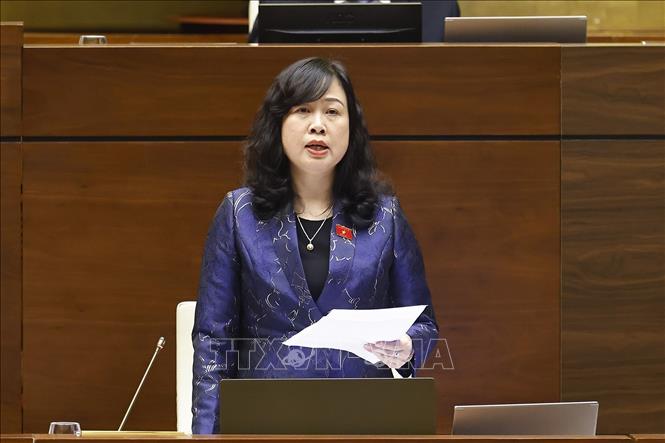
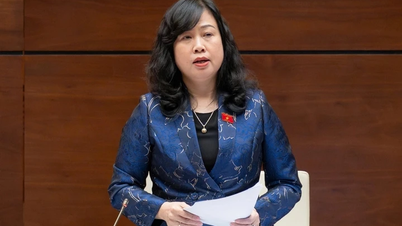
Explaining to the National Assembly, Minister of Health Dao Hong Lan affirmed that the development of a specific Resolution to implement Resolution No. 72-NQ/TW dated September 9, 2025 of the Politburo on a number of breakthrough solutions to strengthen the protection, care and improvement of people's health is carried out in the spirit of identifying people's health care as "the top political task". The health sector will carry out regular tasks and breakthrough solutions in parallel, while ensuring no overlap with other public investment programs.
Regarding periodic health check-ups and disease screening, the Minister said that the delegates' recommendations have been accepted and included in the draft Law on Disease Prevention, expected to be passed at this session. The Government will provide specific guidance on the subjects and roadmap. Regarding ensuring safety and benefits for medical staff, many preferential policies on land, taxes and attracting public-private partnerships have been agreed upon with the Ministry of Finance and the Ministry of Education and Training.
The Minister added that the draft Decree on special regimes (on-duty allowances, regimes for village health workers, etc.) has been submitted to the Government, aiming to remove difficulties and encourage frontline forces.
Regarding the development of the geriatric system, the Minister said that the country currently has 3 geriatric hospitals, 14 central hospitals and 48 provincial hospitals with geriatric departments. The Ministry has included the investment in geriatric hospitals at the central level in the public investment program; at the same time, it is reviewing the planning of the health network associated with the arrangement of administrative units. Localities are requested to consider this an important task and proactively implement it after having a plan.
Regarding nursing homes and attracting socialization, the Minister said that this issue has been integrated into Project 4 of the Program. In addition, preferential policies on land and taxes in this draft Resolution will be applied directly to nursing homes, creating incentives to attract private investment.
Regarding budget allocation and grassroots health, the allocation mechanism is designed in the direction of increasing decentralization: the Central Government allocates total capital, while the Provincial People's Council decides on the detailed implementation content. For grassroots health, the Ministry is reviewing the model according to two-level local government and will issue a new set of criteria for commune health stations in 2026.
Source: https://baotintuc.vn/thoi-su/dap-ung-yeu-cau-phat-trien-chuyen-nganh-lao-khoa-20251202133420153.htm


![[Photo] National Assembly Chairman Tran Thanh Man receives First Vice Chairman of the Federation Council of the Federal Assembly of the Russian Federation](/_next/image?url=https%3A%2F%2Fvphoto.vietnam.vn%2Fthumb%2F1200x675%2Fvietnam%2Fresource%2FIMAGE%2F2025%2F12%2F02%2F1764648408509_ndo_br_bnd-8452-jpg.webp&w=3840&q=75)

































































Comment (0)