

Identify the 5 pillars
Automobile is a key industry with strong spillover effects, affecting many other sectors. In the value chain, supporting industries play a decisive role in the localization rate, price and competitiveness.
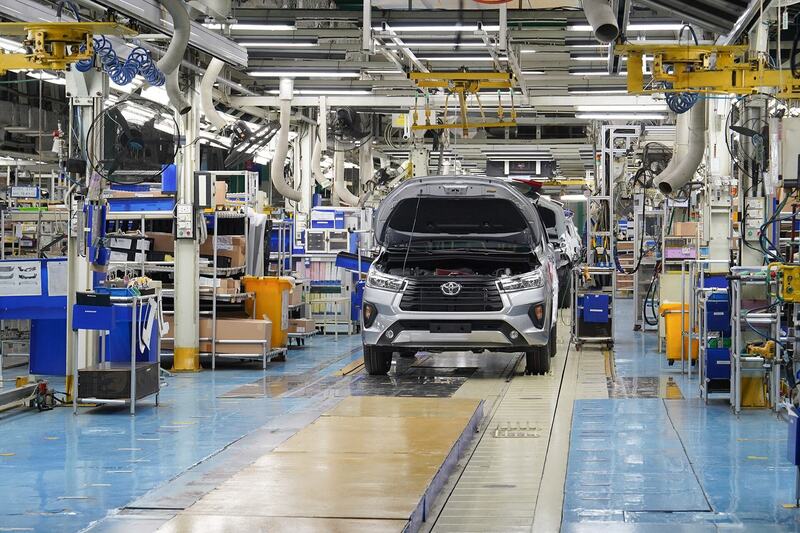
In the value chain of the automobile industry, supporting industries play an essential role. Photo: CTA
The Ministry of Industry and Trade has recently completed the draft of the Automotive Industry Development Strategy, identifying five pillars: Environment, technology, infrastructure, human resources and market. Most notably, the supporting industry is placed at the center, as the localization target is pushed to an unprecedented level: 55-60% by 2030 and 70-80% by 2035.
Without self-sufficiency in components, Vietnamese automobiles will find it difficult to form a competitive advantage. Looking at developed industrial countries such as Japan and South Korea, we can see a common denominator: they all possess a powerful supporting industrial ecosystem, with thousands of businesses producing precision components.
The new strategy emphasizes the formation of 5 supporting industrial clusters across the country, acting as “technology hubs”, connecting manufacturing enterprises - suppliers - research institutes. Vietnam expects to make a leap into high value-added segments: electrical and electronic components, transmission systems, new materials, batteries and control modules for electric vehicles.
In particular, Vietnam is forecast to consume 800,000 - 900,000 vehicles/year in 2030 and 1.5 million vehicles in 2035, more than 5 million vehicles in 2045. A large enough market size is a "long-term order" for the supporting industry to develop.
However, to meet the current double-digit localization requirement, small and medium-sized enterprises - the backbone of the supporting industry - must overcome many limitations: lack of capital, lack of technology... Auto parts, especially electrical and electronic parts, require extremely strict standards, which very few Vietnamese enterprises can currently meet.
Another important target is the supporting industry by 2035, in the period 2026 - 2035, the domestic auto supporting industry must meet over 65% of the demand for components and spare parts for domestic auto production. This means that the supporting industry will play a key role in reducing dependence on imported components and contributing to lowering the cost of domestic auto products.
For the Vietnamese automobile industry to develop sustainably and achieve the target of localization rate, experts say that there need to be clear strategic solutions and specific support policies.
Building a strong enough supporting industrial ecosystem
Mr. Pham Van Quan, Deputy Director of the Department of Industry, Ministry of Industry and Trade also acknowledged: "The automobile and mechanical industries are not simply production, but are symbols of technological strength, industrial level and national position. If we want Vietnam to become a developed industrial country, we must master the mechanical, automobile and high-tech industries ."
Mr. Quan also frankly pointed out that in the development process, there are still some limitations such as low localization rate, supporting industry has not really developed. Besides, there are not enough enterprises to participate in the global market.
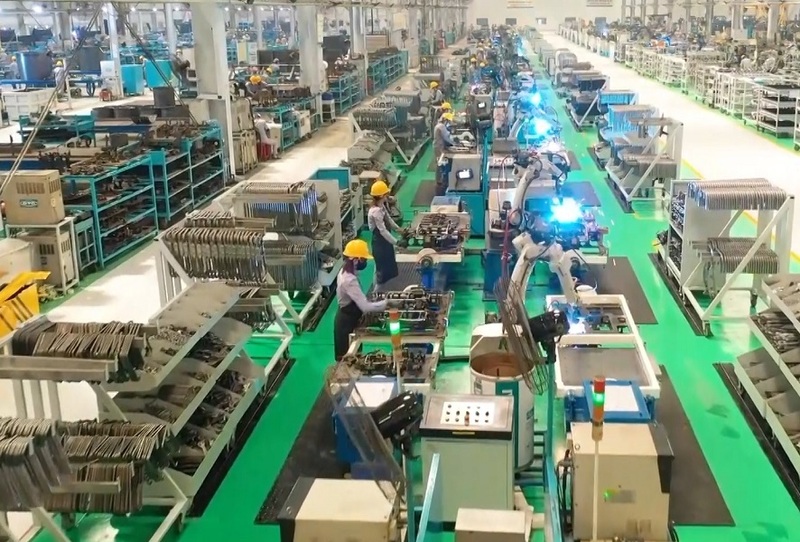
THACO has supplied components to many major brands such as Hyundai, Ford, Toyota, Isuzu, bringing in revenue of 13 million USD, and is expected to increase sharply in the near future. Photo: THACO
In Vietnam, a number of large-scale manufacturing centers are creating new momentum. THACO's complex in Chu Lai operates at a capacity of 100,000 vehicles/year, with a localization rate of 25-40% and is aiming for 45% for advantageous car models. VinFast, with two complexes in Hai Phong and Ha Tinh, has created significant spillover effects as the localization rate of electric vehicles has exceeded 60% and is expected to reach 84% by 2026.
The emergence of leading enterprises such as THACO and VinFast helps to strengthen the belief that Vietnamese enterprises are completely capable of creating “large orders” for domestic suppliers. This is also an important condition for small and medium enterprises to boldly invest in machinery, technology, and upgrade management to enter the global chain.
The spillover effect of supporting industries will not stop at the automobile industry. A strong ecosystem will promote a series of foundational industries such as precision mechanics, metallurgy, electronics, chemicals, new materials, etc. These are the industries that create the core production capacity of a modern economy.
The global trend of electric vehicles and green transition is opening up great opportunities for Vietnam. This opens up the possibility of participating in new segments such as batteries, control modules, electronic components – areas where Vietnamese enterprises can catch up quickly.
According to experts, when implemented systematically and transparently, Decree No. 205/2025/ND-CP dated July 14, 2025 of the Government, many important policies and regulations for the supporting industry have been amended and supplemented, focusing on increasing the quality of support, transparency of administrative procedures and adapting to digital transformation and international integration. This Decree will play a "leverage" role in promoting the entire supporting industry ecosystem to develop in a modern, efficient and integrated direction. This is a prerequisite for Vietnam to avoid dependence on imported components and raw materials, while increasing its ability to participate in regional production networks, taking advantage of the wave of international investment shifts.
In addition, the issuance of the above policy is also a strategic boost, helping businesses overcome investment cost barriers, access international markets and build independent production capacity.
In addition, to take advantage of that opportunity, businesses themselves must change and improve their capacity every day. Vietnam also needs to build capable industry-leading businesses. The proposed solution is to focus on innovation to improve product quality to ensure compliance with international standards. At the same time, forming a number of concentrated automotive industry centers/clusters based on the organization and rearrangement of production; promoting cooperation and linkage between automobile manufacturing and assembling enterprises, supporting industry enterprises, research and development establishments and training establishments of all economic sectors to improve investment efficiency and enhance specialization capacity...
According to the Ministry of Industry and Trade, in the coming time, the supporting industry needs to approach and apply technology to manufacture important parts and components such as transmissions, gearboxes, engines, car bodies, etc. for several types of vehicles; strengthen cooperation with major automakers to select types of spare parts and components that Vietnam can produce to take on the role of a link in the global production and supply chain, on that basis, invest in advanced technology and produce for export.
Source: https://congthuong.vn/dat-cong-nghiep-ho-tro-vao-tam-diem-trong-chien-luoc-phat-trien-o-to-433815.html





![[Photo] Urgently help people soon have a place to live and stabilize their lives](/_next/image?url=https%3A%2F%2Fvphoto.vietnam.vn%2Fthumb%2F1200x675%2Fvietnam%2Fresource%2FIMAGE%2F2025%2F12%2F09%2F1765248230297_c-jpg.webp&w=3840&q=75)



















































![[Photo] General Secretary To Lam works with the Standing Committees of the 14th Party Congress Subcommittees](https://vphoto.vietnam.vn/thumb/402x226/vietnam/resource/IMAGE/2025/12/09/1765265023554_image.jpeg)





















Comment (0)