

Entering the 21st century, cultural industry has emerged as a remarkable phenomenon in the economic restructuring strategy in many countries. In 2016, for the first time, Vietnam had a Cultural Industry Development Strategy. At the 13th National Party Congress, Cultural Industry was included in the Congress Documents.
This demonstrates the Party's special attention to the role of cultural industries in national development. Over the past five years, during the 13th Party Congress, cultural industries have made progress, showing a change in the thinking of both management agencies, localities and businesses.
"Red Rain" became a box office phenomenon in 2025 when it surpassed the 710 billion VND mark in revenue. Many films with revenue of hundreds of billions such as "Tunnel", "Tử Chiến Trên Không", "Mai" - were highly appreciated both artistically and commercially. These are proofs of the breakthrough development of Vietnam's cultural industry.
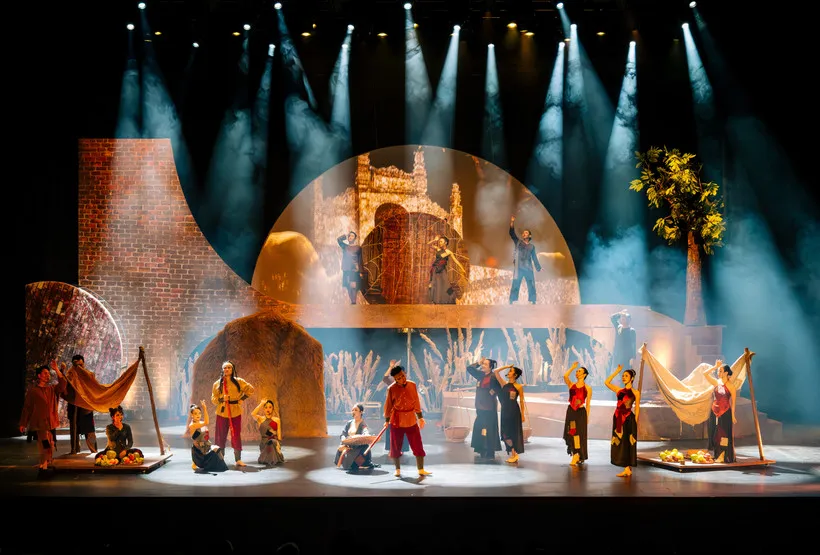
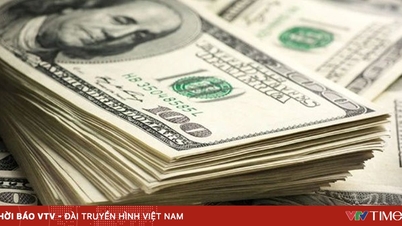
To date, cultural industries in Vietnam contribute over 4% of GDP. (Illustration photo - Photo: Vietnam+)
The Resolution of the 13th National Party Congress emphasized the implementation of focused and key development of the cultural industry. Implementing the Resolution of the Congress, the Government issued Directive 30 on the development of Vietnam's cultural industries. The "National Target Program for Cultural Development for the 2025-2035 period" was also approved by the National Assembly . Cultural development has strongly shifted to a creative economic model.
Mr. Tran Hoang (Director of the Copyright Department, Ministry of Culture, Sports and Tourism) said: "We have shifted our mindset from cultural production to cultural management, creating favorable mechanisms and policies for development, attracting businesses to develop cultural industrial products. In particular, we have formed an ecosystem from creation - production - distribution".
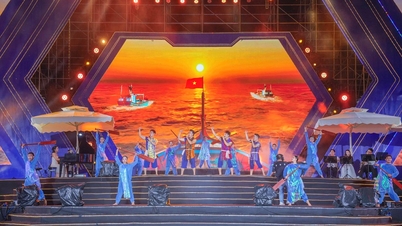
Over the past 5 years, hundreds of creative spaces have been established, creating an environment connecting artists, businesses and audiences. Performing arts have made a breakthrough with many large-scale music festivals, attracting tens of thousands of participants. Notably, Hanoi, Hue, Hoi An, Da Lat, and Ho Chi Minh City have officially joined the UNESCO Creative Cities Network.
"The development of cultural industries over the past 5 years has been outstanding, turning cultural industries into a breakthrough for development, not only of culture but also of the country's sustainable development. Creative economy brings confidence and pride in national values," said Associate Professor, Dr. Bui Hoai Son (full-time member of the National Assembly's Committee on Culture and Society).
To date, cultural industries in Vietnam contribute over 4% of GDP. Recently, the Cultural Industry Strategy for the period 2025-2030 was officially approved, setting a target that by 2030, cultural industries will contribute 7% of GDP. This target is considered completely feasible, with the current positive growth rate of a number of key industries such as cinema, performing arts, handicrafts, etc.
Source: https://vtv.vn/dau-an-5-nam-phat-trien-cong-nghiep-van-hoa-100251208220501366.htm

![[Photo] Urgently help people soon have a place to live and stabilize their lives](/_next/image?url=https%3A%2F%2Fvphoto.vietnam.vn%2Fthumb%2F1200x675%2Fvietnam%2Fresource%2FIMAGE%2F2025%2F12%2F09%2F1765248230297_c-jpg.webp&w=3840&q=75)























































![[Photo] General Secretary To Lam works with the Standing Committees of the 14th Party Congress Subcommittees](https://vphoto.vietnam.vn/thumb/402x226/vietnam/resource/IMAGE/2025/12/09/1765265023554_image.jpeg)

























Comment (0)