

In Vietnam, where the national liberation movement was seeking a new path of development in the 1920s and 1930s, the spiritual values from the October Revolution became a "modern vitality", contributing to shaping the appearance of revolutionary culture, creating the foundation for many artistic achievements of the 20th century.
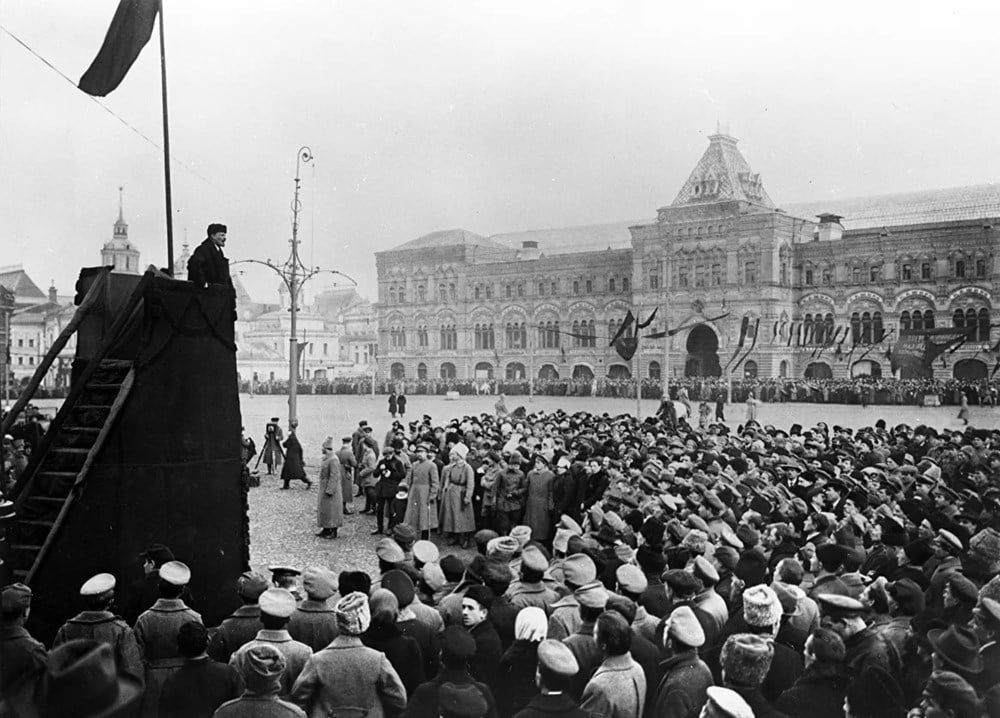
October Revolution - the starting point of a new aesthetic system
Since the 1920s, when Nguyen Ai Quoc approached and disseminated Marxist-Leninist theory, Vietnamese culture began to enter a new ideological orbit: culture must serve the people, art must be aimed at the masses, and artists must be closely connected with current events. This concept coincides with the spirit that Lenin once affirmed: "Art belongs to the people. It must be deeply rooted in the working masses" (Excerpt from Lenin's articles on culture, Tien Bo Publishing House, Moscow).
For Vietnamese intellectuals during the colonial period, this was a completely new orientation compared to traditional aesthetics, which was deeply influenced by Eastern scholarly literature, and also different from the romantic - individualistic concept of art that was emerging in the city.
From that foundation, the aesthetic system of revolutionary culture gradually formed: promoting the working people, collective spirit, optimism, faith in the future, and in the ability of human self-liberation.
Vietnamese Literature of the 20th Century: Receiving Russian - Soviet Literature as a “Spiritual Source”
The influence of the October Revolution on Vietnamese literature can be considered the most profound. From the 1930s to after the August Revolution in 1945, Russian-Soviet literature was translated and widely disseminated: Lenin, Gorki, Maiakovsky, Fadeev, Sholokhov, Tolstoy... became familiar names in the bookcases of Vietnamese writers.
Writer Nguyen Ngoc once wrote: “Russian literature gives us a sense of the greatness of human personality. Reading Gorky, we feel like we have a path to follow.” (interview published in the Army Literature Magazine, 2018).
From Gorky, Vietnamese literature absorbed the image of the new worker; from Sholokhov, writers learned the epic spirit of a changing society; from modern Soviet literature, young authors found ways to build collective characters - an important highlight of Vietnamese resistance literature in the period 1945-1975.
It is no coincidence that many Vietnamese writers of the 20th century viewed Russia as a “great spiritual school”. Writer To Hoai once said: “We learned from Soviet literature how to look at reality through the eyes of those involved, not only describing what was seen but also predicting what was to come” (To Hoai Complete Works, Memoirs).
Thanks to extensive contact with Russian and Soviet literature, Vietnamese literature has the ability to expand the range of reality, describing society with a view that is both realistic and optimistic - an important condition in turbulent historical periods.
Vietnamese art, an aesthetic bearing the Soviet mark write
Not only literature, many other fields of art also bear clear influence from the October Revolution and Soviet culture.
Painting - sculpture
The Soviet Union’s major art schools such as Surikov and Repin trained many generations of Vietnamese artists. The Soviet realist style, characterized by large compositions, strong images, bold colors, etc., has blended into the Vietnamese revolutionary art stream.
Many works such as Party Admission in Dien Bien Phu (Nguyen Sang), Victory Smile (Nguyen Hai), or the series of paintings about workers - farmers - soldiers all exude the spirit of socialist realism.
Stage and cinema
From the very beginning, Vietnamese cinema was clearly influenced by the Soviet cinema model: narrative structure, studio organization, and the view that "cinema is a weapon of artistic propaganda".
Many Vietnamese directors were trained at VGIK (Russia), among them are key names such as Hai Ninh, Bui Dinh Hac, Tran Dac... They brought back to the country the spirit of national cinema - epic, contributing to the creation of a series of classic films such as Parallel 17 - Day and Night , Hanoi Baby , Noi Gio ...
Music - dance - performance
Vietnamese revolutionary music was also influenced by Russian musical thought through musicians trained at the Tchaikovsky Conservatory and Soviet art schools. Many of Vietnam's first choral and symphonic works had a Russian flavor in the way they organized the harmony and instrumentation.
Contemporary reception: October heritage in new dialogue
In the current context of integration, the influence of Russian - Soviet culture is no longer as pervasive as before, but the values left behind are still very sustainable: Honoring the working people as creative subjects; belief in the social role of art; optimistic, epic spirit, considering art as a part of community life.
Many domestic scholars believe that this is a "spiritual heritage that needs to be viewed dialectically": absorbing humanistic values, while expanding creative space to suit today's diverse society.
Professor Tran Van Khe once commented: "Accepting Soviet culture Writing helps Vietnamese art mature, but it is important to maintain its identity in the integration process.” (interview 2012, archived at the Center for Vietnamese Cultural Studies).
In general, the influence of the October Revolution is a process of open exchange: it is both a stream of ideas, a cultural resource, and an art school. It is this impact that has contributed to creating the appearance of Vietnam's revolutionary culture - a culture that is closely connected to the people, puts social ideals first, and at the same time nurtures great artistic talents.
In the new journey of Vietnamese culture, looking back at that heritage is not to repeat the old model, but to better understand the layers of values that have contributed to creating national identity, and from there move forward in a more confident, creative and humane way.
Source: https://baovanhoa.vn/van-hoa/dau-an-cach-mang-thang-muoi-trong-van-hoa-van-hoc-nghe-thuat-viet-nam-186341.html
















![[Photo] National Assembly Chairman Tran Thanh Man attends the VinFuture 2025 Award Ceremony](/_next/image?url=https%3A%2F%2Fvphoto.vietnam.vn%2Fthumb%2F1200x675%2Fvietnam%2Fresource%2FIMAGE%2F2025%2F12%2F05%2F1764951162416_2628509768338816493-6995-jpg.webp&w=3840&q=75)










































Comment (0)