

Returning to the war-torn land of Quang Tri this time, we are truly moved and impressed by this land rich in cultural and historical traditions and with its strategically important position in the nation-building and national defense of the Vietnamese people.
Quang Tri was once considered a "battlefield," a "border defense," and a "frontier bulwark." The extraordinary resilience and perseverance that its people endured during the war to protect the homeland make us admire even more the rapid transformation and greening of this place. Quang Tri is a place where the bells of aspiration for peace ring out, deserving to be a symbol of peace for the world .
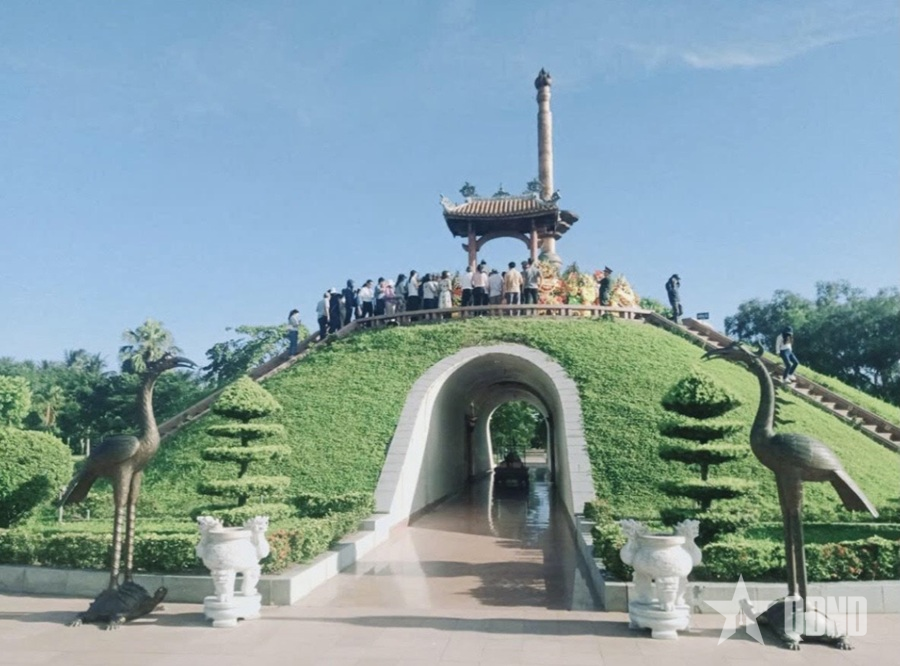 |
| The ancient citadel of Quang Tri stands majestic and serene. |
The majestic and solemn Quang Tri Citadel casts its shadow over the gentle Thach Han River. In the summer of 1972, approximately 328,000 tons of bombs and ammunition were dropped by the American enemy on this land. The sky and land of Quang Tri were ablaze with blood and fire; not a single tree or blade of grass could survive. Yet now, this very place is covered with lush green grass and trees, stretching out in the warm spring sunshine. Visiting this ancient citadel, one can sense the sacredness of every plant, flower, and brick, for all are steeped in the blood of heroic martyrs.
Meeting us during our pilgrimage to light the flame of gratitude at Quang Tri Ancient Citadel, Ms. Tran Bich Lien from Da Nang shared: "I was born and raised in a time of peace, free from bombs and bullets. This achievement was made possible by the blood and sacrifices of our ancestors. Visiting Quang Tri Ancient Citadel is not just about visiting a historical site, but also about visiting a cemetery—a cemetery without tombstones. Because the youth and aspirations of the heroic martyrs have been embodied in every inch of land, sleeping deeply in the embrace of Mother Earth. Not only for our young generation, but also for the Vietnamese people and friends around the world, the name Quang Tri is no longer just a place name, but has become a symbol, a shared pride in a glorious era of a heroic nation.”
About 3km from the ancient citadel, we arrived at Trieu Thanh commune (formerly), now Trieu Phong commune, to visit the house and offer incense at the altar to commemorate the late General Secretary Le Duan, a heroic son of Quang Tri province and an outstanding disciple of President Ho Chi Minh. Throughout his revolutionary life and later work, with his creative strategic thinking, he led the Party and our people through war, standing firm against the complex changes of the times, building, developing, and firmly protecting the Socialist Republic of Vietnam. Heading towards Cua Viet, we followed Highway 9 and then turned right onto National Highway 1 to reach the northern part of Quang Tri (formerly Quang Binh).
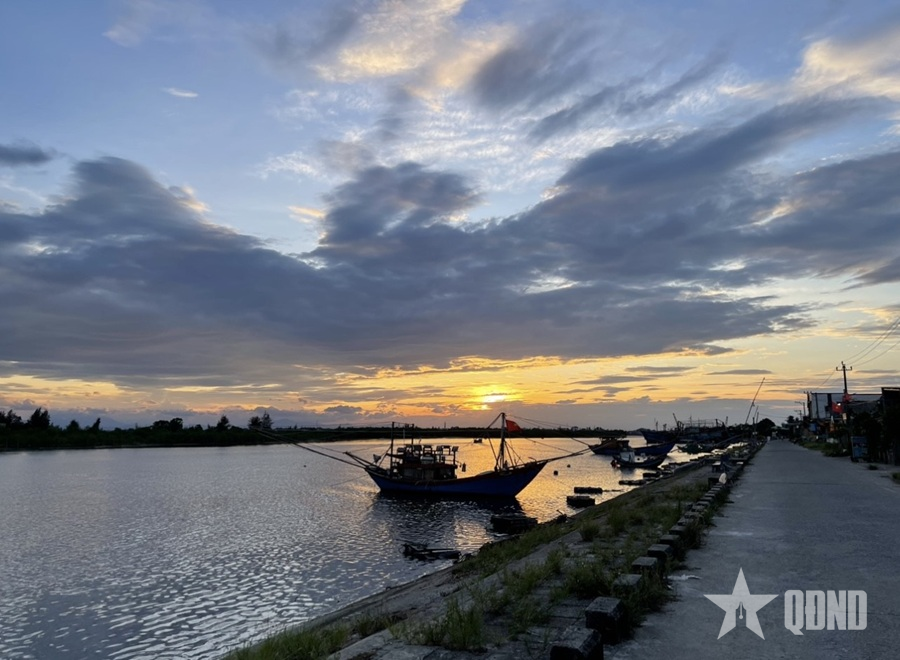 |
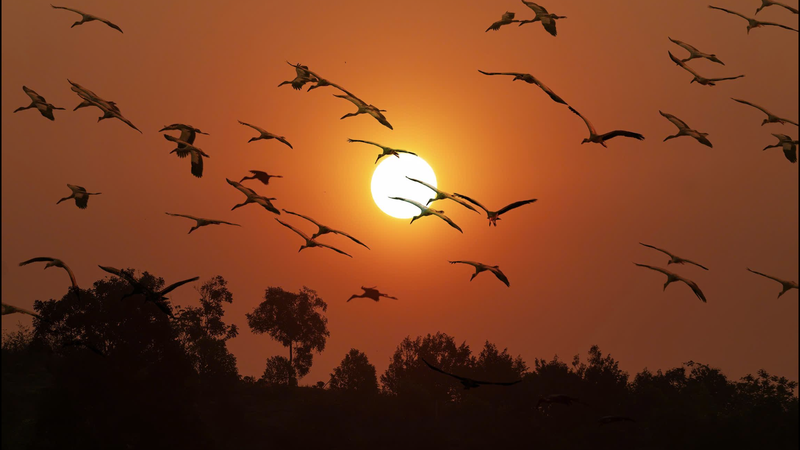
| Sunset by the river in Nam Cua Viet. |
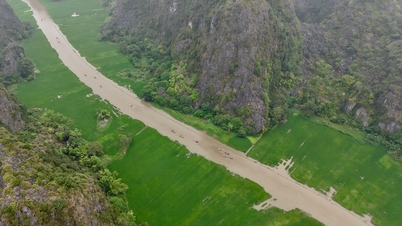
I've visited Quang Tri many times, but this was my first time traveling on this road on a spring morning with a friend who was both my driver and guide. It wasn't just "white sand and hot winds"; the road took me through vast fields with young rice plants sprouting and growing lush and green. Along the way, my friend introduced us to an area that was once a demilitarized zone, with its expansive fields famous for the McNamara electronic barrier. Today, life has revived with peaceful houses nestled amidst verdant orchards. The Hien Luong Bridge, spanning the Ben Hai River during the war, served as the temporary demarcation line between North and South Vietnam. Now, it's a historical site for locals and tourists alike to visit and learn more about that time of separation. The summer sun seemed to make the Ben Hai River even clearer, more beautiful, and more captivating. Nature has truly bestowed upon this land a perfect picture. The winding roads along the riverbank, the bamboo groves, the fields, the orchards, and the houses all blend together to create a familiar, peaceful image, with no trace left of the brutal war of more than half a century ago, with its bombs, mines, and devastating destruction.
The car entered the Sen Ngu commune in northern Quang Tri province, where we passed by endless stretches of white sand dunes. This is a distinctive feature of the area, giving it a unique beauty unlike anywhere else. On these dunes now lies a vast wind farm, stretching along a long road and covered in lush green trees. Our first stop in Dong Hoi ward was the Monument to Mother Suot by the Nhat Le River. The story of Mother Suot has been a part of the childhood lessons of generations of students. The river has a beautiful name, and in reality, it was even more beautiful than I had imagined before arriving. I was deeply moved standing beside the monument, picturing the image of the mother with her graying hair, strong and resilient, bending over the oar to ferry soldiers across the river day and night under enemy bombs and bullets. This heroic mother fell, but she lives on forever in the heart of her land, beside the river full of heroic achievements, where she single-handedly steered the ferry across the river.
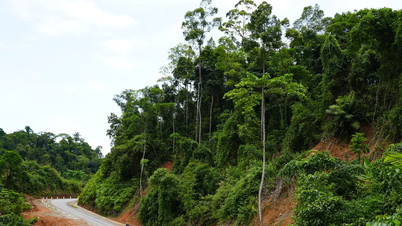
We didn't have much time here. After touring the wards of Dong Hoi, Dong Thuan, and Dong Son, we arrived at the Phong Nha-Ke Bang National Park. It was a magnificent landscape with towering mountains and interconnected caves. In the Trường Sơn mountain range's winds, on the Son River as we passed the A ferry crossing and the Nguyen Van Troi ferry crossing of the old 20th Victory Road, I could still hear the echoes of the valiant troops marching to battle. With the slogan "Live clinging to the road, die bravely and resolutely," soldiers from the main units, local forces, and volunteer youth groups held their ground and fought. Hundreds of sons and daughters of the homeland fell, so that today the green of the Son River and the lush greenery of the trees here could flourish.
A single day in Quang Tri is far too short to fully explore. But the lasting impression is the blue of the water, the sky, and the foliage – a blue of enduring vitality, the beauty of Vietnam and its people. The sun hid behind the Truong Son mountain range, leaving a soft, rosy hue in the air. I softly sang a song: "Coming here, a blue so endearing, oh beloved land and sky of Quang Tri…!"
Source: https://baosonla.vn/nhan-vat-su-kien/dau-an-noi-vung-dat-lua-070hZOhDR.html











































































Comment (0)