From the Old Quarter and Hoan Kiem Lake to Thang Long Imperial Citadel and the Temple of Literature, traditional values are no longer confined to tiled roofs and mossy walls, or to carvings and historical documents, but are truly brought out into the streets, engaging in dialogue with locals and tourists. This approach allows heritage to be both preserved and to thrive alongside the modern era.
Awakening heritage in the heart of the city.
While in previous years these activities took place at a few famous historical sites, this year they have been expanded throughout the city, offering a multi-faceted perspective, rich experiences, and a closer connection to tradition for the people of Hanoi and tourists.

During the 2026 Lunar New Year, Hanoi will organize a series of activities to "awaken" its heritage (Photo: Hoang Thanh).
Amidst the historically rich atmosphere of the Old Quarter, the "Vietnamese Tet - Street Tet" 2026 program has opened a journey to bring the traditional Tet holiday back to its true meaning: a living cultural space, connected to the community and urban life. Viewers not only experience a simulation but also feel as if they are traveling back in time, participating in and witnessing firsthand what happened in Thang Long - Hanoi many years ago.
The historical site at 22 Hang Buom Street has been "revived" as a center for recreating the traditional Tet (Lunar New Year) atmosphere and Tet market of the Northern Delta region.
Stepping through the time-worn wooden door, viewers are transported back in time. The ancient house, with its moss-covered tiled roof and wooden columns made of ironwood joined by mortise and tenon joints instead of nails – a symbol of the Vietnamese people's sustainable architectural thinking – has been meticulously restored. The ancestral altar is placed solemnly in the center, with a tray of five fruits, green sticky rice cakes, and the lingering scent of incense, reminding us of the principle of "drinking water, remembering the source."

Traditional Tet atmosphere in the Old Quarter (Photo: TITC)
The traditional Tet market comes alive with calligraphy stalls, Tet paintings, Ha Thai lacquerware products, Chuong village hats, and more. This space not only evokes memories but also affirms the value of traditional crafts in modern life.
At the Heritage House at 87 Ma May Street, the living space of a traditional Hanoi family is recreated, along with the art of carving and trimming narcissus flowers – a refined pastime of the people of Thang An (Hanoi). The Hanoi Old Quarter Cultural Exchange Center (50 Dao Duy Tu Street) opens its doors to traditional Tet (Lunar New Year) celebrations, with a "Traditional Music in the City" night creating a fusion of folk music and contemporary influences.
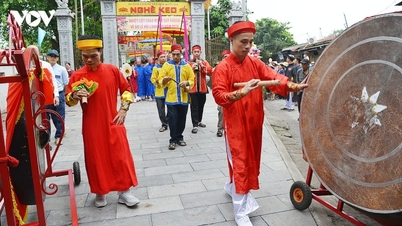
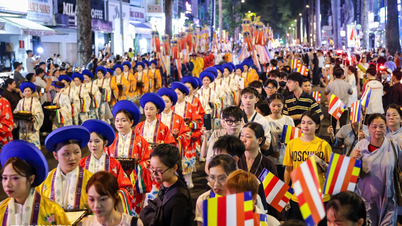
In particular, a series of traditional rituals were recreated at Kim Ngan Temple and on the old streets, including the opening ceremony of O Quan Chuong Gate, flower procession, announcement to the City God, erection of the ceremonial pole… combined with horsemanship and archery performances, and traditional costumes, creating a vibrant cultural scene in the heart of the city.

Opening ceremony of O Quan Chuong Gate (Photo: Thanh Tung/VNA)
At Thang Long Imperial Citadel, a series of unique Tet activities offered a profound journey to welcome the spring. The "Sunrise of Aspiration" flower street was arranged as a contemporary art piece, using flowers as "the soft material of time," honoring the architecture and spatial axis of the heritage site. Dien pomelos, kumquats, peach blossoms, and flowering rice interspersed with daisies, peonies, sunflowers... created a cultural experience where each step was a way to "re-read" the heritage.
At the reception area (House 19C), the traditional Tet (Lunar New Year) atmosphere of a city dweller's family is fully recreated with customs such as ancestor worship, hanging Tet paintings and couplets, making banh chung (traditional rice cakes), asking for calligraphy, and giving lucky money... The exhibition space is antique and deeply marked by the streets of the old capital city.
The Kính Thiên Palace courtyard area (House N14) showcases the court Tet rituals of the Lê Trung Hưng era, with a series of ceremonies from the Tiến Lịch ceremony, Tiến Xuân ngưu ceremony, the erection of the New Year's pole, to the Chính Đán ceremony. The lowering of the pole on the 7th day of the first lunar month and the opening of the new year ceremony on the 9th day of the first lunar month are also solemnly held to pay tribute to ancestors and honor the values of Thăng Long.

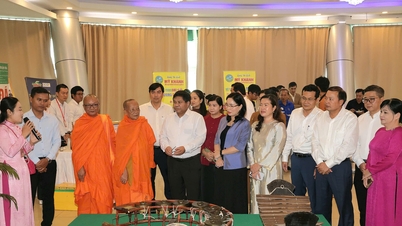
100-year-old People's Artist Nguyen Thi Khuou participates in the "Vietnamese Music in the City" program (Photo: Khanh Hoa / VNA)
The exhibition "Tet in Memory" at House D67 and the display "Vietnamese Cultural Heritage - Vitality from Tradition to Modernity" help the public look back at the difficult yet optimistic spring seasons, while also recognizing the journey of heritage preservation in the new context.
At the Temple of Literature - National University, the Spring Calligraphy Festival of the Year of the Horse 2026 became a cultural meeting point at the beginning of the year. Besides requesting calligraphy, visitors participated in reading spaces, folk games, and enjoyed Quan Ho, Ca Tru, and Cheo performances. Exhibitions such as "Ancient Traces of Culture 4," "Horses Returning to the City," and "Stone History Preserving Fame" further affirmed the profound value of the relics within the cultural heritage of Thang Long.
Transforming heritage into community assets.
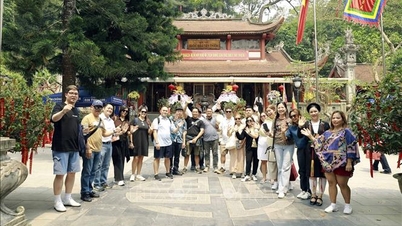
Notably, from February 20th to 22nd, 2026, 17 historical sites and scenic spots managed by the city will be open free of charge, including Thang Long Imperial Citadel, Temple of Literature - National University, Ngoc Son Temple, Hoa Lo Prison, Co Loa Citadel, Duong Lam Ancient Village, and Huong Pagoda… This decision not only cares for the spiritual life of the people but also affirms the policy of bringing heritage closer to the community.

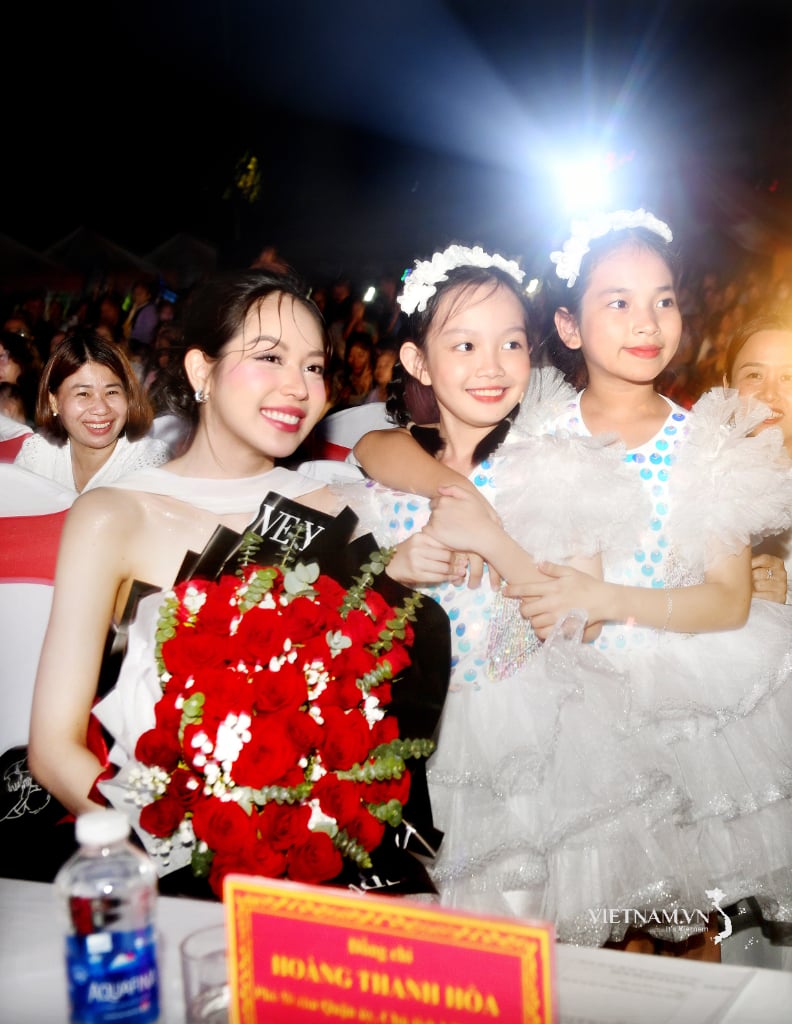
The "reviving of heritage" creates excitement and enthusiasm for welcoming spring, and for Hanoi residents and tourists alike to rediscover traditions (Photo: Hoang Thanh).
According to statistics, from the first day of the Lunar New Year to the sixth day of the first lunar month, Huong Pagoda welcomed 169,020 visitors, an increase of 54,786 compared to the same period last year (a 148% increase). On the sixth day of the first lunar month alone, Huong Pagoda received 33,125 visitors.
By the end of the third day of Tet (Lunar New Year), the Temple of Literature - National University had welcomed 66,000 visitors. During the days when admission was free (from the 4th to the 6th day of the first lunar month), the Temple of Literature received a record 260,000 visitors.
At Thang Long Imperial Citadel, on the second day of Tet (Lunar New Year), more than 8,000 visitors were welcomed, on the third day of Tet nearly 10,000 visitors, and a record was set on the sixth day of the first lunar month, the last day of the holiday, when the heritage site welcomed nearly 35,000 visitors.
From the first day of the Lunar New Year to the sixth day of the first lunar month, Huong Pagoda welcomed 169,020 visitors, a 148% increase compared to the same period last year. On the sixth day of the first lunar month alone, Huong Pagoda received 33,125 visitors.

Old traditions and streets come alive in the heart of modern life (Photo: TITC)
The series of activities during Tet (Lunar New Year) shows how Hanoi is concretizing the policy of conservation linked to sustainable development. Heritage is no longer a "frozen" space, but has become the foundation for cultural tourism, creative economy, and traditional education.
The widespread participation of the people, especially the youth, shows that the heritage is being embraced with a proactive attitude.
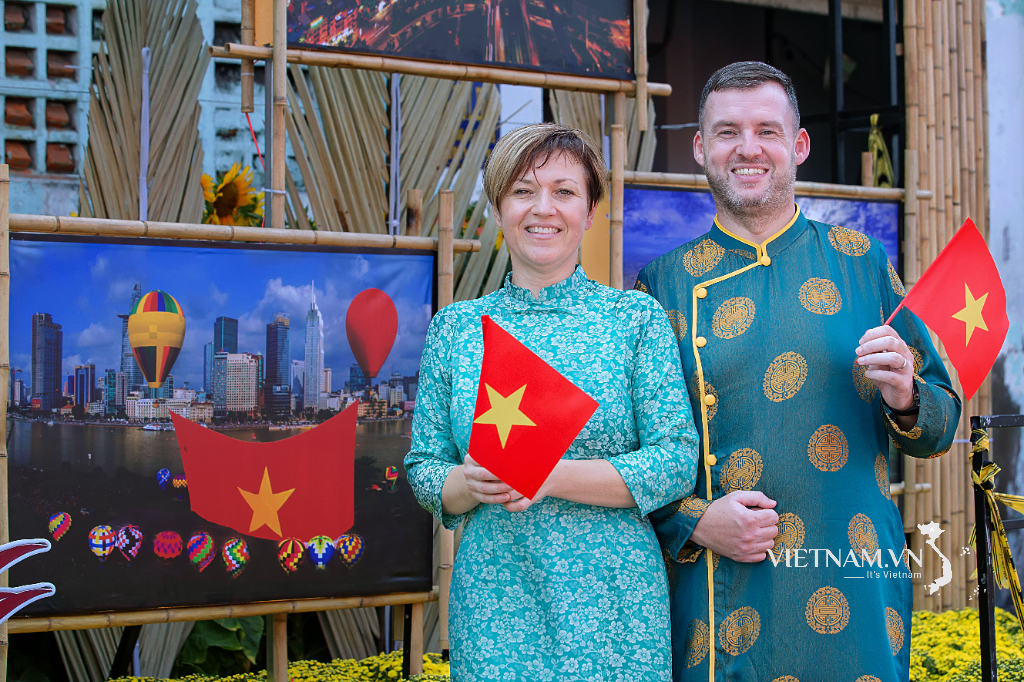
The "Vietnamese Tet - Street Tet" space has become a favorite check-in spot, and the "Following in the Footsteps of Giong's Horse" lacquer workshop attracts many young people to experience painting, eggshell inlay, and learning about traditional techniques.
When young people seek out heritage with curiosity and pride, fostering a love for the values left by their ancestors and nurturing a spirit of continuation, that is the greatest success.
Opening up historical sites to free admission also helps to make heritage truly a shared asset. People can access and enjoy cultural values, thereby fostering greater love and pride in their place of residence. Heritage is no longer distant, but present in everyday life.
In the context of the Politburo's Resolution 80, which emphasizes heritage preservation linked to creative development, Hanoi has demonstrated a suitable approach: preservation without rigid framework, and innovation without losing its identity.
For heritage to thrive in the modern era, it requires the collaboration of the government, artisans, the community, and the younger generation. The Lunar New Year of the Horse 2026 has proven that when heritage is properly "awakened," it not only comes back to life but also shines brightly.
Amidst the springtime beauty of Hoan Kiem Lake and the rhythm of modern urban life, ancient rituals, old roofs, flower-lined streets, and calligraphic inscriptions tell the story of a Hanoi that cherishes the past to build the future.
When heritage becomes a source of pride and an intrinsic resource, and the culture of Thang Long - Hanoi is cherished, preserved, continued, and developed, the capital will continue to rise – becoming cultured, creative, and sustainable in the flow of the times.
Source: https://hanoimoi.vn/de-di-san-vuon-minh-cung-thoi-dai-734856.html



















































































Comment (0)