

However, to realize the set goals, a new approach and a development model with deep regional integration is needed.
A comprehensive, long-term framework
Deputy Director of the Import-Export Department ( Ministry of Industry and Trade ) Tran Thanh Hai commented that this is a new "policy impulse" for the logistics industry to promote its role as essential infrastructure, contributing to reducing costs, improving national competitiveness and leading the transformation of the growth model.
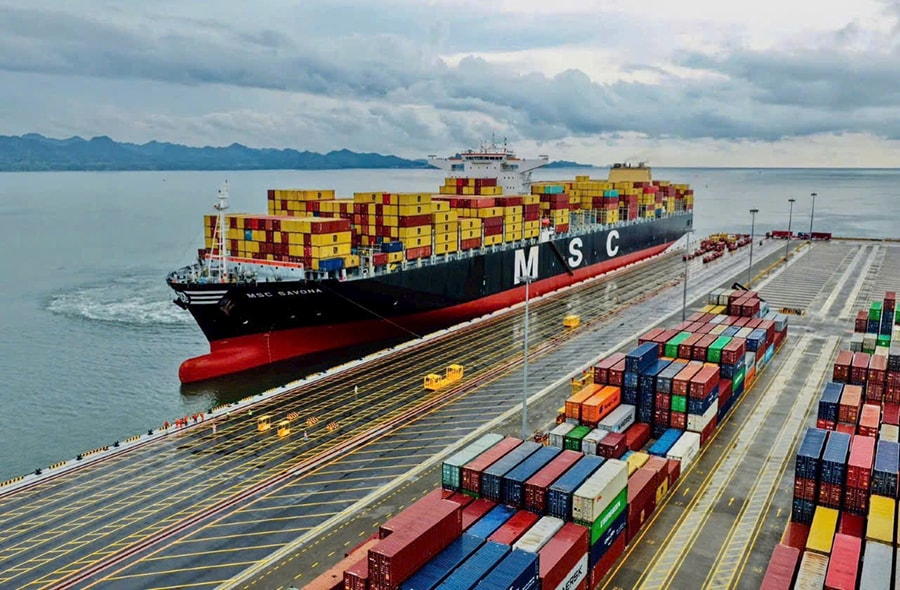
According to Dr. Bui Ba Nghiem, senior expert of the Import-Export Department, the Strategy sets out a series of ambitious goals, in which logistics contributes 5-7% of GDP, grows 12-15%/year, logistics costs are reduced to 12-15% of GDP and ranked among the top 40 countries in the world by 2035. In particular, 5 international logistics centers will soon be formed, aiming for 10 international logistics centers by 2050, which are important connecting poles, helping Vietnam become a regional freight transit point.
Regarding infrastructure, the Strategy aims to develop a synchronous and modern structure, prioritizing the construction of large-scale logistics centers in key economic zones. The system of seaports, airports, dry ports, and international railways will be upgraded to the standard of a "multimodal network", reducing pressure on roads - which currently carry more than 70% of transport.
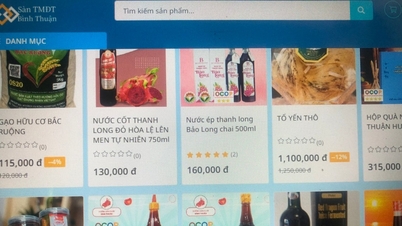
Notably, the Strategy devotes significant space to e-commerce logistics, smart warehouses, and green urban logistics, allowing businesses to exploit the momentum of the digital economy.
The formation of dynamic logistics zones in the Red River Delta, Southeast, Central regions, along with the growth poles of Hanoi - Hai Phong - Ho Chi Minh City - Da Nang, will create a new connecting axis for exports and the domestic market.
According to the Ministry of Industry and Trade, this vision not only aims to reduce costs and improve logistics rankings, but also puts logistics in the right position as a key economic sector, playing a leading role in green transformation, digital transformation and deep integration into the global supply chain.
Planning must be one step ahead
Experts believe that it is necessary to simultaneously change the planning mindset, implementation model and resource mobilization methods. According to Deputy Director of the Department of Domestic Market Management (Ministry of Industry and Trade) Bui Nguyen Anh Tuan, it is necessary to focus on developing a multi-layered, interconnected and synchronously planned logistics center network. From mid-2025, when Vietnam switches to an administrative structure of 34 provinces and cities, the scale of regions - growth poles - economic corridors will be clearer, requiring a large enough regional - inter-regional logistics model to replace the current fragmented approach.
Specifically, Vietnam will form 3 logistics poles North - Central - South, linked with seaports and gateway airports, economic corridors and free trade zones. At the regional level, each economic zone will have 2-3 logistics centers to connect production - import - export - domestic market. At the urban level, industrial zones, raw material areas, specialized logistics centers (agricultural products, cold goods, e-commerce...) will be developed according to specific characteristics...
As the growth pole of the North, Hanoi is making significant progress in logistics development. Deputy Director of the Hanoi Department of Industry and Trade Nguyen The Hiep said that the city ranked 4th in the country in terms of provincial logistics competitiveness index, with advantages in economic capacity, human resource quality and transport infrastructure. However, the city still faces many limitations such as lack of large-scale logistics centers, fragmented land fund, lack of effective multimodal connections, scattered agricultural logistics, small businesses have difficulty accessing capital and technology, etc.
To effectively implement the National Strategy, Hanoi will step up the review and update of logistics planning in accordance with the Capital Planning 2021-2030, while accelerating investment in 2 approved logistics centers and 8 proposed projects. The city also focuses on developing new services such as green logistics, digital cold storage, deploying e-logistics, optimizing data connection between enterprises - ICD - ports - customs...
"Completing mechanisms, accelerating infrastructure investment, innovating urban logistics models and implementing green logistics - smart logistics are decisive factors for Hanoi to meet the goals of the Vietnam Logistics Services Development Strategy for the 2025-2035 period, with a vision to 2050," Mr. Nguyen The Hiep emphasized.
Chairman of the Vietnam Logistics Services Association Dao Trong Khoa suggested that it is necessary to improve the inter-sectoral coordination mechanism; at the same time, there are solutions to remove bottlenecks in infrastructure, procedures, and markets, thereby creating new momentum for businesses in the logistics industry.
Experts believe that the Logistics Service Development Strategy 2025-2035 is a great opportunity for Vietnam to restructure its infrastructure system, drastically reduce costs, improve its ranking in the international logistics efficiency index and participate more deeply in the regional supply chain. It requires a strong change from thinking to doing, in which planning goes first, infrastructure is large enough, modern governance model, green - digital - smart logistics and close connection between the State - enterprises - localities.
Source: https://hanoimoi.vn/de-logistics-la-nganh-xuong-song-cua-nen-kinh-te-726114.html





![[Photo] Urgently help people soon have a place to live and stabilize their lives](/_next/image?url=https%3A%2F%2Fvphoto.vietnam.vn%2Fthumb%2F1200x675%2Fvietnam%2Fresource%2FIMAGE%2F2025%2F12%2F09%2F1765248230297_c-jpg.webp&w=3840&q=75)





















































![[Photo] General Secretary To Lam works with the Standing Committees of the 14th Party Congress Subcommittees](https://vphoto.vietnam.vn/thumb/402x226/vietnam/resource/IMAGE/2025/12/09/1765265023554_image.jpeg)





























Comment (0)