


The OCOP program has spread widely throughout the province, attracting the participation of many businesses, cooperatives, and hundreds of thousands of households. To date, the province has 599 OCOP products recognized with 3 to 5 stars (543 3-star products, 54 4-star products, and 2 5-star products at the national level).
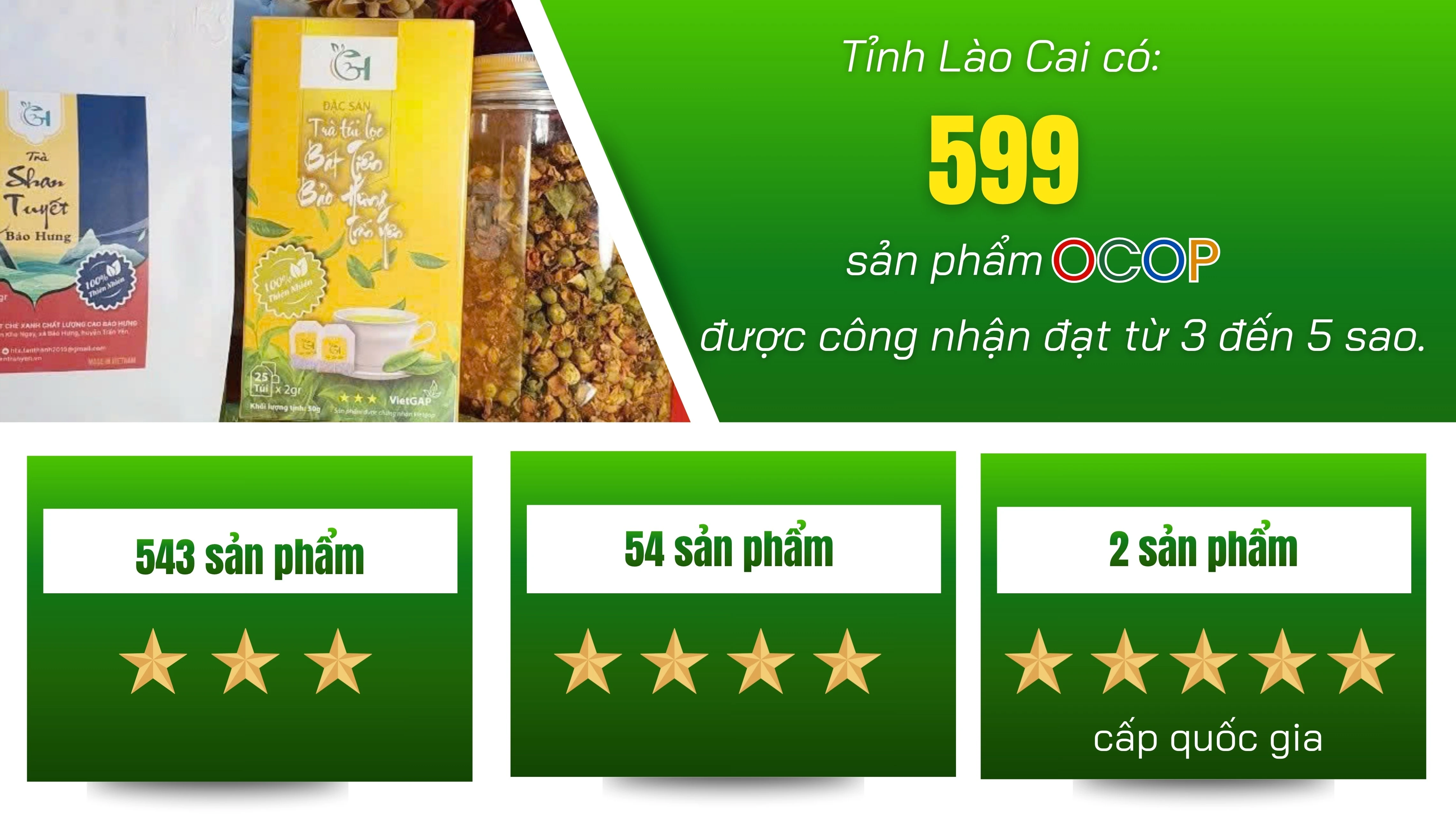
This figure not only reflects the scale of development but also shows a shift in agricultural production thinking, from small-scale to market-oriented and commodity-driven.
Many localities have gradually formed raw material areas and developed distinctive products such as tea, medicinal herbs, cassava vermicelli, honey, chili sauce, etc.
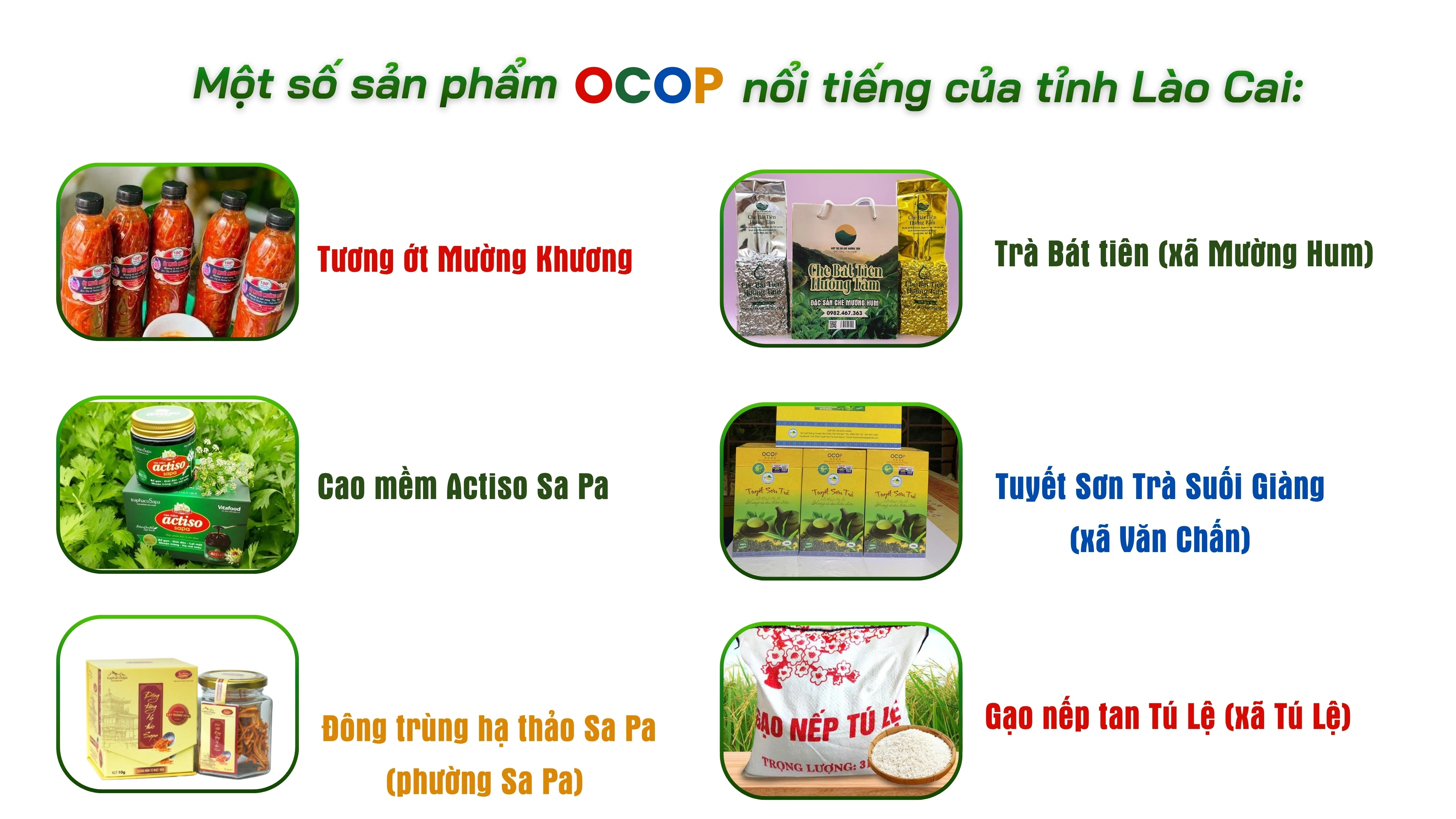
Many OCOP products from Lao Cai are famous not only domestically but also internationally, such as: Muong Khuong chili sauce, Sa Pa artichoke extract, Sa Pa cordyceps (Sa Pa ward), Bat Tien tea (Muong Hum commune), Tu Tam herbal cinnamon buds (Mau A commune), Tu Le sticky rice (Tu Le commune), Tuyet Son Suoi Giang tea (Van Chan commune)...
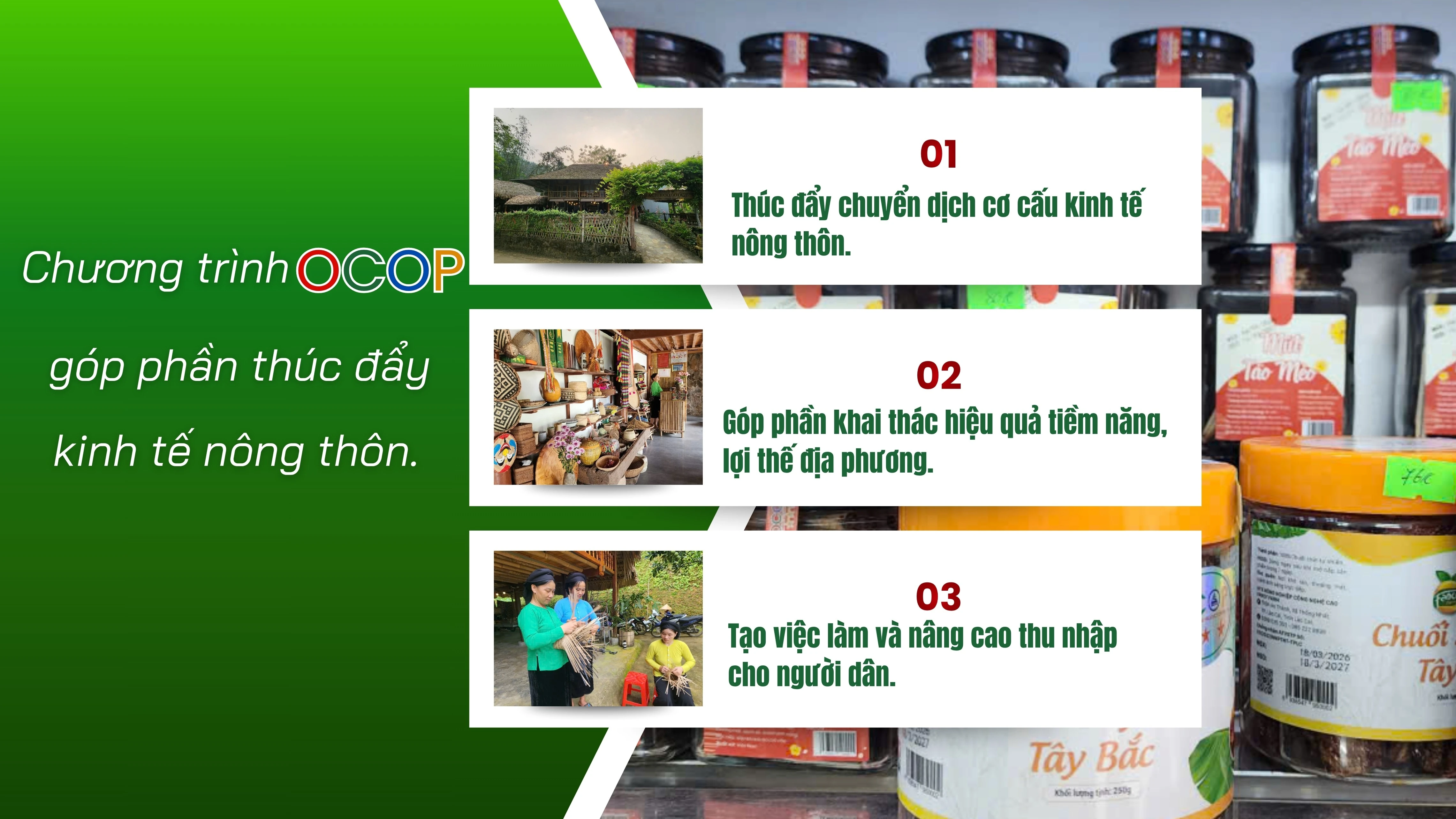
The OCOP program has contributed to effectively exploiting local potential and advantages; promoting the shift in rural economic structure; creating jobs and increasing income for people.
According to Ms. Hoang Thi Vinh, a household participating in the cultivation of Bat Tien tea raw materials in Pieng Lao village, Muong Hum commune, previously, households in the village cultivated tea on small areas, only selling raw materials or processing the tea themselves to sell at the market, resulting in low income. Since participating in the OCOP Program, receiving guidance on techniques for making "Bat Tien Muong Hum Tea" products, and establishing consumption linkages, the value of the product has increased significantly, and the output is much more stable.
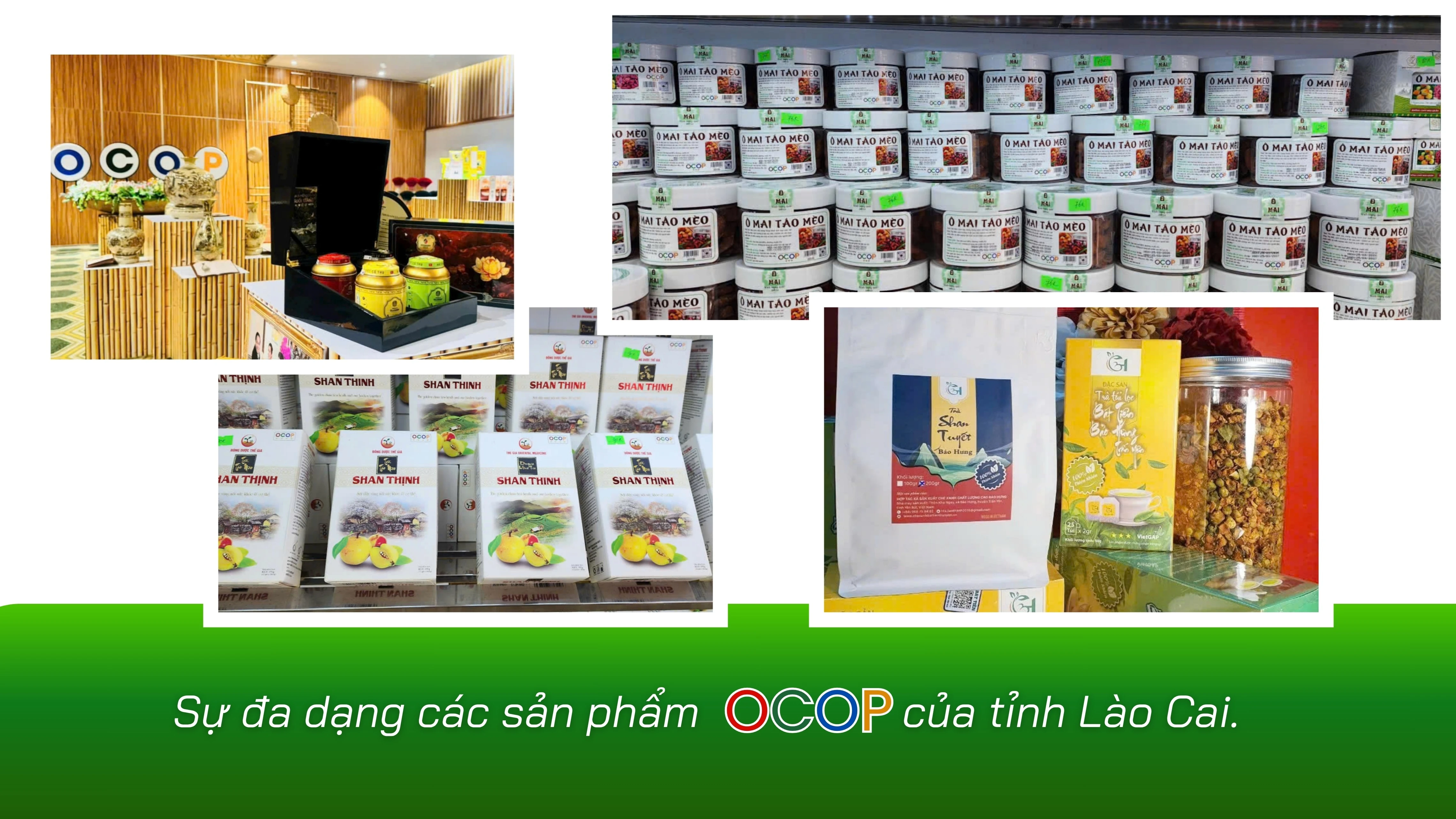
Not only individuals, but also many cooperatives and businesses are gradually changing their methods, investing in machinery, building brands, and bringing products into modern distribution systems. As a result, the OCOP program has created a "wave" of developing distinctive products in many localities.
Sa Pa ward leads the entire province in the number of recognized OCOP products (30 products), and also has the highest number of OCOP products achieving 4-star and 5-star standards in the province (6 OCOP products achieving 4-star standards and 2 OCOP products achieving 5-star standards).
According to Mr. To Ngoc Lien, Chairman of the People's Committee of Sa Pa ward, thanks to its advantageous geographical, climatic, and soil conditions, Sa Pa ward has many types of specialty plants and animals that can be processed into OCOP-certified products ranging from 3 to 5 stars.
“Besides OCOP products that have proven effective and established themselves firmly in the market, there are still many products with limited competitiveness. Furthermore, within the province, many localities have similar OCOP products, leading to direct competition. Therefore, in the coming time, the province needs to review all OCOP products in localities to make adjustments to the certification process. Each locality needs to exploit its unique products with distinct characteristics and promote deep processing to increase added value,” Mr. To Ngoc Lien added.

In reality, despite achieving positive results in terms of quantity, the quality and effectiveness of many OCOP products in localities throughout the province are still not commensurate, and furthermore, while there are many products, their market coverage remains limited.
Many products are only sold within a limited area, lacking stability and competitiveness in the market.
In particular, in some localities, the development of OCOP products is mainly aimed at "meeting the criteria" for recognition as achieving new rural standards and advanced new rural standards.
A leader of the People's Committee of a mountainous commune (who requested anonymity) shared: The commune currently has 9 OCOP products, but so far only 3 are regularly produced and sold on the market. The remaining products have not developed further, or have even ceased production, because they have not yet become widely available goods.
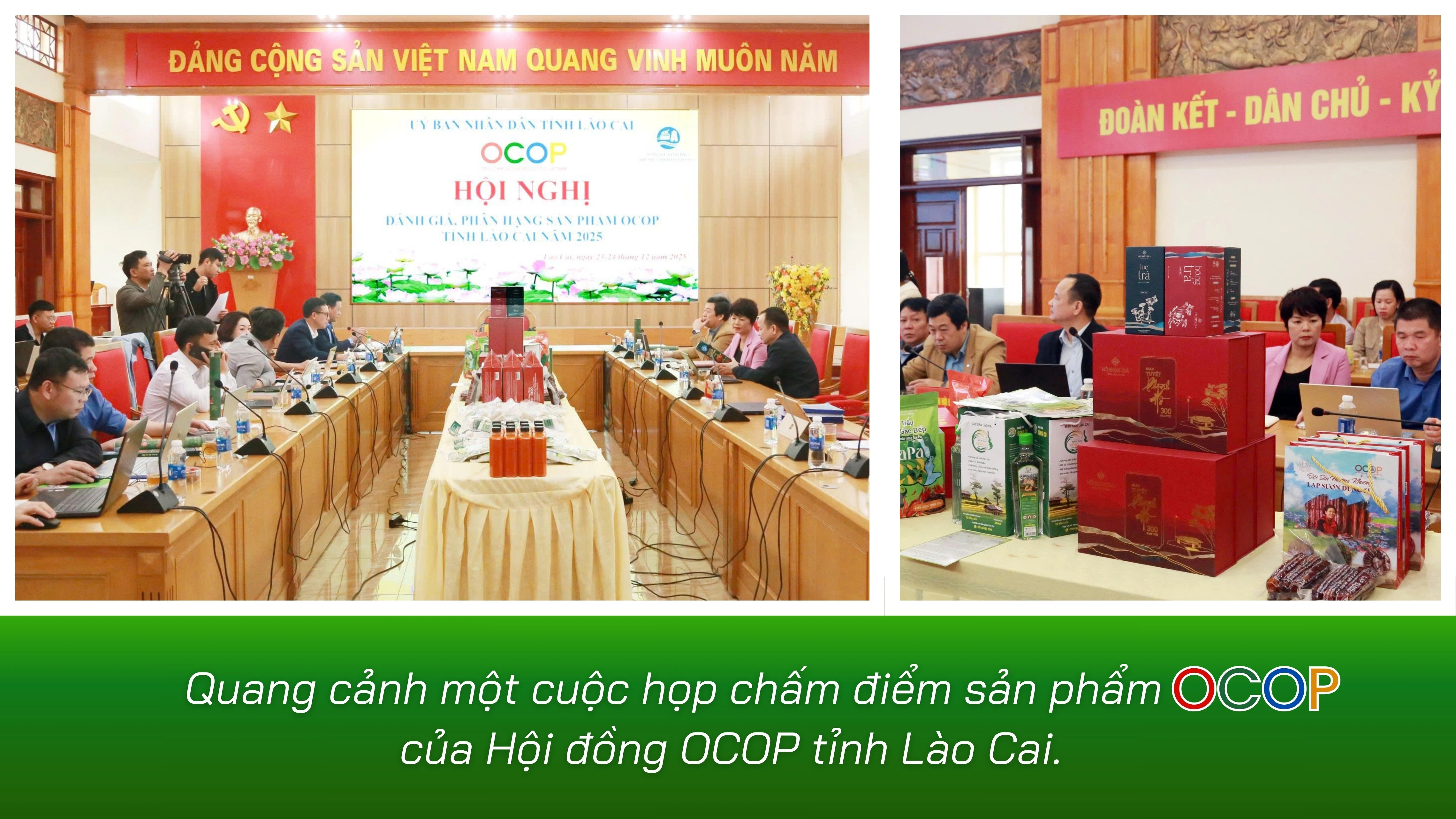
The difficulties in developing OCOP products in localities were also pointed out by the provincial specialized agencies. These include the weak linkages between businesses, cooperatives, production facilities, and farmers, failing to connect the interests and responsibilities of all parties. Many farmers are unfamiliar with contract farming and do not adhere to production processes and standards.
Furthermore, many OCOP product manufacturers are small-scale with limited management capacity, leading to weak value chain linkages and a lack of large enterprises to lead the application of standards such as VietGAP, organic farming, traceability, packaging design, labeling, and product promotion and sales. These are major "bottlenecks" that prevent OCOP from fully realizing its potential in the socio-economic development of localities.
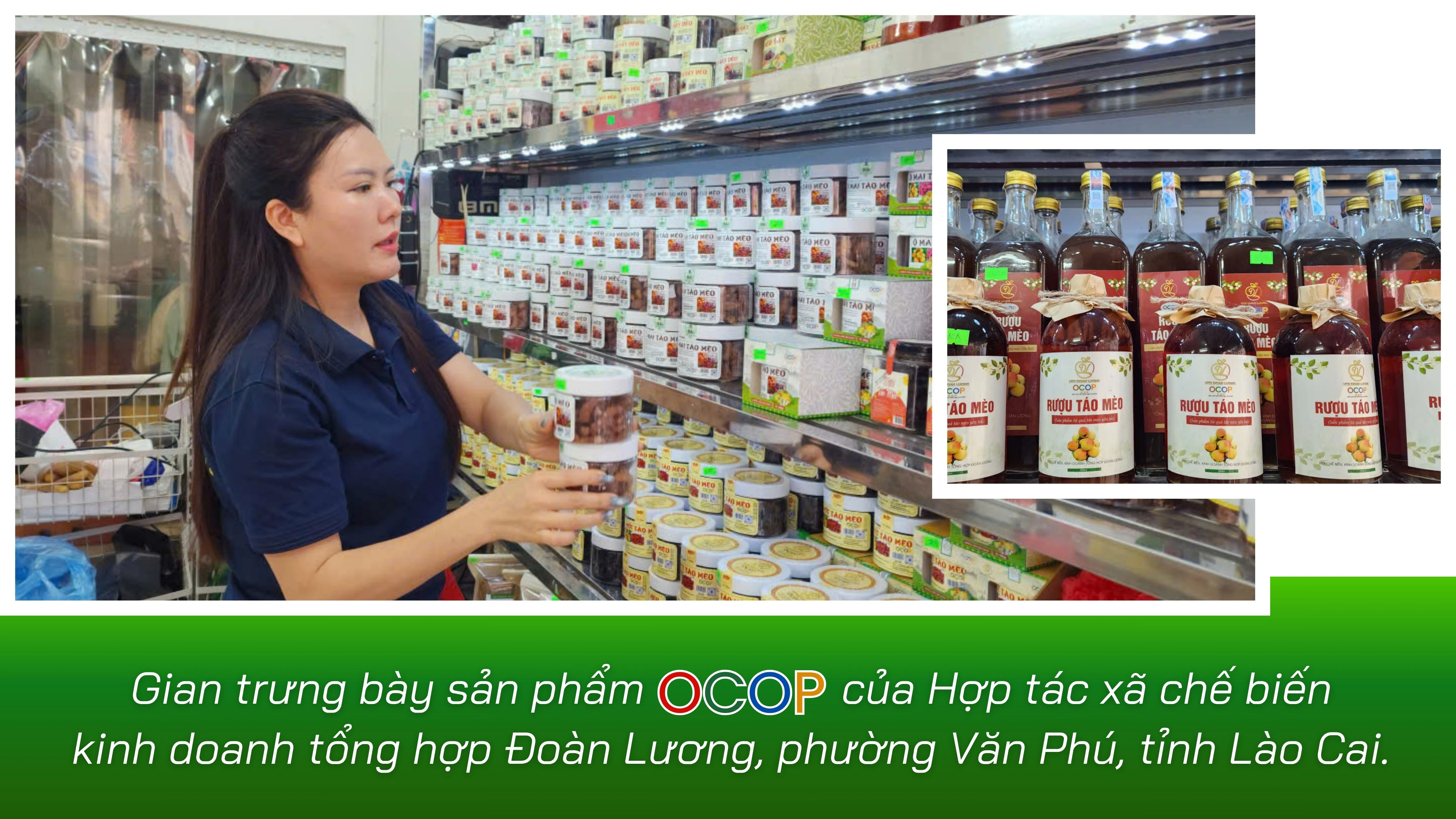
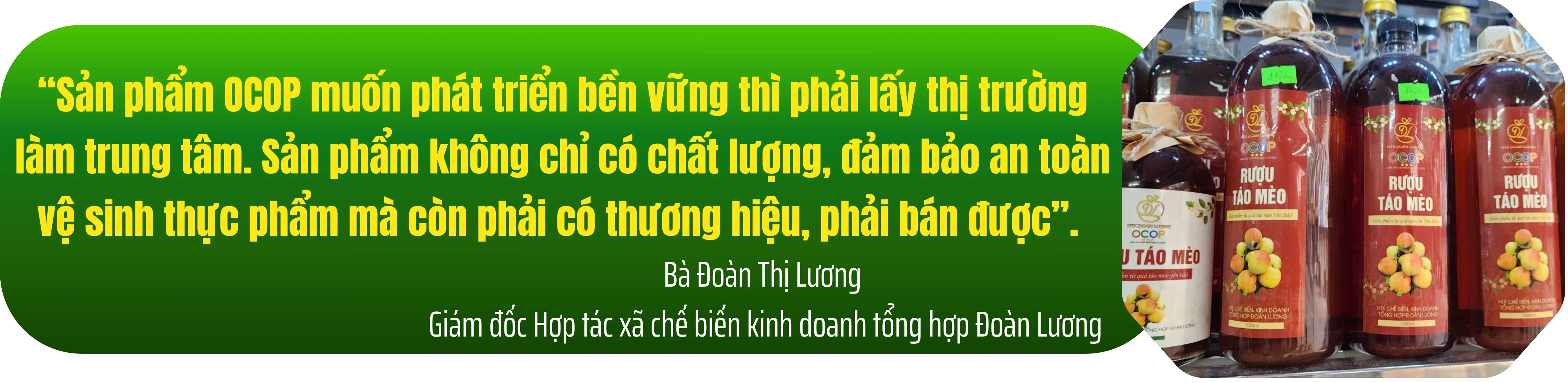
Ms. Doan Thi Luong, Director of Doan Luong General Processing and Trading Cooperative in Van Phu Ward, shared: “For OCOP products to develop sustainably, the market must be at the center. Products must not only be of high quality and ensure food safety and hygiene, but also have a brand and be marketable. Making OCOP products by hand preserves tradition but results in low productivity, high costs, and difficulty competing. Therefore, after building a brand, we hope to receive support in terms of loans and land to build a factory and apply science and technology to produce OCOP products in large quantities, not only for the domestic market but also for export. In addition, we want to build a sustainable value chain from cultivation to processing and consumption, linked with the cooperation between households and businesses.”
According to Mr. Nguyen Huu Truong, Deputy Head of the Department of Quality and Rural Development of Lao Cai province, nearly a year after the province's merger, the evaluation and classification of OCOP products is still being implemented on schedule and according to plan.
In 2025, Lao Cai province had 62 new OCOP-recognized products (achieving 114.8% of the assigned plan), including 10 products that had completed their 36-month evaluation period and were re-evaluated. By sector, food continued to be the leading sector with 480 out of 599 products, followed by beverages with 41 products, medicinal herbs and products from medicinal herbs with 26 products, handicrafts with 36 products, tourism with 20 products, and the remainder being ornamental plants and animals.
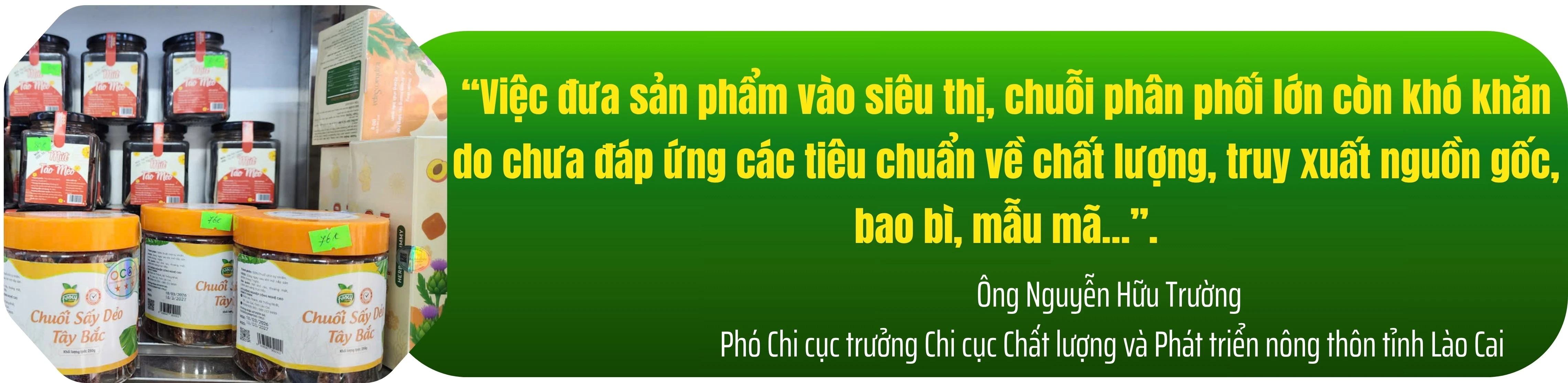
"Monitoring and evaluating the implementation of the OCOP program in various localities shows that many businesses still view OCOP as a 'title' rather than an economic development program. Therefore, investment in products is often reactive and lacks strategy. Getting products into supermarkets and large distribution chains remains difficult due to not meeting quality, traceability, packaging, and design standards..." Mr. Nguyen Huu Truong added.
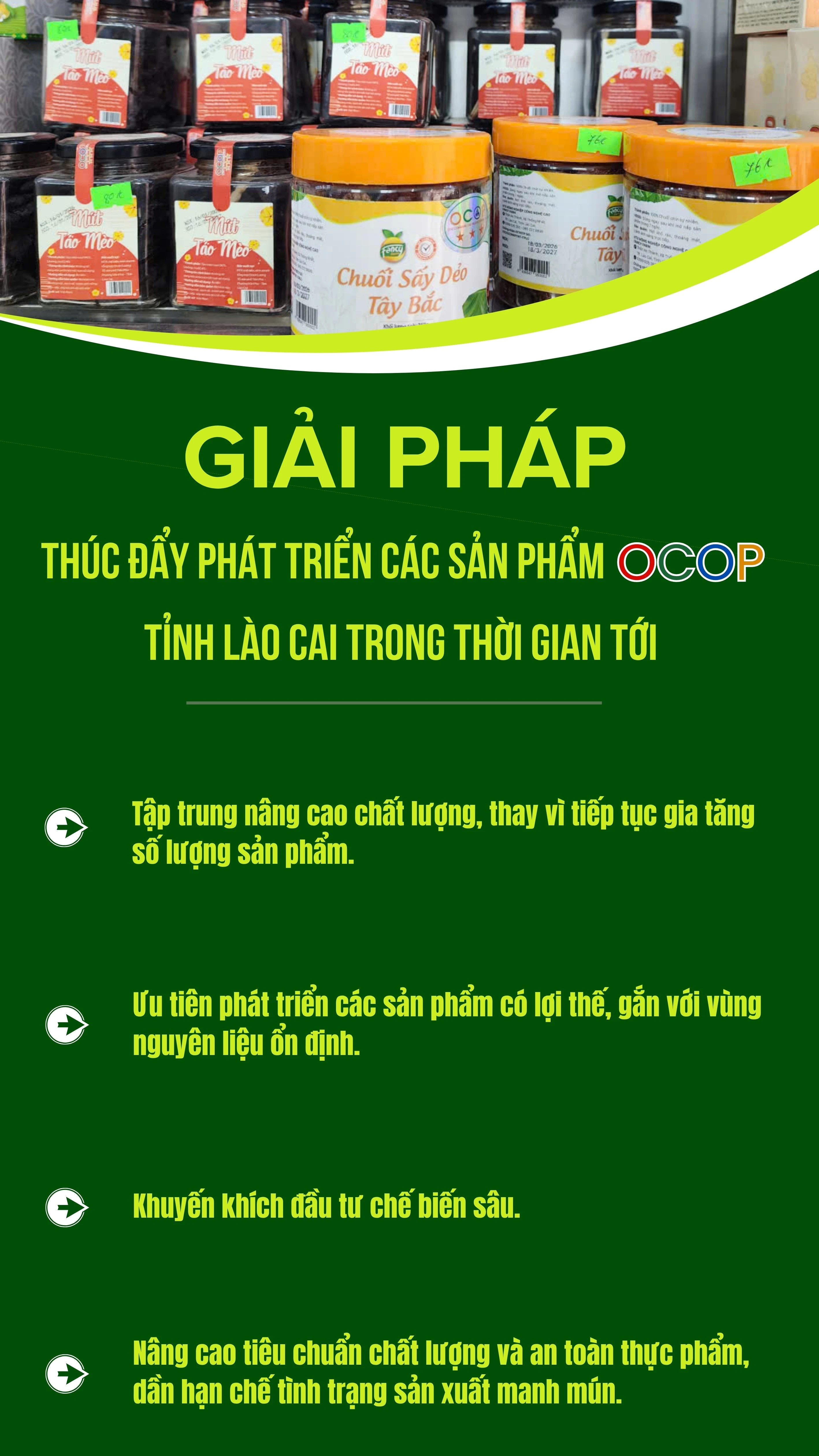
Given the existing challenges and difficulties in developing OCOP products, experts and businesses share a common view: To ensure the sustainable development and market position of OCOP products in Lao Cai, localities within the province need to focus on improving quality rather than increasing the quantity of products; prioritize the development of products with competitive advantages, linked to stable raw material areas; encourage investment in deep processing; improve quality and food safety standards, and gradually reduce fragmented production.
To achieve this, the Provincial OCOP Council needs to advise the Provincial People's Committee to focus resources on supporting 4-star and 5-star products, instead of spreading them thinly across 3-star products. This aims to motivate businesses to shift from developing OCOP products extensively to intensively. Only when each product truly has quality, a brand, and a market will OCOP fulfill its proper role.
Presented by: Huu Huynh
Source: https://baolaocai.vn/de-san-pham-ocop-thuc-day-kinh-te-nong-thon-post898958.html




























































































Comment (0)