

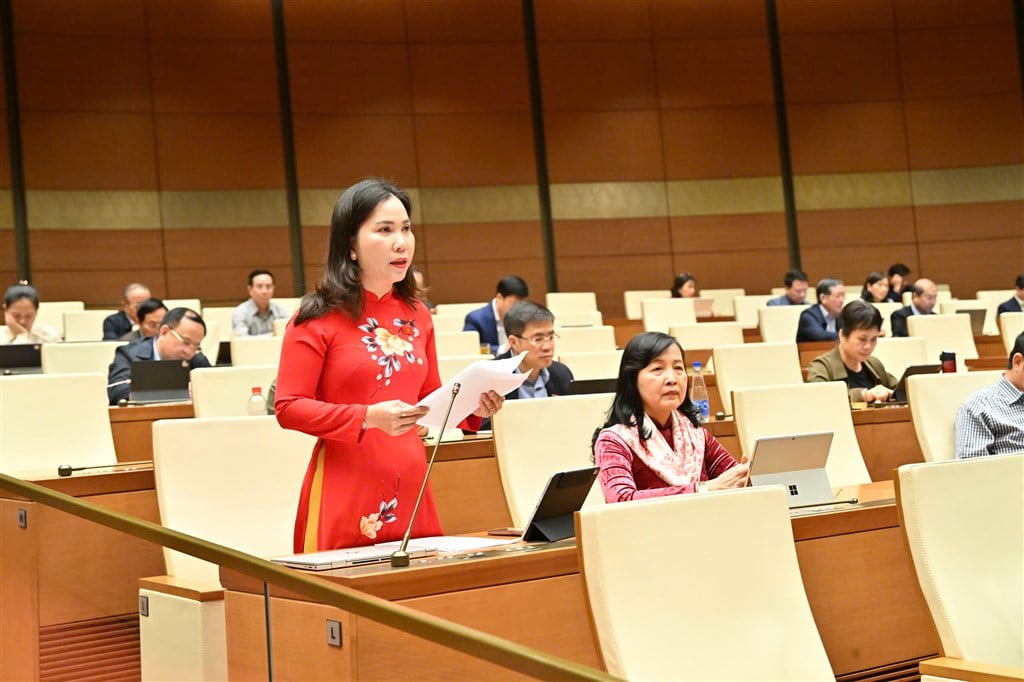
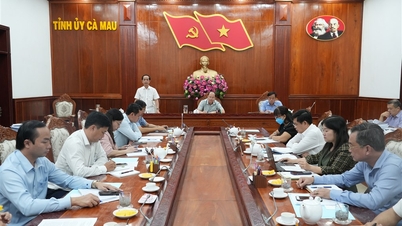
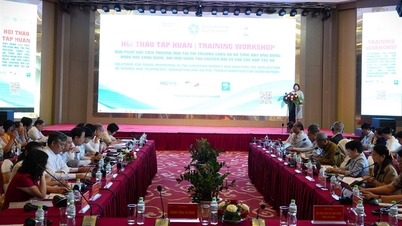
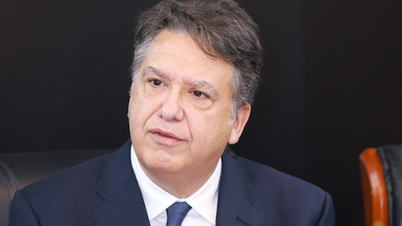
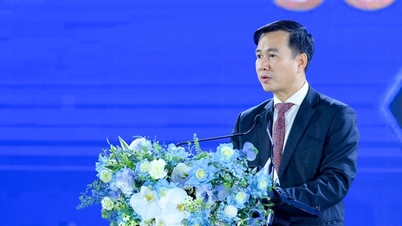
Delegate Le Thi Ngoc Linh participated in the discussion in the hall.
It is necessary to clearly define priority groups to avoid different understandings in each place.
Delegate Le Thi Ngoc Linh agreed with the policy of the State budget (through the Health Insurance Fund) paying for periodic health check-ups or free screening at least once a year for subjects without financial regulations. However, Delegate Le Thi Ngoc Linh said that the draft has not clearly specified which subjects are given priority, nor has a specific roadmap, which could easily lead to "each place implementing it differently".
Delegate Le Thi Ngoc Linh suggested immediately identifying priority groups: the elderly; children under 16 years old; people with disabilities; heavy, hazardous laborers or those at risk of occupational diseases; groups at high health risk or with difficulty accessing health services.
According to delegate Le Thi Ngoc Linh, this helps localities proactively plan, arrange resources and avoid confusion when implementing policies.
Ensuring resources: Avoid putting pressure on the Health Insurance Fund and the health system
According to delegate Le Thi Ngoc Linh, free periodic health check-ups for a large number of people will certainly put pressure on the Health Insurance Fund, the grassroots health system, and medical staff.
Delegate Le Thi Ngoc Linh suggested that there should be a thorough impact assessment, cost forecast and clear guidance on resource allocation. At the same time, it is necessary to promote the application of electronic health records to reduce the burden on medical facilities.
Important proposal: Health insurance covers 100% for poor people with cancer
A highlight of the speech was the recommendation to add a health insurance policy to cover 100% of the costs for people in difficult circumstances who have serious illnesses, especially cancer.
Delegate Le Thi Ngoc Linh gave 3 convincing reasons:
The cost of cancer treatment is huge.
Patients have to undergo long-term, complicated, and expensive treatment, causing many families to fall into debt, sell assets, or take out loans for treatment.
Households are not poor on paper but in reality are very difficult.
Many families are not considered poor or near-poor by standards, but their income is greatly reduced when the breadwinner falls ill and cannot afford the treatment costs.
This is a "rescue" policy with profound humanistic meaning.
Delegate Le Thi Ngoc Linh emphasized: This policy not only reduces the medical burden, but also cures anxiety, helps people maintain hope and stabilize their lives, in the spirit of "leaving no one behind".
At the end of her speech, delegate Le Thi Ngoc Linh affirmed that the Resolution needs to be completed in a specific - transparent - feasible direction, to truly reduce medical costs for people and improve the quality of health care for all people.
Source: https://www.camau.gov.vn/thoi-su-chinh-tri/de-xuat-bhyt-chi-tra-100-cho-nguoi-kho-khan-mac-benh-ung-thu-291826

![[Photo] Worshiping the Tuyet Son statue - a nearly 400-year-old treasure at Keo Pagoda](/_next/image?url=https%3A%2F%2Fvphoto.vietnam.vn%2Fthumb%2F1200x675%2Fvietnam%2Fresource%2FIMAGE%2F2025%2F12%2F02%2F1764679323086_ndo_br_tempimageomw0hi-4884-jpg.webp&w=3840&q=75)


![[Photo] National Assembly Chairman Tran Thanh Man receives First Vice Chairman of the Federation Council of the Federal Assembly of the Russian Federation](/_next/image?url=https%3A%2F%2Fvphoto.vietnam.vn%2Fthumb%2F1200x675%2Fvietnam%2Fresource%2FIMAGE%2F2025%2F12%2F02%2F1764648408509_ndo_br_bnd-8452-jpg.webp&w=3840&q=75)



































































Comment (0)