

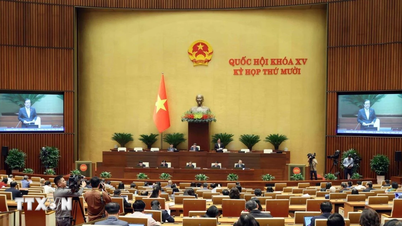
On the morning of December 2, continuing the 10th Session, the National Assembly discussed in the hall the draft Resolution of the National Assembly on a number of breakthrough mechanisms and policies for the work of protecting, caring for and improving people's health. Investment policy for the National Target Program on health care , population and development for the period 2026 - 2035.
Update cancer treatment drugs to the list of health insurance drugs
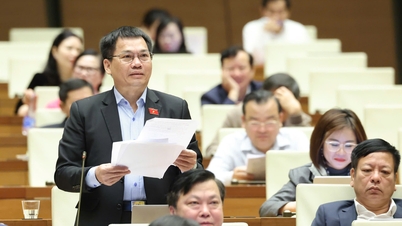
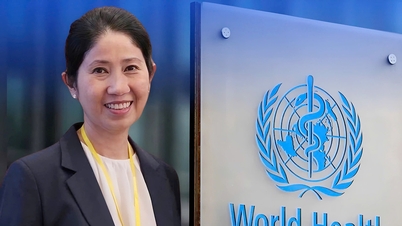
Agreeing with the proposal on policies to expand health care benefits and reduce the financial burden of medical care for people, delegate Trinh Thi Tu Anh (Lam Dong delegation) said "the burden of treatment costs is still the biggest barrier for patients".
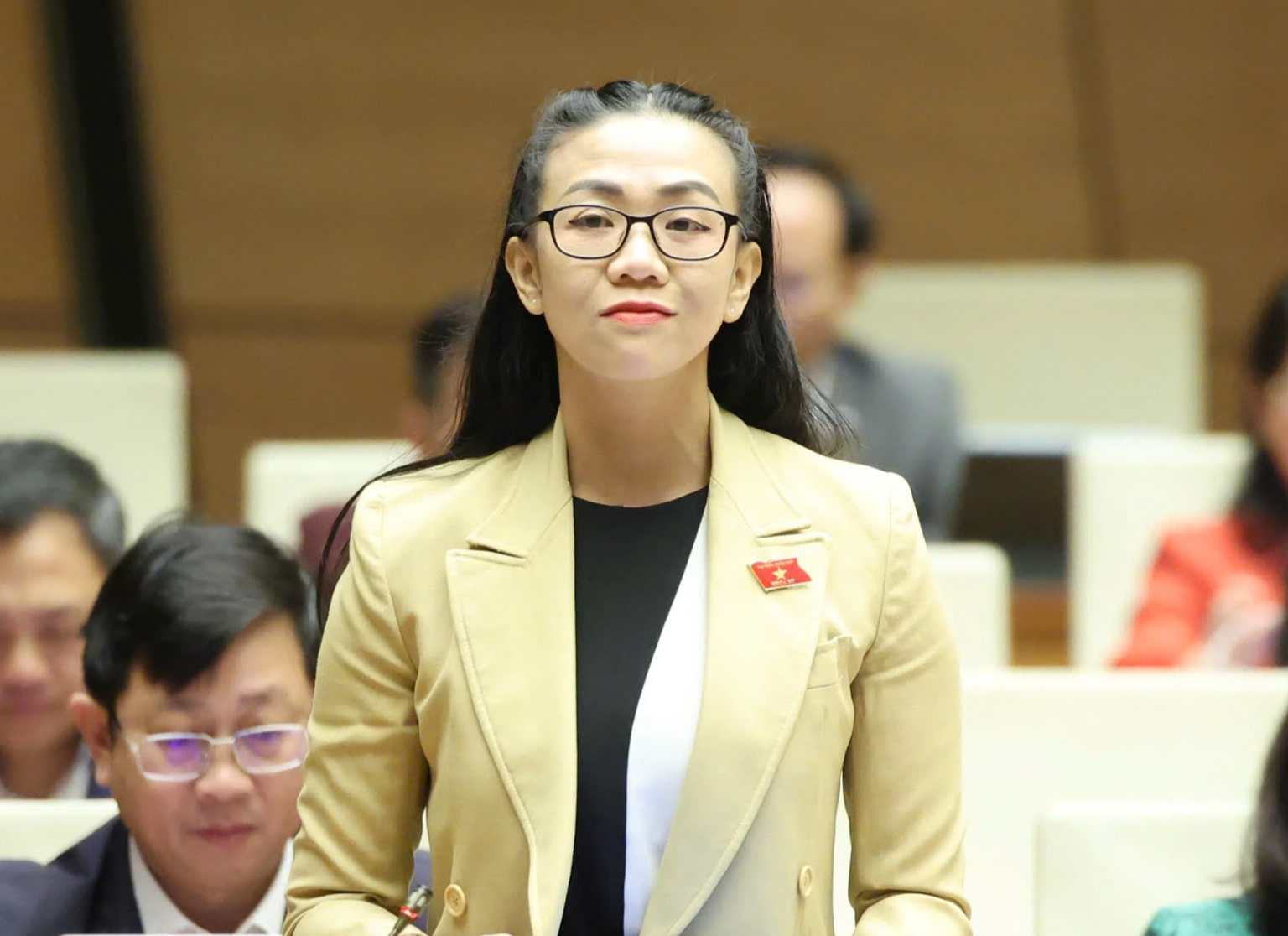
Delegate Trinh Thi Tu Anh ( Lam Dong ). PHOTO: GIA HAN
According to Ms. Anh, many new generation drugs, such as targeted therapy drugs and immunotherapy drugs, have proven to be highly effective in treatment, helping to prolong life and improve quality of life. However, high costs prevent many patients from accessing optimal treatment.
Statistics show that medicine costs always account for the highest proportion in the structure of medical examination and treatment costs, currently accounting for about 33% (down from 40 - 50% in previous years).
Therefore, the female delegate recommended updating the drug list in a timely manner, especially for cancer treatment drugs and new generation immunomodulators, to reduce people's out-of-pocket expenses and ensure benefits for more than 95.5 million people participating in health insurance today.
Prioritize drugs with strong clinical evidence and clearly proven effectiveness; the list is updated flexibly and keeps up with international medical advances. "This is a direct, practical solution so that patients, especially those with serious illnesses and those with difficult family circumstances, are not left behind in the treatment journey," the female delegate proposed.
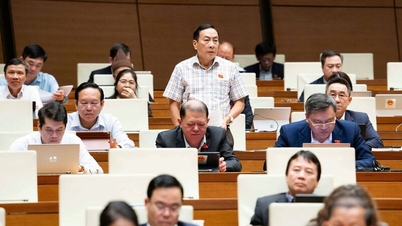
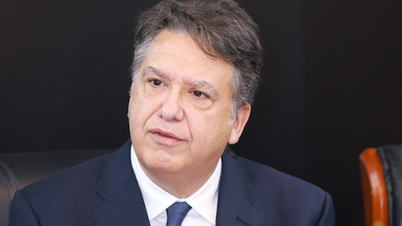
Delegate Nguyen Anh Tri, former Director of the National Institute of Hematology and Blood Transfusion, proposed to clarify the regulations on hospital fee exemption. According to him, hospital fee exemption must be aimed at improving the quality of medical examination and treatment with good medicine and standard diagnostic and treatment protocols.
At the same time, it must be convenient, that is, proactively seeking medical examination and treatment at the nearest and most convenient place, implementing real referrals, not depending on health insurance payments and ability to pay.
The Hanoi delegation emphasized the factor of fairness, the basic medical examination and treatment must be arranged as close as possible and there must be enough medicine to treat the people. All people, depending on the level of illness, will benefit equally.
"Free hospital fees need to have a reasonable roadmap but must achieve universal hospital fees by 2030. I propose to soon exempt hospital fees for people being treated for difficult-to-treat, chronic cancers, patients on dialysis, especially cancer patients being treated with very expensive drugs," said Mr. Tri.
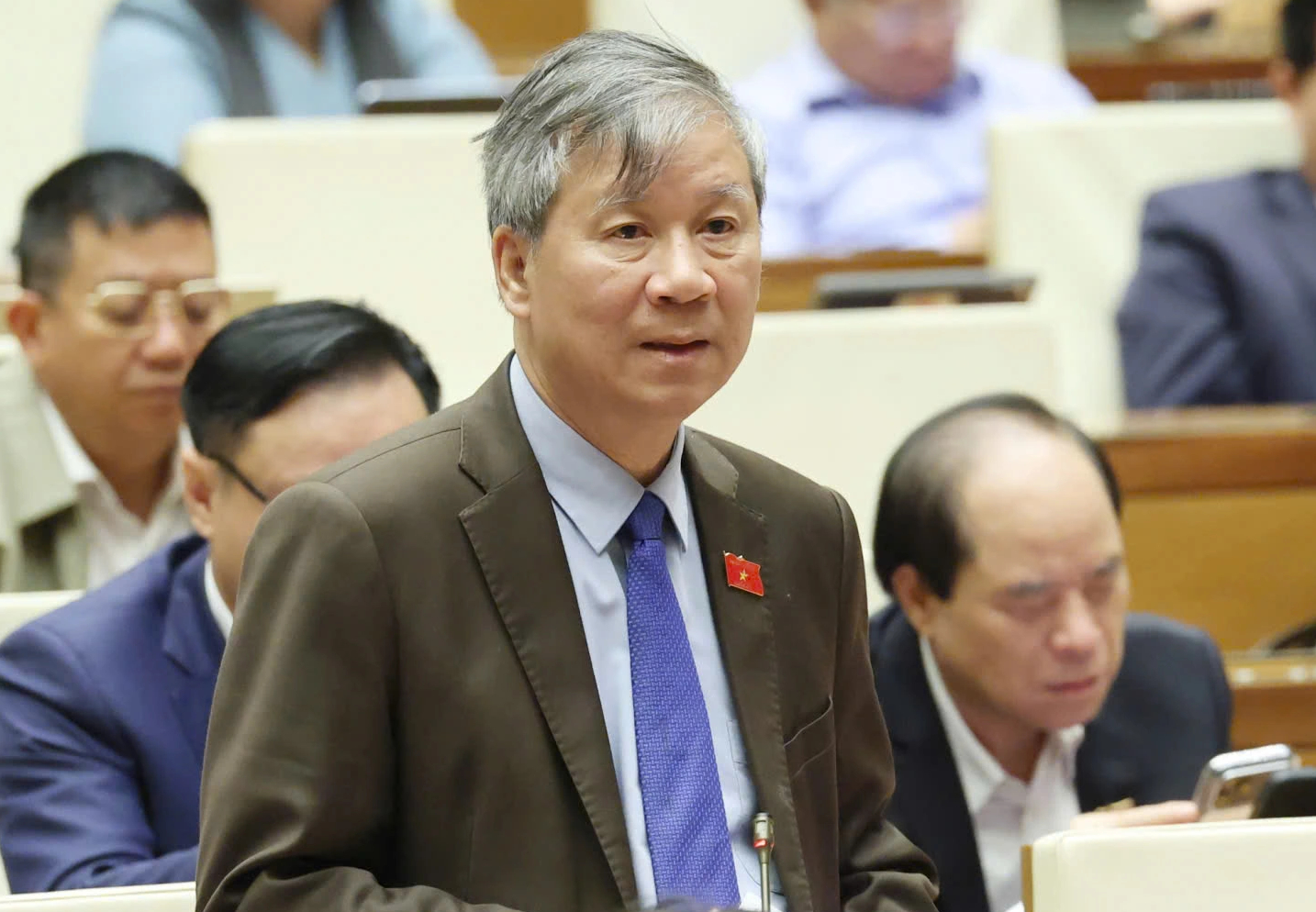
Delegate Nguyen Anh Tri, former Director of the National Institute of Hematology and Blood Transfusion. PHOTO: GIA HAN
Increasing the production capacity of cancer treatment drugs
In the context of rapidly increasing cancer cases, radiopharmaceuticals play an important role. Vietnam has made important strides, laying the foundation for the field of radiopharmaceuticals. The research reactor in Da Lat has produced a number of isotopes for diagnosis and treatment (e.g. I-131, P-32)...
Many large hospitals have invested in accelerators to produce isotopes with short half-lives such as 18 F. Vietnam has mastered the production process of some basic radioactive pharmaceuticals that have been commercialized such as I-131, P-32, 18 F-FDG and 99m Tc and many radioactive pharmaceuticals are being researched such as diagnosis and treatment of bone pain due to metastatic cancer, neuroendocrine tumors, prostate cancer...
However, according to delegate Trinh Thi Tu Anh, the great potential is being limited by technical infrastructure bottlenecks. The Da Lat reactor is old and has low capacity; Vietnam still has to depend on importing many important isotopes such as 99Mo, 131I, 177Lu, 135Sm and 68Ga.
Ms. Trinh Thi Tu Anh said that to overcome this, it is necessary to accelerate the construction of new multi-purpose research reactors to improve the capacity to produce important isotopes autonomously. Invest in establishing GMP-standard synthesis centers, focusing on research and technology transfer for synthesizing new generation therapeutic isotopes (such as 68 Ga and 177 Lu)...
Mai Ha
Source: https://thanhnien.vn/de-xuat-mien-vien-phi-som-cho-benh-nhan-ung-thu-185251202092906463.htm
![[Photo] Parade to celebrate the 50th anniversary of Laos' National Day](/_next/image?url=https%3A%2F%2Fvphoto.vietnam.vn%2Fthumb%2F1200x675%2Fvietnam%2Fresource%2FIMAGE%2F2025%2F12%2F02%2F1764691918289_ndo_br_0-jpg.webp&w=3840&q=75)




![[Photo] Worshiping the Tuyet Son statue - a nearly 400-year-old treasure at Keo Pagoda](/_next/image?url=https%3A%2F%2Fvphoto.vietnam.vn%2Fthumb%2F1200x675%2Fvietnam%2Fresource%2FIMAGE%2F2025%2F12%2F02%2F1764679323086_ndo_br_tempimageomw0hi-4884-jpg.webp&w=3840&q=75)









































































Comment (0)