

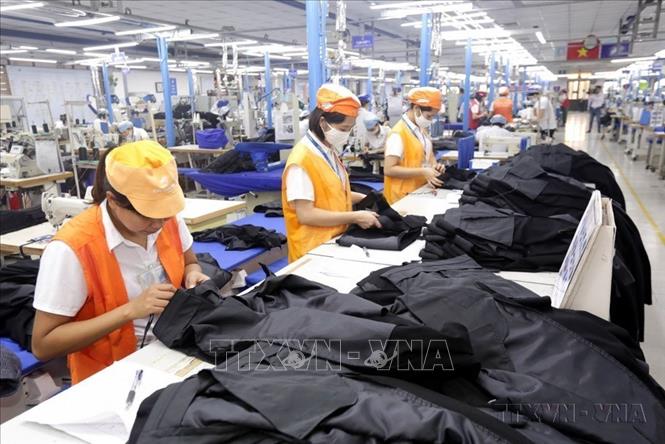
Although this result is lower than the target of 48 billion USD, it still increased by 5.6% compared to the previous year, maintaining the position of "top 3" in the world . This is an important milestone to help the industry complete its target in the coming years under pressure of deep restructuring, meeting the green standards of export markets.
Mr. Vu Duc Giang, Chairman of the Vietnam Textile and Apparel Association (Vitas), said that the industry's export turnover would be reduced by 2 billion USD, which is inevitable when the textile and garment industry has experienced market fluctuations and international policy fluctuations in 2025. Specifically, the escalating US-China trade tensions have caused many textile and garment products to be taxed, along with the complex geopolitical context and reduced purchasing power in the US and EU.
Consumers tighten spending, forcing businesses to accept small orders, rush production and short delivery times, reducing profit margins, directly impacting key product groups, traditional markets are under great pressure. This context forces businesses to seek new markets, receive scattered orders, continuously adjust production plans, meet green standards and traceability to maintain prestige with international customers... "The EVFTA and other FTAs only become opportunities if businesses have the capacity to meet new standards and improve the localization of raw materials," Mr. Vu Duc Giang emphasized.
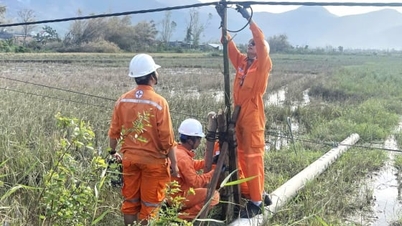
In addition, natural disasters in the Central and Northern regions in the last months of the year forced many factories to temporarily stop production. Many garment factories in Hue, Quang Nam, Da Nang, and Thai Binh were flooded, machinery was damaged, and goods were delayed. Domestic logistics costs increased when roads were cut off, container shipping changed direction or waited for clearance, while international customers placed small, scattered orders to reduce risks...
These factors, combined with slowing global consumer demand, have compressed export performance and put increasing pressure on businesses. Notably, in a context of geopolitical fragmentation and a series of new tariff barriers, from CBAM (Carbon Border Adjustment Mechanism) to stricter rules of origin, global supply chains are increasingly vulnerable. As a result, brands are forced to diversify production to reduce risk.
General Director of Vietnam Textile and Garment Group (Vinatex) Cao Huu Hieu also analyzed that textile and garment is Vietnam's key export industry, with the third largest export turnover in the country, but is facing many challenges in the context of increasingly fierce competition and strict requirements from major import markets.
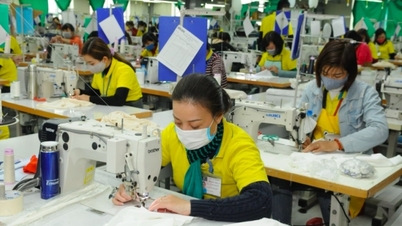
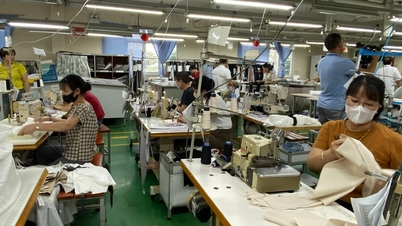
Along with that, customers tend to place short-term orders, small orders, require fast delivery or high competitive pressure, causing processing prices to drop sharply, leading to reduced profit margins, which are challenges that businesses continue to face.
Therefore, enterprises must be proactive in meeting small orders, high technical requirements, short lead times, fast delivery as well as proactively supplying raw materials for domestic production. Currently, Vietnam's textile industry is heavily dependent on imported raw materials. For example, raw materials for the yarn industry must be imported 100% of cotton, 90-95% of fiber, along with chemicals and dyes that cannot be produced domestically. This leads to great risks for the industry if the US applies tariff regulations on products with a high origin ratio from third countries.
Next, the Vietnamese textile and garment industry mainly participates in the production stage, and has not yet developed strongly in the stages of creating high added value such as design, brand building or distribution. On the other hand, Vietnam currently no longer has an advantage in labor costs compared to many other exporting countries. Basic orders in large quantities with low processing costs are shifting to countries with cheaper labor costs...
By 2030, with the orientation of sustainable development and circular economy, Vietnam's textile and garment industry aims to achieve an export turnover of 64.5 billion USD, an average growth rate of 6.5 - 7%/year, and develop a domestic market of 8 - 9 billion USD; in which, the strategic focus is "greening - digitalization", increasing the localization rate to more than 60%, building a strong fashion brand...
To achieve this goal, Vitas Chairman Vu Duc Giang said that businesses must promote strategies to diversify markets, products, and customers, as well as promote the ability to call for investment in the supply shortage, build a strategy to develop resources in conjunction with science and technology, and especially build the aspiration to bring Vietnamese brands to the world market.
“Vietnam has researched and produced a number of unique, high-value products that meet the needs of industries, healthcare, aviation, etc. Currently, a number of factories are completing the final stages to put into operation in 2026. This is a breakthrough, increasing value and promoting industry development in the coming time,” Mr. Vu Duc Giang emphasized.
To overcome the challenges, textile and garment enterprises need two synchronous pillars: improving domestic production capacity with localization of raw materials, greening and upgrading equipment; at the same time, expanding investment abroad, choosing strategic markets with reasonable costs, tariff incentives, smooth logistics and cross-border management.
In the 2026-2030 period, the industry will move on two parallel “tracks”: raising domestic competitiveness standards and expanding international presence. These two directions complement each other, reducing risks and increasing adaptability to global shocks. The industry will no longer rely on low-cost advantages but will grow through quality, sustainability and risk management. Enterprises that are flexible, upgrade technology, and perfect domestic and international supply chains will become “winners”.
With a sustainable and circular economic orientation, the industry is shifting strongly to the FOB model (proactive in raw materials, finished products), ODM (full-package manufacturing), proactive from design, raw materials, transportation to warehouse management in the importing country, aiming to master production instead of just processing.
Source: https://baotintuc.vn/kinh-te/det-may-viet-nam-truoc-ap-luc-tai-cau-truc-sau-20251209143322548.htm



![[Photo] Urgently help people soon have a place to live and stabilize their lives](/_next/image?url=https%3A%2F%2Fvphoto.vietnam.vn%2Fthumb%2F1200x675%2Fvietnam%2Fresource%2FIMAGE%2F2025%2F12%2F09%2F1765248230297_c-jpg.webp&w=3840&q=75)



















































![[Photo] General Secretary To Lam works with the Standing Committees of the 14th Party Congress Subcommittees](https://vphoto.vietnam.vn/thumb/402x226/vietnam/resource/IMAGE/2025/12/09/1765265023554_image.jpeg)
























Comment (0)