

“Implement the policy of arranging 100% of the positions of Chairman of the People's Committee, Chairman of the Inspection Committee, and Chief Inspector of the province to not be local people and complete before December 15”, is the request made by the Politburo and Secretariat in Conclusion No. 201. Although the required time has not yet been reached, this goal has been basically completed.
Previously, all 34 provincial and municipal party secretaries were not local people after the Politburo simultaneously rotated and swapped personnel among many provinces and cities.
The 3 youngest provincial party secretaries are only 48 years old.
Among the 34 newly appointed provincial and municipal party secretaries, there is one Politburo member, Mr. Nguyen Duy Ngoc, Secretary of the Hanoi Party Committee; one Secretariat member, Mr. Tran Luu Quang, Secretary of the Ho Chi Minh City Party Committee.
Mr. Nguyen Duy Ngoc was elected to the 13th Politburo at the Central Conference held at the end of January. Mr. Ngoc is 61 years old this year, from Hung Yen, and has many years of experience working in the police force.
Mr. Tran Luu Quang is 58 years old this year, from Tay Ninh. Also at the Central Conference at the end of January, Mr. Quang was elected to the Secretariat of the 13th term. At that time, he was holding the position of Head of the Central Economic Committee (now the Central Policy and Strategy Committee).
By the end of August, Mr. Tran Luu Quang was assigned by the Politburo to hold the position of Secretary of the Ho Chi Minh City Party Committee.

After the rotation process, most of the provincial Party Secretaries and Chairmen are not local people (Graphic photo: Tuan Huy).
20/34 provincial and municipal Party Committee Secretaries are currently Central Committee members (accounting for 55.9%). Of these, there are 18 official Central Committee members and 2 alternate Central Committee members, namely Lao Cai Secretary Trinh Viet Hung and Dak Lak Secretary Luong Nguyen Minh Triet.
The oldest Secretary is Hanoi Party Secretary Nguyen Duy Ngoc, born in 1964, 61 years old this year.
The three youngest secretaries, all born in 1977 (48 years old), are Ca Mau Provincial Party Secretary Nguyen Ho Hai, Lao Cai Provincial Party Secretary Trinh Viet Hung, and Thai Nguyen Provincial Party Secretary Trinh Xuan Truong.
The majority of the 34 provincial and municipal party secretaries are between 50 and 59 years old, with 25 personnel in this age group (73.5%); 3 people are between 60 and 69 years old (8.8%) and 6 people are under 50 years old (17.6%).
It is noteworthy that currently there are no female provincial or municipal party secretaries.
In terms of educational qualifications, the majority of provincial and municipal Party Secretaries have master's degrees, with 19 people in this group; 9 local Party Secretaries have doctoral degrees.
Secretaries with doctoral degrees include: Can Tho Secretary Le Quang Tung, Quang Ninh Secretary Quan Minh Cuong, Dong Nai Secretary Vu Hong Van, Hai Phong Secretary Le Tien Chau, Khanh Hoa Secretary Nghiem Xuan Thanh, Lang Son Secretary Hoang Quoc Khanh, Lao Cai Secretary Trinh Viet Hung, Ninh Binh Secretary Dang Xuan Phong; Cao Bang Secretary Pham Thang An.
Many people before being transferred to their localities held important positions in the Central Government such as Hanoi Secretary Nguyen Duy Ngoc, Ho Chi Minh City Secretary Tran Luu Quang, Hai Phong Secretary Le Tien Chau, Can Tho Secretary Le Quang Tung, Dien Bien Secretary Tran Tien Dung, Quang Ngai Secretary Ho Van Nien, Lai Chau Secretary Le Minh Ngan, Bac Ninh Secretary Nguyen Hong Thai, Quang Ninh Secretary Vu Dai Thang...
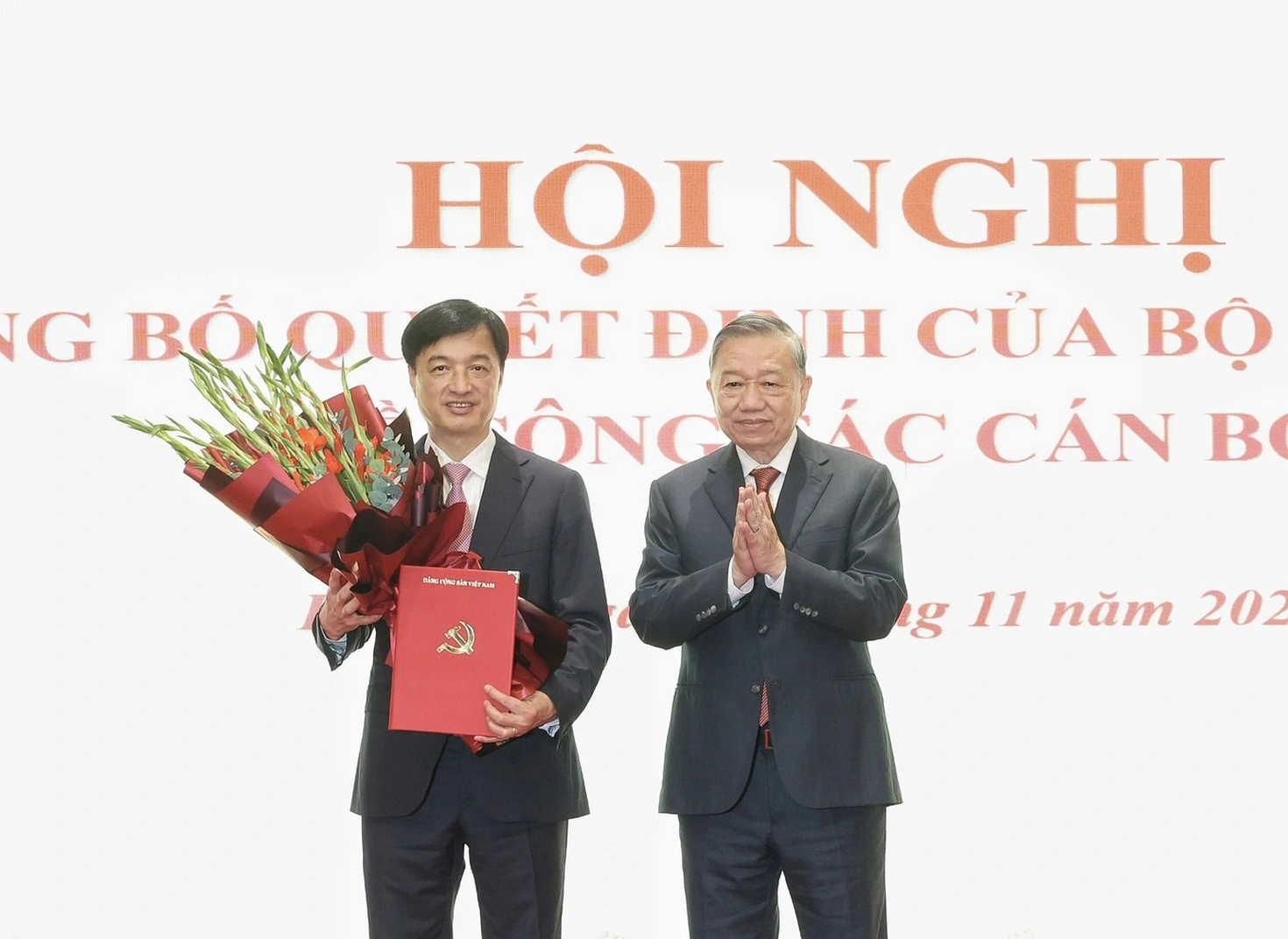
General Secretary To Lam presented the decision and flowers to the new Secretary of the Hanoi Party Committee Nguyen Duy Ngoc (Photo: Contributor).
There are 5 provincial party secretaries who are ethnic minorities, including: Quang Ngai Party Secretary Ho Van Nien, Tuyen Quang Party Secretary Hau A Lenh, Son La Party Secretary Hoang Van Nghiem, Lam Dong Party Secretary Y Thanh Ha Nie Kdam, and Lang Son Provincial Party Secretary Hoang Quoc Khanh.
Many provincial and municipal chairmen are young and highly educated.
Regarding the provincial and municipal chairpersons, 33/34 of the personnel are not local people. In particular, Chairman of the Hanoi People's Committee Vu Dai Thang is from Hanoi, but was born in Hai Phong.
Among the 34 heads of local governments, there are 5 members of the Party Central Committee, including 2 official members of the Central Committee: Mr. Nguyen Van Duoc, Chairman of the Ho Chi Minh City People's Committee and Mr. Vu Dai Thang, Chairman of the Hanoi People's Committee.
The three alternate Central Committee members include An Giang Chairman Ho Van Mung, Thai Nguyen Chairman Vuong Quoc Tuan and Thanh Hoa Chairman Nguyen Hoai Anh.
Similar to local party secretaries, all provincial and municipal chairmen are men. Among them, Mr. Le Hai Hoa, Chairman of the People's Committee of Cao Bang province, is the youngest (45 years old).
Many provincial and municipal chairmen belong to the 7X generation such as: Hanoi Chairman Vu Dai Thang (born 1975), Lai Chau Chairman Ha Quang Trung (born 1976), Son La Chairman Nguyen Dinh Viet (born 1977), Thai Nguyen Chairman Vuong Quoc Tuan (born 1977), Phu Tho Chairman Tran Duy Dong (born 1979), Thanh Hoa Chairman Nguyen Hoai Anh (born 1977), Quang Tri Chairman Le Hong Vinh (born 1974), Vinh Long Chairman Tran Tri Quang (born 1977)...
Regarding educational qualifications, of the 34 provincial and municipal chairmen, 9 have PhDs; 21 have master's degrees, and the rest have bachelor's degrees.
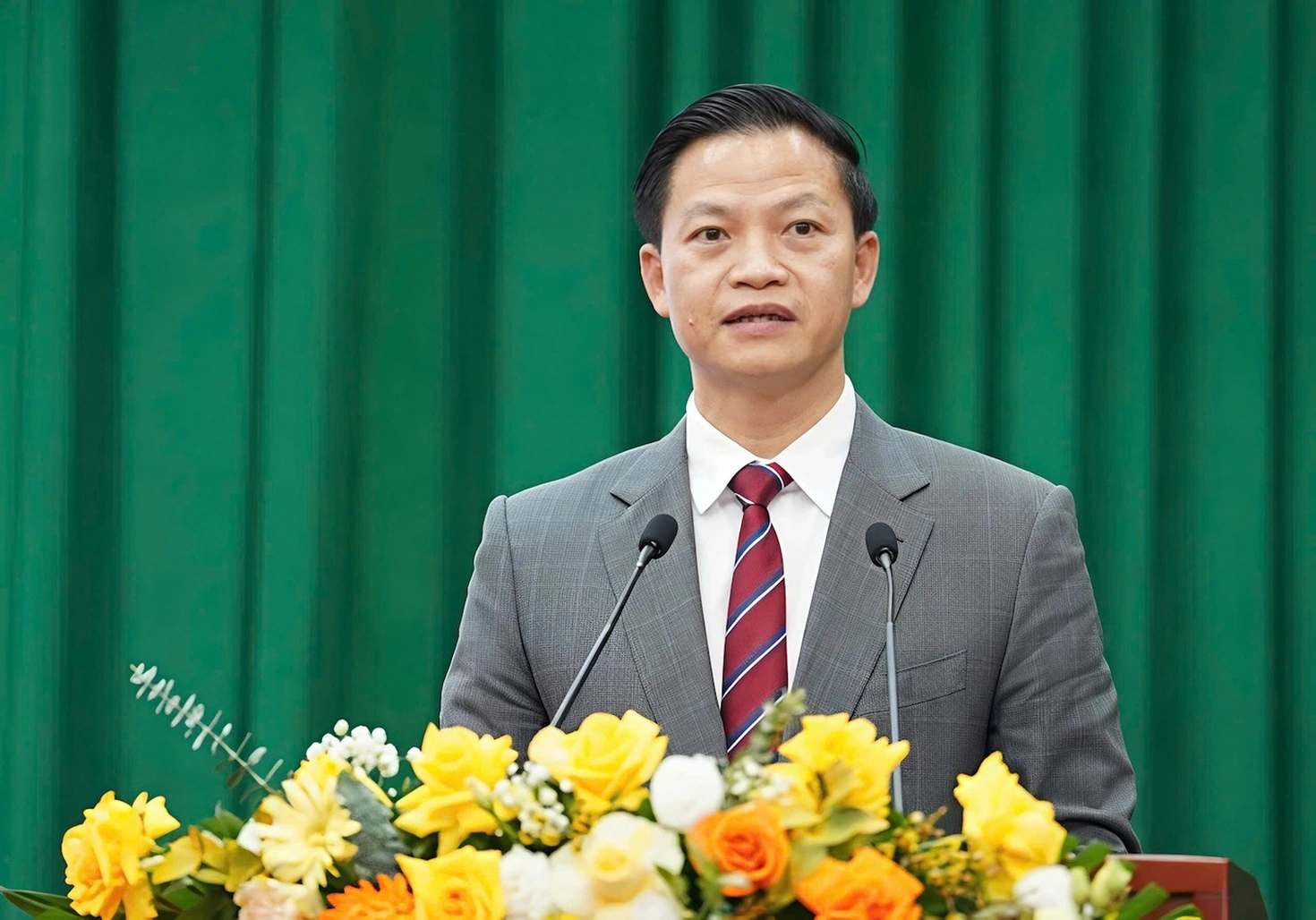
While holding the position of Chairman of Bac Ninh province, Mr. Vuong Quoc Tuan was transferred to hold the position of Deputy Secretary of Thai Nguyen Provincial Party Committee, then elected as Chairman of the Provincial People's Committee (Photo: Thai Nguyen People's Committee).
Cao Bang Chairman Le Hai Hoa, Ca Mau Chairman Lu Quang Ngoi, Gia Lai Chairman Pham Anh Tuan, Hai Phong Chairman Le Ngoc Chau, Hung Yen Chairman Pham Quang Ngoc, Quang Ngai Chairman Nguyen Hoang Giang, Lao Cai Chairman Nguyen Tuan Anh, Phu Tho Chairman Tran Duy Dong, Thai Nguyen Chairman Vuong Quoc Tuan, Tuyen Quang Chairman Phan Huy Ngoc, are local government leaders with doctoral degrees.
Proposal to transfer the secretary and chairman to be non-local for at least 3 years
The policy of arranging for the secretaries and chairmen of provinces and cities to be non-local is considered to prevent localism, stop the risk of "the whole family being officials", "backyards" and friendly relationships influencing the work process. This also helps local leaders have a more objective and impartial view, not dependent on economic interests or family and clan relationships.
Speaking with Dan Tri reporter , National Assembly delegate Ha Sy Dong (former Chairman of Quang Tri Provincial People's Committee) acknowledged that the Politburo's policy is an innovation aimed at fundamentally solving the problems of localism, factionalism, and individualism.
In fact, he believes that if the secretary, chairman, head of the inspection committee or chief inspector of the province are local people, it will have a certain impact on their work, and they can even easily get entangled in family relationships, and for a while the press mentioned a lot about the situation of "the whole family being officials", leading to a lack of transparency and objectivity in local leadership and management.
For example, in a locality where there is a project that needs investment, the policy may be completely transparent, but there will still be suspicions that "the secretary or chairman decided to invest because it is their hometown".
Or in the inspection and audit work, it is the same. If at the local level, checking for signs of violations or monitoring work contents that hit relatives, siblings or neighbors, certainly the decision to handle will be somewhat hesitant, not impartial and objective because of "friendly relationships".
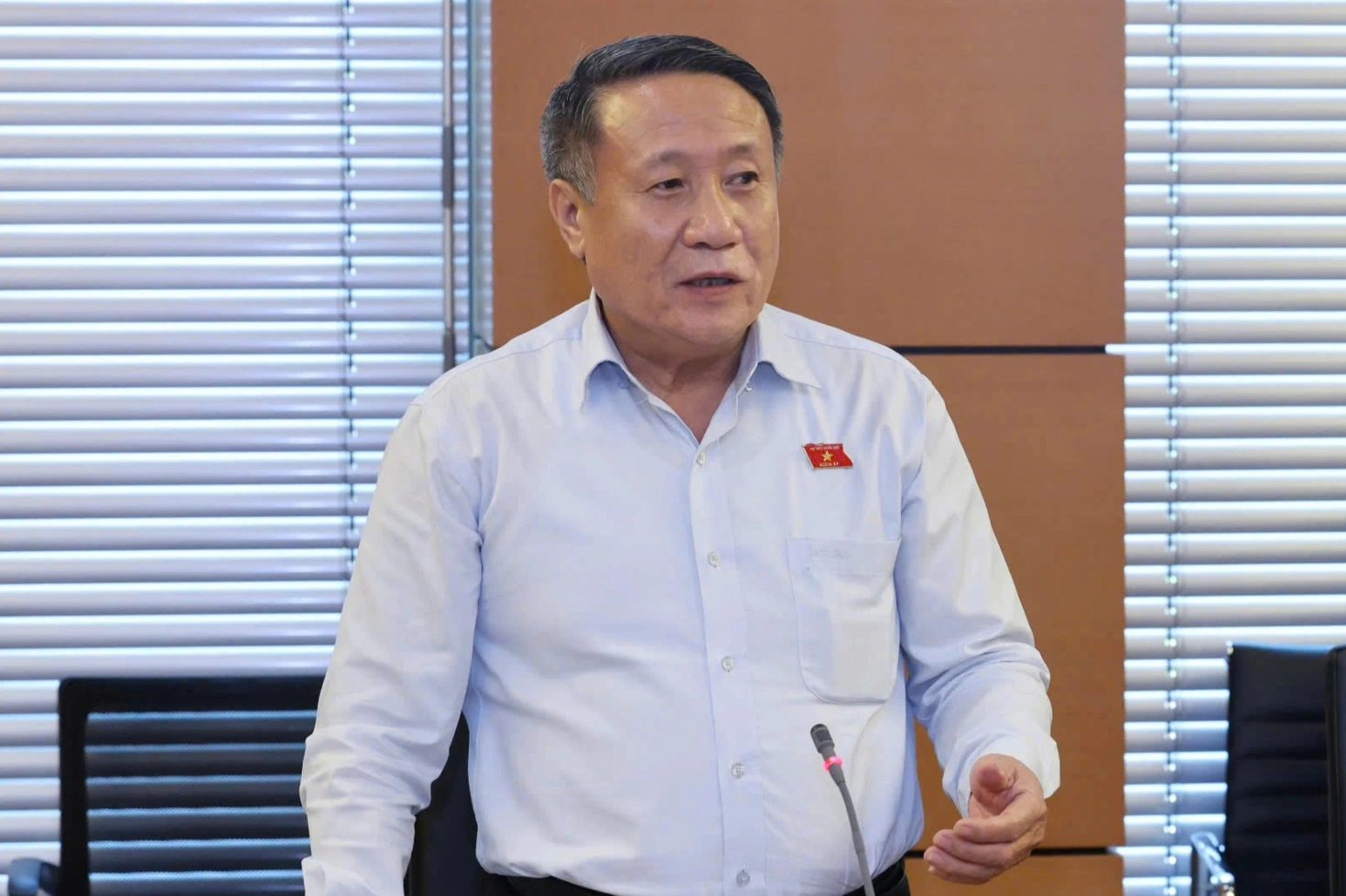
National Assembly Delegate Ha Sy Dong (Photo: Hong Phong).
Concerned that both the secretary and chairman of the province and city are "new people", not local people and will not understand the locality, Mr. Dong said that this is not a big problem, because there are also members of the Standing Committee and Executive Committee who are local people and understand the locality, they will be the ones to help the secretary and chairman approach, grasp the locality, and advise on important decisions in directing and operating in the locality.
"The fact that the provincial party secretary and chairman are not local people does not have many limitations, but will gradually increase publicity and transparency and create trust among the people, eliminating localism, factionalism, and group interests," Mr. Dong commented.
However, for this policy to be effective, the former Chairman of Quang Tri province suggested that the time to mobilize, rotate, and replace non-local leaders must be "at least 3 years", so that when the personnel are brought back, they will have time to grasp the area and manage effectively.
"Leaders assigned to completely new areas, new people, new working conditions all need time to grasp and survey in order to have plans and directions for local development," said delegate Ha Sy Dong.
Besides, to avoid the situation where non-local leaders are afraid of conflicts when they return and only do their best to complete their tasks, Mr. Dong said that there should be a mechanism to check and evaluate the responsibility of the leader and the effectiveness of local management through economic development figures, not to let officials return to the locality to just "apply glaze".
In particular, according to the delegate of Quang Tri province, there should be a mechanism to encourage people from outside the locality to work, consider it their hometown, dare to commit, sacrifice, innovate strongly and decisively, create solidarity and contribute to the breakthrough development of that locality.
Mr. Dong believes that when rotating and transferring leaders who are not local, there may be disruptions in the short term, but this will not last long. The most important thing is to choose the right person for the right job, arrange them in the right position, with the right capacity and expertise, then surely "you will gain more than you will lose".
"This policy will benefit the people, the country, and the locality, so it should be boldly implemented and gradually expanded. Minor concerns should not create obstacles in the work of ministries as well as in the local socio-economic development strategy," Mr. Dong stated his opinion.
Dantri.com.vn
Source: https://dantri.com.vn/thoi-su/dieu-dac-biet-trong-dan-lanh-dao-tinh-thanh-khong-phai-nguoi-dia-phuong-20251207193359803.htm



![[Photo] General Secretary To Lam works with the Standing Committees of the 14th Party Congress Subcommittees](/_next/image?url=https%3A%2F%2Fvphoto.vietnam.vn%2Fthumb%2F1200x675%2Fvietnam%2Fresource%2FIMAGE%2F2025%2F12%2F09%2F1765253019536_a1-bnd-0983-4829-jpg.webp&w=3840&q=75)
![[Photo] Urgently help people soon have a place to live and stabilize their lives](/_next/image?url=https%3A%2F%2Fvphoto.vietnam.vn%2Fthumb%2F1200x675%2Fvietnam%2Fresource%2FIMAGE%2F2025%2F12%2F09%2F1765248230297_c-jpg.webp&w=3840&q=75)







































































Comment (0)