

Identifying the "bottlenecks"
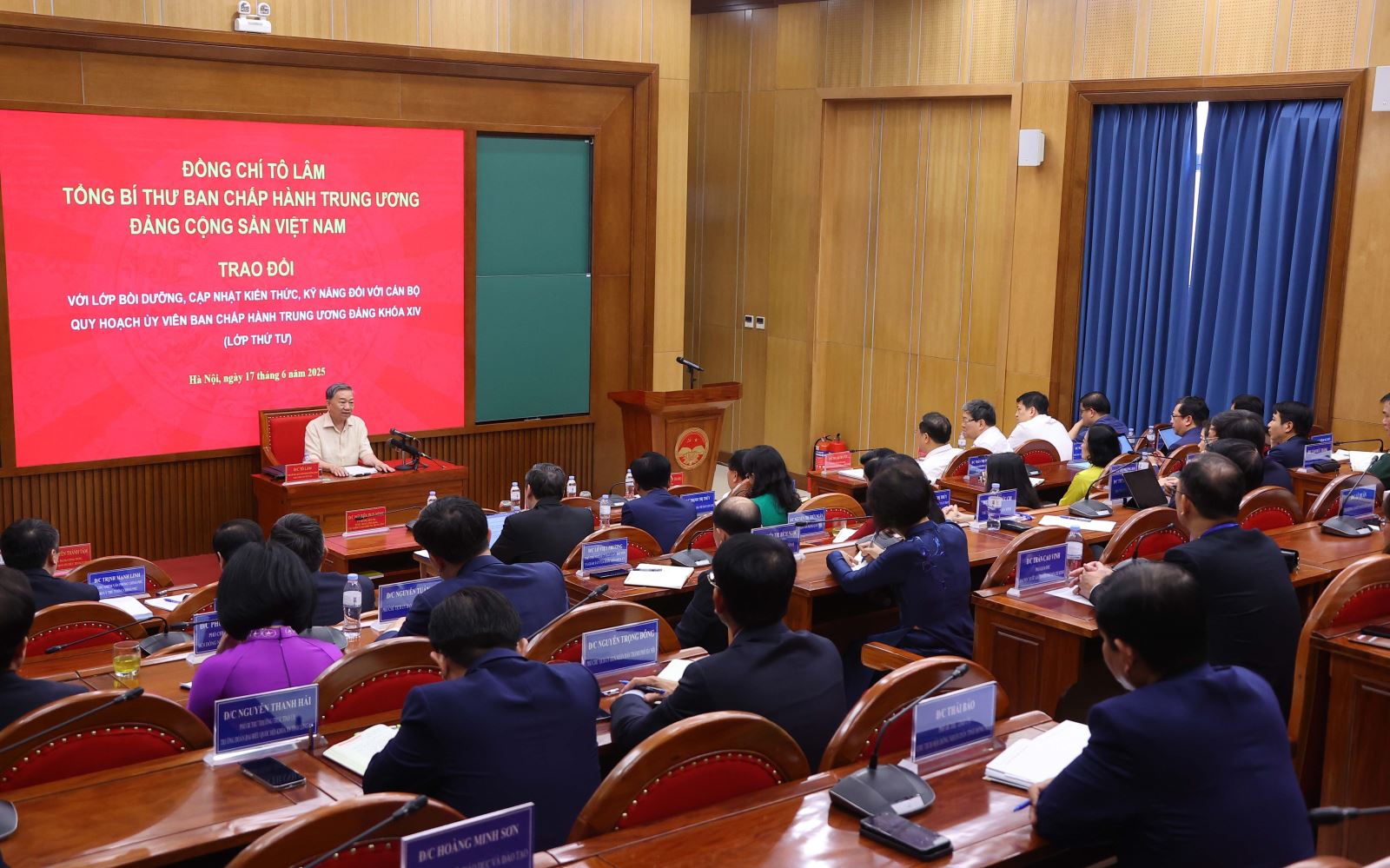
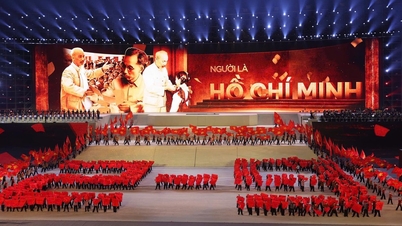
President Ho Chi Minh once taught: "Cadres are the foundation of all work," and "The success or failure of all endeavors depends on whether the cadres are good or bad." Imbued with this ideology, throughout the revolutionary process, our Party has always considered cadre work as the "key of keys." However, the ever-changing realities of the market economy and international integration are posing new challenges, demanding a more modern, transparent, and effective approach to human resource management.
For decades, despite achieving many successes in personnel management, invisible barriers have persisted. These include the "seniority-based promotion" mentality, prioritizing academic qualifications over practical ability, and a personnel evaluation mechanism that remains qualitative, subjective, and lacking specific quantitative measures. The consequence of "not putting the right person in the right job" is a huge waste of intellectual resources.
When a creative thinker is placed in a purely administrative position, or a highly skilled professional is forced into a managerial role without the necessary leadership skills, social productivity will be hampered. More concerningly, the practice of "buying and selling positions" or cronyism in personnel management erodes public trust and stifles the motivation of talented and honest individuals.
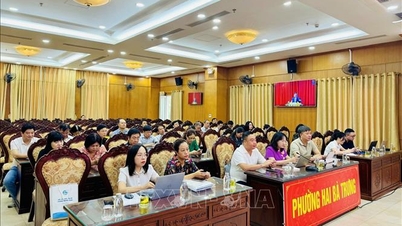
Mr. Mai Van Tuat, a National Assembly representative from Ninh Binh province, believes that relevant agencies need to review and accurately assess the current state of grassroots officials. After implementing the two-tiered local government model, grassroots officials, especially at the commune, ward, and special zone levels, are sometimes former provincial or district officials, while in other places they utilize local staff or are transferred from one commune to another...
Reviewing and assessing the current state of local officials is extremely important, especially after nearly a year of implementing the two-tiered local government model. This will provide a basis for developing training and professional development plans to improve the skills of local officials, enabling them to perform their duties better and more effectively.
In the digital age, an official needs not only to be both politically sound and professionally competent, but also to possess a digital mindset, the ability to adapt quickly, and the courage to venture into new, unprecedented fields. Without innovation in recruitment, training, and appointment methods, the administrative apparatus will become rigid and sluggish in the face of societal development.
To solve the problem of "the right person, the right job, at the right time," a revolution in personnel management thinking is needed, shifting from administrative management to management of competence and work efficiency.
Standardization and quantification of evaluation
Speaking with a reporter from the newspaper Tin Tuc va Dan Toc (News and Nation), Ms. Dang Bich Ngoc, a National Assembly representative from Phu Tho province, stated that reform must begin with the evaluation process. Instead of generic year-end performance reviews with the phrase "successfully completed tasks," it is necessary to establish a system of specific Key Performance Indicators (KPIs) for each position. The evaluation must be based on actual output results, using the satisfaction of citizens and businesses as a benchmark.
Furthermore, it is necessary to promote the application of information technology and build a national database of officials to ensure regular and impartial monitoring of their contributions, abilities, and strengths. "Data-driven" personnel management will help eliminate personal interference and provide competent authorities with a comprehensive overview when making personnel decisions.
"Finding the right person" can only be achieved through a transparent selection mechanism. The recent expansion of pilot programs for competitive examinations for leadership and management positions in ministries, departments, and localities is a correct step that should be replicated. Open examinations help to "separate the wheat from the chaff," creating equal opportunities for all candidates, including non-Party members and young people with outstanding abilities.
The "up, down, in, out" mechanism also needs to be implemented more decisively. A culture of "resignation" should be encouraged when officials feel they are no longer suitable or do not meet the job requirements, making way for those with better capabilities.
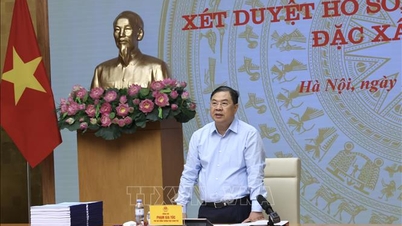
According to Deputy Prime Minister Pham Thi Thanh Tra, personnel work is not just about selecting people, but also about creating an environment for them to maximize their potential. One of the groundbreaking new points of the Party today is the policy of encouraging and protecting cadres who "dare six things": Dare to think; dare to speak; dare to act; dare to take responsibility; dare to innovate and create; and dare to confront difficulties and challenges.
In reality, many places still have officials who are "self-preserving," afraid of making mistakes, and hesitant to innovate for fear of disciplinary action if risks arise. To maximize human resource capabilities, a sufficiently strong "legal framework" is needed to protect those who dare to act for the common good. Conclusion No. 14-KL/TW dated September 22, 2021, of the Politburo on the policy of encouraging and protecting dynamic and creative officials for the common good is like a breath of fresh air, empowering dedicated officials.
When officials know that their innovative efforts are recognized and the objective risks are understood, they will be willing to dedicate themselves fully, offering groundbreaking solutions for the development of their locality or unit.

Reforming personnel management cannot be separated from salary and benefits policies. "The right person for the right job" must go hand in hand with "the right value." A mechanism is needed to pay salaries based on job position and level of contribution, ensuring that officials can live on their salaries and feel secure in their work. Fair compensation is not only a recognition but also an effective tool to attract talent from the private sector to the public sector, preventing brain drain.
Besides encouragement and facilitation, personnel management needs close supervision to ensure that power is exercised for its intended purpose. Innovation does not mean loosening control, but rather stricter governance through mechanisms and laws.
Mr. Mai Van Tuat argued that controlling power in personnel work is a fundamental solution to eliminate the situation where "the process is correct" but "the wrong people are chosen." The principle of democratic centralism must be strictly implemented, and all stages of the personnel process must be transparent so that the people and mass organizations can monitor them. Regulations on controlling power and combating corruption in appointments and promotions must be implemented with the spirit of "no forbidden zones, no exceptions."
When the personnel selection process is transparent, opportunists will no longer have a place to operate, making way for truly dedicated and capable individuals to join the leadership ranks. Reforming personnel work to ensure "the right person for the right job" is not a short-term campaign but a continuous and sustained strategy. It is a process of purifying, nurturing, and elevating the human resources of the Party and the State.
In the coming period, Vietnam aims to become a developed, high-income country by 2045. To achieve this ambitious goal, we need a generation of officials who not only possess pure revolutionary ethics but also have a global mindset, understand economic laws, and are capable of leading change.
Reforming personnel management is a breakthrough step to unleash individual capabilities and connect them into collective strength. When each position in the system is filled by the healthiest and most suitable "cells," the political system will operate smoothly, creating a powerful impetus to propel Vietnam forward quickly and far.
Deputy Prime Minister Pham Thi Thanh Tra affirmed: "The right person for the right job" is the key to all success. Reforming personnel management with groundbreaking thinking, scientific methods, and a pure heart will create an environment where talent is valued, contributions are recognized, and dignity is honored. This is the most solid foundation for unlocking all resources, maximizing human potential, and leading the country steadily into a new era.
Source: https://baotintuc.vn/thoi-su/doi-moi-cong-tac-can-bo-trong-tinh-hinh-moi-20260513061326929.htm






























































































Comment (0)