

No longer confined within the four walls of a traditional classroom, many educational institutions have "unlocked" learning spaces, bringing literature closer to life through flexible and creative methods.
From closed classrooms to open spaces
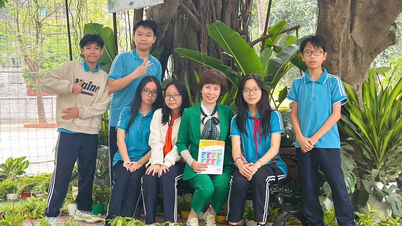
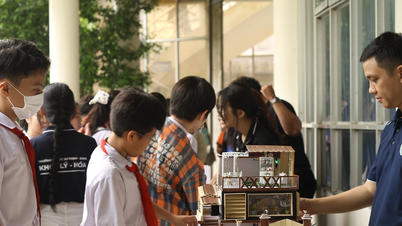
Recently, students from Nguyen Huu Huan High School (Thu Duc Ward) enthusiastically expressed their love for literature by participating in a project presentation on the theme "Uc Trai - Echoes of a Thousand Years." The project, implemented over the past three months, has helped students gain a deeper understanding of Nguyen Trai – a great cultural figure and outstanding politician of the nation.
The project is structured into three stages: Echoes from Nature, Echoes from Humanity, and Echoes in Life. Each section offers a different approach, helping students not only understand the work but also connect Nguyen Trai's thought to the contemporary context.
Sharing about the project's implementation, Ms. Ho Thi The (the supervising teacher) said: “The students clearly demonstrated their passion throughout the project. From the beginning, they proactively set goals for each type of product, then found ideas and implemented them. The entire project completed 18 models, 8 art paintings, a digital map, and many creative products such as bookmarks, crochet items, etc.”
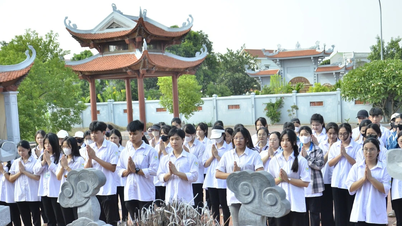
At Nguyen Huu Huan High School, project-based learning and extracurricular activities are strongly implemented. Early last year, the Literature department organized the "A Glimpse of Vietnam" program, combining field trips to Cu Chi, allowing students to explore the architecture of the three regions of Vietnam, learn about history, and experience traditional crafts. These activities not only help students acquire knowledge but also foster love for their homeland and national culture.
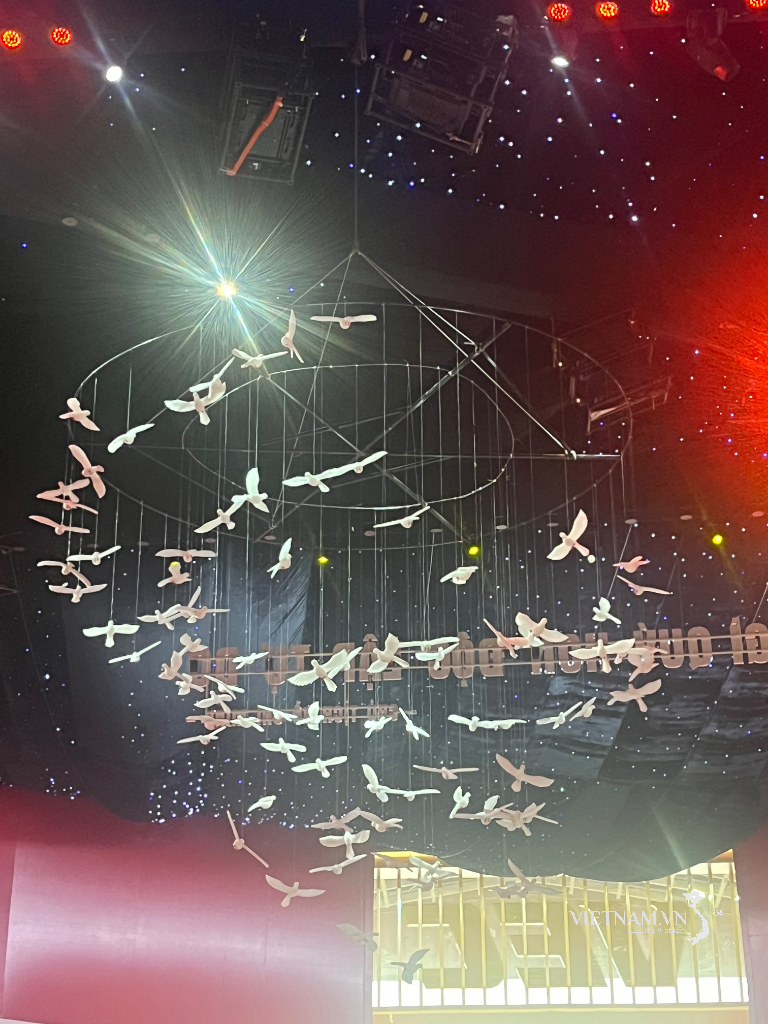
Recently, the Literature Department of Le Quy Don High School (Xuan Hoa Ward) organized a thematic presentation titled "I Go to the Festival of the Nation," with the participation of students from the entire school. The activity aimed to honor the image of women and spread the value of cultural heritage through creative experiential activities. The program included a stage and exhibition, featuring hundreds of products such as magazines, reports, posters, handwritten letters, along with cultural booths and folk games, creating a vibrant learning environment.
According to Ms. Bui Minh Tam, the school principal, the project not only helps students apply knowledge from the 2018 General Education Program but also expands their learning space, connecting them with museums, daily life, and the community. "Learning goes hand in hand with practice, knowledge is linked to experience" is the core value that the project aims for. Through their products, students demonstrate their self-learning, creativity, collaboration, and work management skills, while also maturing in awareness, emotions, and responsibility.
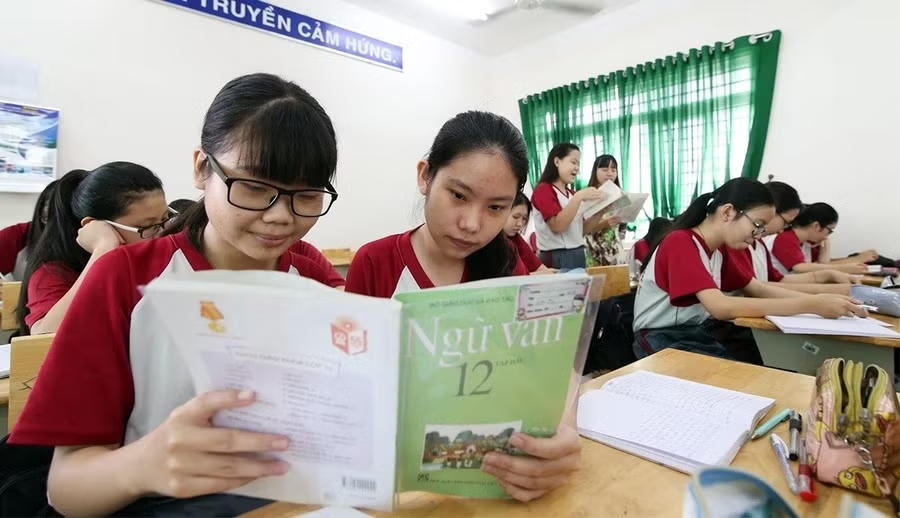 INT illustration.
Integrating AI into learning
Last March, the Literature lesson of class 12A14 at Hung Vuong High School (Cho Lon Ward) clearly demonstrated the trend of innovation when "unlocked" within the Ho Chi Minh Cultural Space, combining station-based learning, digital skills, and especially the application of artificial intelligence (AI).
In the lesson "Building a Nation with Two Hands" (by Ho Chi Minh), the theme "Ho Chi Minh in My Eyes" is developed within a realistic cultural context, helping students approach the work both intellectually and emotionally. From the image of Nha Rong Port and familiar melodies to a system of open-ended questions, the lesson is guided by dialogue, stimulating personal reflection and multifaceted perspectives on President Ho Chi Minh.
A highlight of the lesson was the integration of technology, especially AI. Before class, students proactively designed products such as videos recreating the life and career of President Ho Chi Minh using AI tools, infographics, or creative articles. In class, these products were shared via the Padlet platform, connecting to form a common "digital learning space" where knowledge is formed, supplemented, and disseminated. Along with this, the "heritage box" and the "knowledge tree" model helped systematize knowledge in a visual and engaging way, creating conditions for students to access the lesson content more comprehensively.
According to Ms. Ngo Thi Thanh Thuy, the teacher in charge of the class, integrating AI not only aligns with the development of digital competencies in education but also contributes to changing the role of the classroom. Instead of being a one-way place for knowledge transmission, the classroom becomes a space for verifying, supplementing, and developing the understanding that students have prepared beforehand. This helps learners become more proactive, while simultaneously enhancing their thinking and creativity skills.
Furthermore, videos created by students using AI technology have opened up a fresh perspective on the life and career of President Ho Chi Minh. The "Heritage Box," which preserves knowledge about his biography and literary contributions, along with the class's shared Padlet system, has created a digitized learning environment where each student can share their work through images, infographics, articles, or short clips. Through this, learning is no longer limited to textbooks but is expanded to many diverse forms of access.
Mr. Tran Tien Thanh, a specialist in Literature at the Ho Chi Minh City Department of Education and Training, commented: "In reality, organizing Literature lessons in open spaces is no longer an isolated practice of a few schools, but has become a trend implemented by many high schools in Ho Chi Minh City."
Models such as project-based learning, extracurricular activities, hands-on experiences, and the integration of technology and AI are being applied flexibly. Learning spaces are expanding from classrooms to libraries, museums, historical sites, cultural spaces, and even digital environments. This shift demonstrates progress in educational thinking, moving towards a student-centered approach, connecting knowledge with life, nurturing emotions, and developing creative thinking.”
Nguyen Khanh Phuc, a student in class 11A13 at Le Quy Don High School, said: “The innovation in teaching Literature has brought many different experiences. Instead of just learning from textbooks, we participate in projects like 'I'm going to the festival of the country,' researching, creating products, and presenting them to the class. This helps me understand the lessons more deeply and see Literature as more relevant to life. I feel more proactive in my studies, no longer learning by rote memorization but by exploring and expressing my own thoughts. These experiences make Literature more interesting and meaningful.”
Source: https://giaoducthoidai.vn/doi-moi-day-hoc-ngu-van-khong-gian-mo-cach-hoc-moi-post777479.html





















































































Comment (0)